Tom And Jerry: Cat On A Hot Hotel Roof

Written by Luke Barnes

Tom And Jerry is a live action hybrid animation film directed by Tim Story. The film serves to bring back the classic cartoon duo, but now in the real world fighting over hotel rooms. Yes, that’s right.

So before, I get into this I just want to acknowledge that this film is aimed at kids, you can tell it is in several ways such as the constant references to youth culture (that feel very much hello there fellow kids), and just the whole vibe of the film, and that’s fine maybe kids would enjoy the mindlessness of it, but anyone else would be a much harder sell.

I did not think that this film was bad, nor did I think it was good, if anything I thought that it was painfully average to the point of being a bit boring. If you compare the spectacle of the old cartoons, and the escalating fight scenes that Tom and Jerry used to have this film feels even tamer. The best sequence would probably be when Tom is trying to get into Jerry’s room for the very first time and things escalate to them wrecking the room, but even then it feels basic.

Perhaps most damning of all is that I actually preferred the human characters to Tom and Jerry. Chloe Grace Mortez as Kayla was a lot of fun and had quite a few great moments: I hope Mortez hitches her wagon to this franchise and appears in any sequels going forward, as she has a good emotional rapport with the characters which is hard to establish as they don’t talk- yet she finds a way. Likewise Michael Pena is entertaining as the film’s villain Terrence, though Pena gets stuck with most of the hello fellow kids dialogue he also manages to have a few funny moments, and actually makes the film bearable.

Overall, if you need something to show your kids that’s bland, stick them in front of Raya and the Last Dragon (which is actually better than this), but if you don’t want to pay for premium access on Disney + then I guess this will do. Though don’t try and watch this if you are over the age of 10 as it might put you to sleep.

Pros.

Mortez

Pena

Cons.

The cartoon was better

This feels overly tame

The soundtrack is distracting

It is mind-numbing

2/5

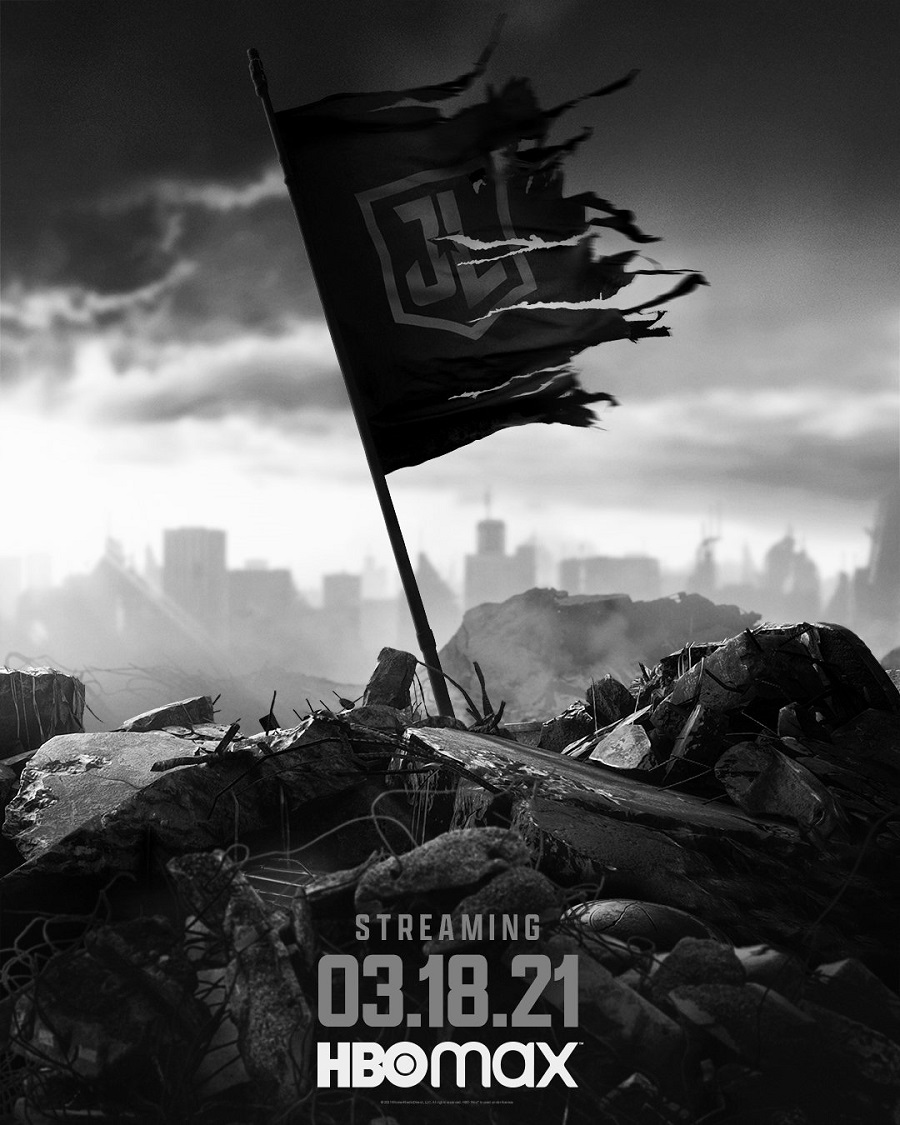
Zack Snyder’s Justice League: The Day Is Finally Upon Us

Written by Luke Barnes

The Snydercut or as it is sometimes more formally known Zack Snyder’s Justice League is a superhero film directed by Zack Snyder, serving as a remastered cut of the 2017 Justice League film that Snyder had to step away from due to personal reasons. The plot focuses on the formation of the Justice League in an attempt to fight off the invading forces of Steppenwolf (Ciaran Hinds) and Darkseid (Ray Porter).

So as many of you know, I have thought for a long time that this film was going to be bad, or at the very least unnecessary. However, I can admit when I am wrong and am pleased to tell you this film is a vast improvement over what we got in cinemas 4 years ago: now I am not saying it is perfect, but I am saying it is a marked improvement, buckle up this is going to be a long one.

Firstly I want to address something that for me was a glaring issue with the film and that is the overly sexualised nature of the female characters. Sorry Snyder fans this is going to upset you, but there is a recurring theme in Snyder’s work of ogling women and that is very much here as well. Wonder Woman’s (Gal Gadot) skirt seems shorter, the Amazonians are basically just wearing fancy metal underwear in some cases with their midriff fully exposed, because that is wise in battle? Iris West (Keirsey Clemons)is included just as a plot device and a damsel to be saved by Barry (Ezra Miller), and of course I would be remiss if I did not mention the camera’s fascination with Gadot’s behind.

Though Cyborg (Ray Fisher), is given more to do, his look and crucially the CGI aspects of it are still quite a ways off and are distracting throughout the film, if they could remove the light in his forehead it would look infinitely better. The same can be said of Steppenwolf the other major CGI character who looks like he has come straight out of a videogame and is again distracting.

The film does benefit from better pacing with the 4 hour runtime allowing the film to feel grander and more epic. I feel that by stretching the film out more a lot of things that didn’t make sense the first time around through lack of context suddenly do, and the world as a whole feels better explored and created.  

Oddly enough despite the sexualisation Snyder seems to understand Wonder Woman better than Patty Jenkins, and after watching this I think the reason the first Wonder Woman film was so good and the second was so bad was Snyder’s involvement. Snyder gives Wonder Woman a lot of good character work that makes her feel far more central to the narrative, and also far more interesting. Moreover, by redoing the bank scene and the Amazonian battle scene Snyder it able to make both more inspiring and appear better on screen; the shortening in the Whedon cut really hurt the film.

Similarly, Snyder finally seems to understand Batman (Ben Affleck) and Superman (Henry Cavill), here as well, moving away from some of the edgy aspects of their characters from his previous films and giving us a more comics accurate portrayal.

I think the tone is much better here than it has been in a lot of the other DCEU films as there are moments of levity amongst an otherwise serious affair, but they aren’t treated like dumb cringey jokes like in the original version of Justice League here they feel far more natural to the characters and importantly work.

I think this film is improved by being a Snyder film and from having his sensibilities applied to the project, I think his trademark use of slow motion is often used to great effect especially with the Flash stuff. I also feel like this film could be viewed as somewhat of a spiritual successor to Watchmen,also directed by Snyder, and think it would make for an interesting double bill.

Ezra Miller’s flash does still stand out for all the wrong reasons, and I do hope in future films they tone down the character and his awkwardness as it does become cringe at times, but not as much as in the previous version. Likewise, I also found the amount of problematic people cast in this film off putting as you have Miller (who choke slammed a fan allegedly), Amber Heard (who is the internet boogeyman) and Jared Leto (look it up), all rubbing shoulders with each other in a troublesome trifactor. Though I will give Snyder the benefit of the doubt the incidents involving two of them didn’t come out until it was too late to change it, but it is a shame.

The score by Junkie XL is terrific and really does bring the film together, with the music really adding a lot to the fight scenes in particular; with the new motif they have for Wonder Woman probably being my favourite.

Sadly, there is a large amount of product placement in this film that really does cheapen the film to an extent, admittedly only brief sections feel almost like adverts within the film.

The things added that have made this film R rated are a mixed bag, the blood does add to the intensity of the battle scenes, though the swearing really adds nothing and on the whole the film does not need to be R rated.

Moreover, the reach around line from Joker, is creepy and needless and should have been left out of the film.

Finally, I just want to talk about some of the stuff from the end of the film. Batman’s attempted self-sacrifice does still feel needless though it is handled better here, and the Nightmare section feels forced in at the end for no real reason. With the nightmare section it is clearly Snyder setting up for another film that he does deserve but most likely won’t get. Furthermore, the film does not really neatly address the Flashes’ warning from the previous film, and there are a number of other outstanding questions left to be answered as well.

Overall, a moment of triumph for the DCEU, something far better than the recent offerings (BOP and WW84), though sadly let down by sexual objectification, poor CGI and product placement.

Pros.

Solid world building

Good character work

The battle scenes are far more intense

A lot of the scenes flow better with more context which is allowed for with the longer run time

Cons.

The sexualisation and using of women as a plot device

The reach around line

The poor CGI

The product placement

3.5/5

Interview With Shaun Rose: The Star/ Co-Writer And Director Of Making And Unmaking

Written by Luke Barnes

Hey Everyone! I recently had the chance to have a chat with Shaun Rose, the writer/actor/director behind Making And Unmaking a very personal documentary film that chronicles Rose’s experiences within the film industry around the film of him making Upstate Story. We discuss the creative process, whether the toll of Hollywood is worth it, and mental health. I hope you enjoy.  

Q: If you were to sum up Making and Unmaking in a word what would it be?


A Therapeutic. Another word would be extensive or exhausting.

Q: What was your message with this film? To inform? To share?


A: Initially it was just me trying to get so many feelings out in the midst of production of ‘Upstate Story’ as they both overlapped. I was in a deep crisis period. I will say that many who have watched the film consider it educational in regard to the creative process. Not just the no budget tier of filmmaking. 

Q: What was the inspiration or catalyst for you making this film?


A: Just wanting to heal or get better. My mental and physical health were in pretty rough states due to so much I was going through. I wanted the film to act as a sort of journal or diary where I could vent. 

Q: Would you describe the struggle you and other filmmakers go through to get films made as worth it?


A: Most of the time. There are horror stories out there. Mainly in Hollywood where filmmakers have expressed regret over certain projects. For myself, I have no regrets at all. It might be hard and at times frustratingly difficult, but the finished product has always been worth the hardship. 

Q: What advice would you give to young filmmakers working in the industry right now?


A: Keep writing and filming. There are a plethora of affordable cam options out there for you. Even modern cell-phones are being used frequently. Go for whatever you want to do. 

Q How did you find the production of Making and Unmaking different from that of your other projects?


A: I’ve only experimented with the documentary form in college so that was a departure from the norm. Many years in between. I also just started using DSLR’s too for the documentary so that was a learning curve. I was late to that party.

Q: Did you find the format of Making and Unmaking, freeing or constrictive?


A: Very freeing, but at times overwhelming. As a documentary, I feel the possibilities are endless or more flexible. Just stick to the truth no matter what. It’s the editing that becomes hard. Trying to keep the story moving along all the while keeping a smooth edit going is where it gets tricky. We only had 1 cam to use during the interview sections, so we had to film each interview 2 times at different angles. From there, try to splice it together. Trying to place the music by Jake was also tricky. Considering it’s a documentary, it was especially tricky. I just took his tracks and placed them in a way to compliment as opposed to overwhelm. I hope I did him justice.

Q: If you won an award who would you thank?


A: My children. Adrianna and Keenan. My co-creators on the film. My Father, Andrea, Jake and Charles. My family, critics who gave my work a chance. A bunch of my friends who have been very close to me in my darkest times. People to confide in during both personal and creative rants. And those that have passed who made a strong impact on me as a person. Gracelynn, Sue and Darlene. 

Q: What are your closing thoughts on the film industry in general?


A: I’m concerned about where it seems that comedy is headed. For centuries, comedy has largely consisted of others laughing at the misfortune of others. It’s always been offensive to some degree or other. There are so many different realms of comedy as well and nowadays, I fear that we’re heading into territory that minimizes what we can laugh at. Perhaps I should say censorship in general. 

Q: If you could go back in time to when you were young and just starting out in the film industry, would you tell yourself to go for it, or to rethink?


A: Go for it. It’s difficult, but getting your works out there, seen and appreciated, makes all the struggle worth it. 

You can check out Making and Unmaking right now on Youtube, and as always you can find a review of the film on my site!

Making And Unmaking: A Frank Conversation With A Filmmaker

Written by Luke Barnes

Making and Unmaking is a candid documentary short film directed by Shaun Rose. The film sees Rose open up and discuss various triumphs and sets backs he had whilst making his feature film Upstate Story.

If you have an interest in the production side of film, then I would say this is a must watch.

Those of us who have made a film before, are presented with an earnest and frank conversation that we all know well, making a film is one of the hardest things a person can do. As Rose details the events surrounding the production of the film, he paints us a vivid picture of the place his life was in, his fight to get this film made. Touching is not enough to describe this film, but as someone who has made short films before (and would dread the pressure of making anything longer), I can say that this film is incredibly relatable.

Moreover, if you have never made a film before this is still immensely enriching, as it provides a very honest look into the sort of things that filmmakers go through, and what life is really like on a film set.

Overall, this is a very special film in a lot of ways, and it brought a tear to my eye. A beautiful story that needs to be heard.

Pros.

The honesty

The raw emotional weight

A useful educational tool

Very relatable

Cons.

Those not into film production may find less to be interested in here

4.5/5

Interview With Hunter Farris: Writer, Director, Producer and Actor For Cursed Camera

Written by Luke

Hey Everyone! I recently had the chance to sit down and chat to Hunter Farris about his new horror shot Cursed Camera, which is a delightful play on the found footage demonic possession genre, with the camera itself being possessed by a demon and killing anyone who goes off screen. We chat about, curses, found footage horror and Martin Scorsese’s quotes on cinema. I hope you enjoy.

Q: If you had to sum your film up in one word what would it be?

A: Experimental.

 Q: Who is your filmmaking inspiration?

 A: Todd Strauss-Schulson. I love how he used movies about movies to explore deep, universal themes.

Q: Do you have any funny on set stories?

A: I forgot to write the last scene until almost the last day of shooting. It wasn’t even in the outline; it was just an afterthought. But because of that, our cinematographer/editor was unable to plan the shot properly. So he solved the problem by taking a single screenshot and focusing on that with everything in voice-over.

Q: If you could travel back in time to when you were first starting in filmmaking out what would you say to your younger self?

 A: First starting out in filmmaking. Slash your budget down to nothing. Then work with what you get. First starting out on this video? Everything will work out just fine. There were a few issues with production that caused me a lot of stress in the moment (like recasting someone on the day of filming), but none of them ultimately affected the finished product.

Q: What would you do if you were caught on the cursed camera?

A: Oh gosh… The whole point of a horror movie is that you can’t win. I mean, sure, I could try to outsmart it by following the rules and staying onscreen… until the rules change, and the camera starts randomly turning off and on. So I guess the best thing to do is turn the camera toward the wall and report the camera to the rental house so they can take care of it.

Q: What was your catalyst for making this film?

A: Honestly? I just wanted to make something that could go to a festival, without spending a dime on production. A found footage movie seemed like the most narratively interesting excuse for no budget and killing off characters was an easy way to make sure people only had to show up for a few hours of filming. So when I asked how they could die without spending money on makeup, effect, props, or costumes, I remembered Martin Scorsese’s quote (“cinema is the art of what’s in the frame and what’s not in the frame”) and decided to play around with the relationship between the character and the camera.

Q: Are there any particular films you are homaging, referencing, or spoofing with curse camera?

A: I’m gonna be honest, I haven’t watched a single found footage movie or possession movie yet, and pre-production went so fast that I didn’t have time to research. So I didn’t want to comment on any movies I hadn’t seen, so I was more commenting on the very idea of a camera. Not many movies make the camera diegetic, and I wanted to make the camera as diegetic as possible to play around with the idea of the interaction between character and camera.

Q: What is your favourite possession film?

A: I wish I could give you a good answer, but I don’t think I’ve seen any possession movies yet. I look forward to watching a lot of possession movies.

Q: How would you describe the state of modern horror?

A: It seems to me that modern horror is splitting into 2 camps: One wants to use horror as a vehicle to explore a theme, and the other wants to use horror as a vehicle to have fun with fear. And I think those are equally valid camps.

Q: If you ever won an Oscar or other award who would you thank in your acceptance speech?

A: I’m always deeply grateful to *every* member of the cast and crew. If I can, I always like to express gratitude to each one by name. And I’d definitely be thanking the people who financially support me while I’m chasing my dreams of filmmaking.

If you want to check out Cursed Camera you can find it on Youtube, and as always there is a review of the short up on my site now!

Cursed Camera: Video Killed…. Well Everyone

Written by Luke Barnes

Cursed Camera is a horror short directed by Hunter Farris. The plot sees a group of budding filmmakers become the unwitting victims of a demon after they start using a cursed camera that kills those who appear on its lens.

This is what horror cinema is all about, the wonderful shorts that breath life back into the genre! I greatly enjoyed this film for the short time it was on, as I thought it was very clever and it made me laugh.

If you have ever made a short yourself before, then you will find the premise itself quite hilarious and more than a little relatable. Moreover, I think the film’s lampoon of possession tropes is spot on, and I was laughing for the entire runtime of the film.

 I thought the acting was also quite good, and even though each character was only on screen a minute amount of time before they are killed off most still have their moment to shine and for the most part nail it.

Overall, this was a lot of fun to watch and if you have a spare few minutes you should definitely check it out, eagerly awaiting what the filmmaker does next.

Pros.

A novel premise

A strong lampoon

Many funny scenes

The cast are strong

The ending perfectly sets up more fun

Cons.

None

5/5

The Parish: Nuns Are Always Creepy

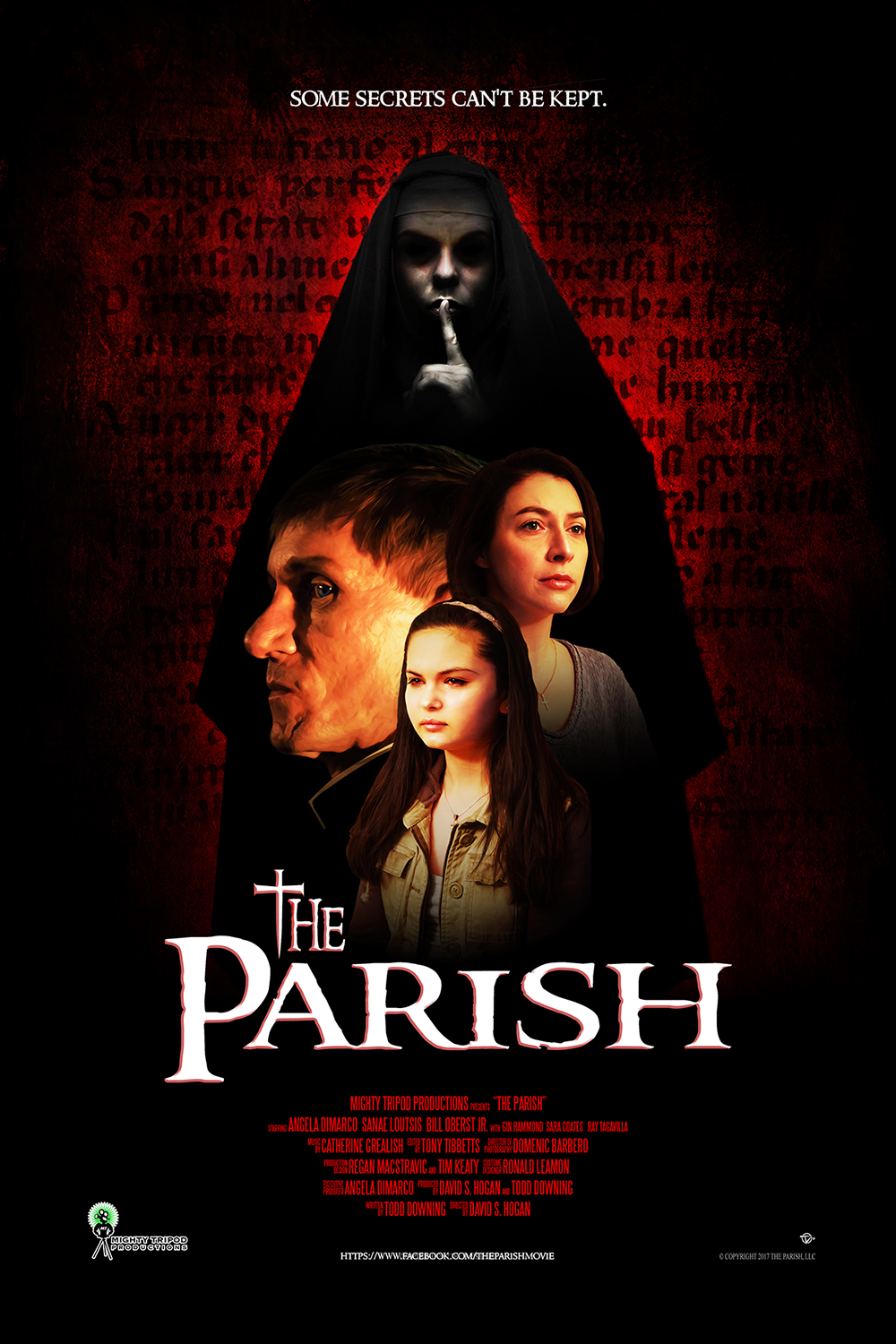
The Parish is a horror film directed by David S. Hogan. The plot sees single mum Liz (Angela DiMarco), and her daughter move after Liz’s husband dies- looking for a fresh start. However, upon arrival Liz and her daughter quickly find themselves caught up in a decades old mystery as well as a millennium long battle between good and evil.

The main thing that drew me to this film was Bill Oberst Jr. I am a big fan of the films of Rob Zombie (particularly the Firefly trilogy), so seeing his name attached instantly attracted my attention. Oberst Jr, does not disappoint and is as good here as he is in the final instalment in that trilogy, stealing damn near every scene he is in and managing to be the coolest thing about the film.

Another strong point about the film is it’s scares. Though the film starts off slow, by the twenty minute mark you can see things are a miss, and when Liz starts having horrific nightmare that’s when the film really starts getting going: the nightmares provide the film with some strong horror visuals, but it is the general scene of creepiness brought about by the atmosphere and the plot that makes the film unsettling. This film sat with me for a while after I watched it, which is always a good sign for a horror film.

Overall, a terrifically creepy affair with an excellent, as always, turn from Bill Oberst Jr.

Pros.

Oberst Jr

DiMarco

The scares

The mystery

The final showdown

Cons.

The opening is a little slow

4.5/5

Reviewed by Luke  

Body Brokers: The Human Trade

Written by Luke Barnes

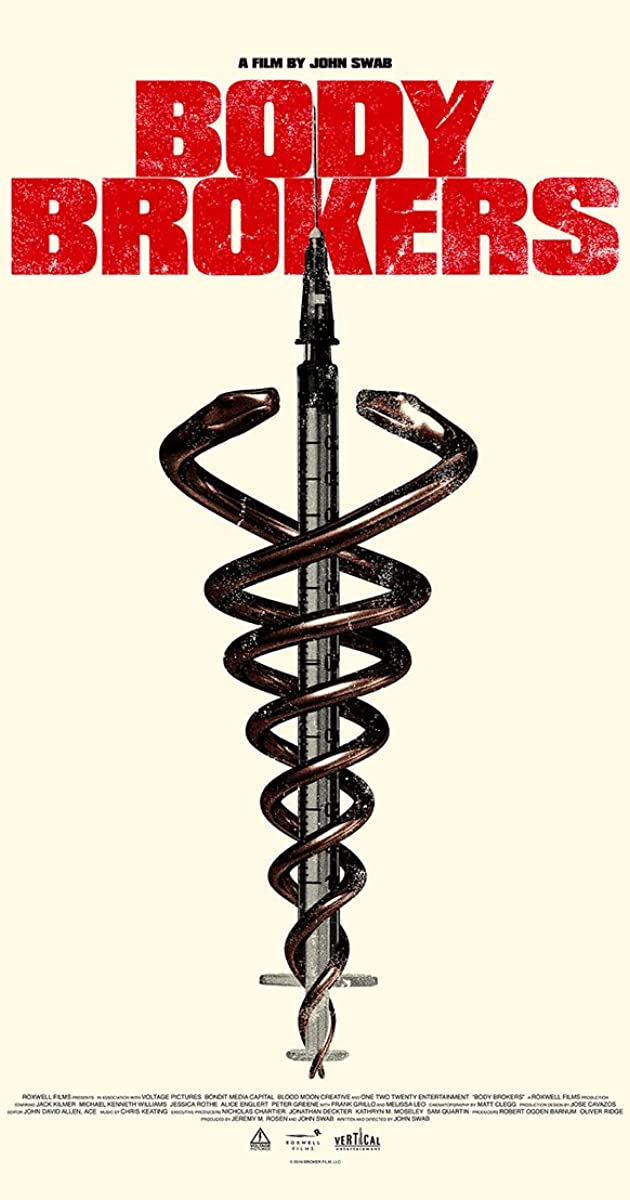
Body Brokers is a crime thriller film directed by John Swab. The plot revolves around the for profit drug rehabilitation system in the United States, and the various predatory tricks and cons people within the industry are using to stay rich.

This film serves to do for the drug rehabilitation system what The Big Short did for the stock market. Providing us the audience with an in-depth, albeit it fictionalised, view into the world of body brokers, characters who prey off junkies going in and out of treatment centres to make their money through various contracts.

Honestly, the fact that this is a thing in the real world is terrifying, and it’s the same kind of terror that you had when you realised that I Care A Lot also has a lot of grounding in reality. Our systems are deeply flawed.

I thought the performances were all very good here, Frank Grillo was the stand out, but he was supported nicely by Michael Kenneth Williams and Jessica Rothe, who is definitely the scene stealer of the film. My one complaint on this front would be that the main protagonist Utah (Jack Kilmer), is fairly bland and predictable

Overall, this film is harrowing, and it opens your eyes to just how easily corrupted our systems are- filling you with even more existential dread and terror of the world around you.

Pros.

The premise

Exposing the injustices and the wrongs of the drug rehabilitation world

Making a few strong points

Rothe, Williams and Grillo

Cons.

Kilmer

The ending is manically depressing

4/5

I Care A Lot: A Sociopathic Super Heroine

Written by Luke Barnes

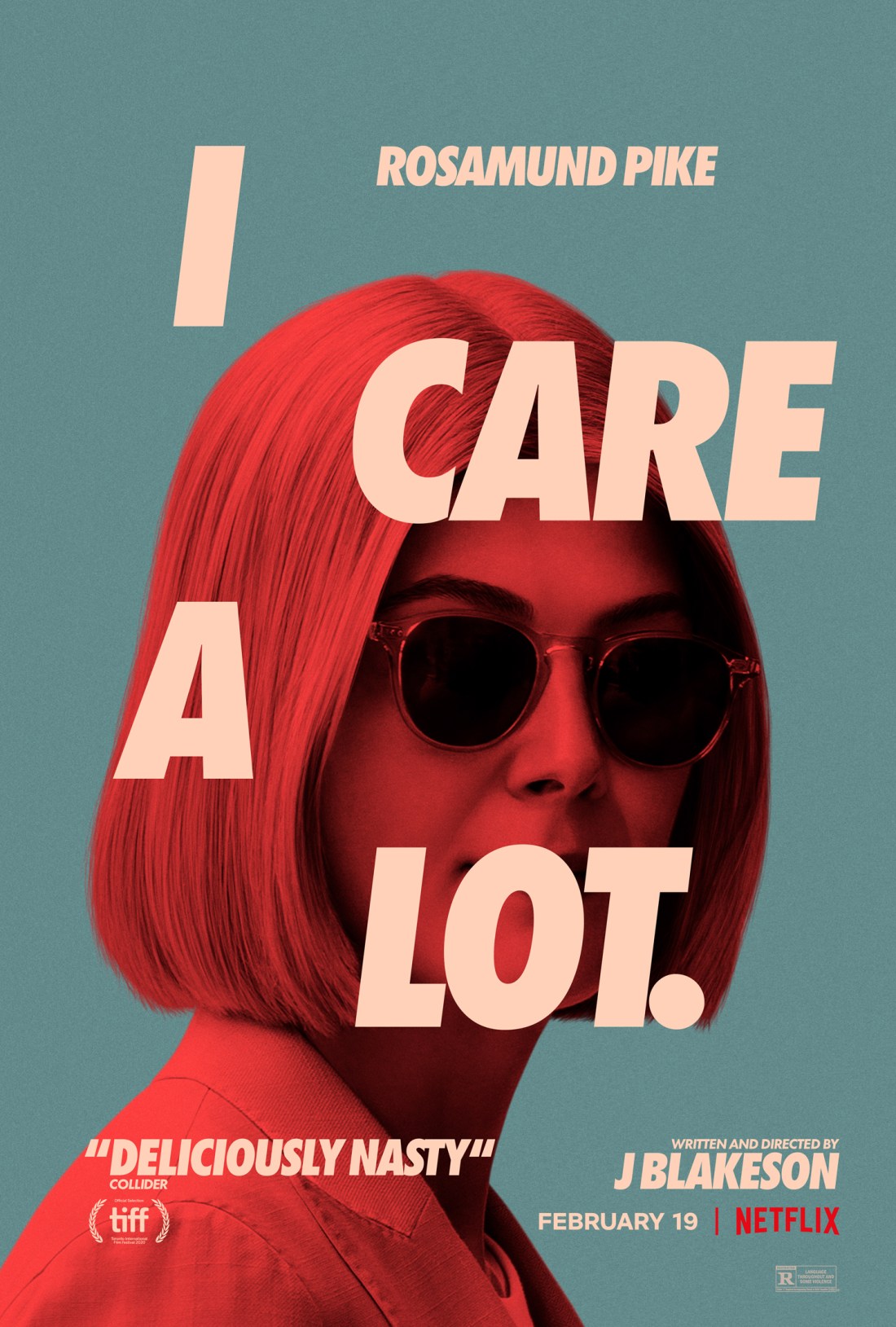
I Care A Lot is a dark comedy film directed by J Blakeson. The plot follows the efforts of Marla Greyson (Rosamund Pike), a court appointed guardian, who defrauds those in her care for personal gain. However, one day she picks the wrong target and invokes the ire of a mob boss.

I did not care for this film at all.

The only pro I can give for this film is that, as usual, Pike is on excellent form and gives one hell of a performance. However, there character is unlikeable and there is really nothing the audience can connect to in her. This isn’t necessarily a bad thing, as you don’t always have to like the protagonist of the films you watch, but it becomes an issue when we are supposed to care about her survival. Personally, I found myself relating more to Peter Dinklage’s mob boss character.

Moreover, the writing is incredibly unbelievable to the point of Marla almost becoming a sociopathic superhero at times. We are supposed to view Marla as a crafty predator, who outwits her opponents, however in a physical sense she is shown to just be a regular human and yet she can’t seem to die; literally she survives definitive death after definitive death, and it gets a bit laughable after a point.

Finally, the narration seems to think it is clever and deep, yet it comes off as just the opposite of that and if anything a little try hardy. Not everyone can be American Psycho, stop trying.

Overall, Pike is giving the performance of her career so far, sadly it is in a deeply unlikeable film.

Pros.

The premise

Pike

Cons.

The audience has no way to connect to the character

You don’t care about the character, so it takes away from any tense or life and death sequences

The narration is not as smart as it thinks it is

Marla basically has superpowers as the result of bad writing

1.5/5

Todd: The Life Of A Budding Killer

Todd is a thriller film directed by Aaron Warren. The plot follows the titular Todd (Hans Hernke), as we see his decent into becoming a budding madman/ killer, due to intense social isolation and abuse.

I appreciated this film not taking the easy road, they could have made a film that used all the evil kid, budding serial killer cliches for Todd and made him out to be an unsympathetic, obvious monster. However, instead the film explores the character further and takes a more nuanced approach to the discussion, showing that he has layers and that his situation has driven him to do what he does.

I thought the tense stalking sequences of the later film were also well done, too often is the term ‘on the edge of your seat’ used, but here I would describe a similar feeling. There is a lot of great suspense around how far will Todd go, when will he be caught. As such the cat and mouse game that escalates from it is very fun to watch.

Overall, the writing really helps to elevate this film beyond mediocrity and make it memorable and dare I say it, impactful?

Pros.

Layered writing

A lens towards society

A strong sense of tension

Cons.

The character’s other than Todd are all quite weak and poorly fleshed out

A few pacing issues

3/5