How to Train Your Dragon: The Love Between A Boy and his Dragon

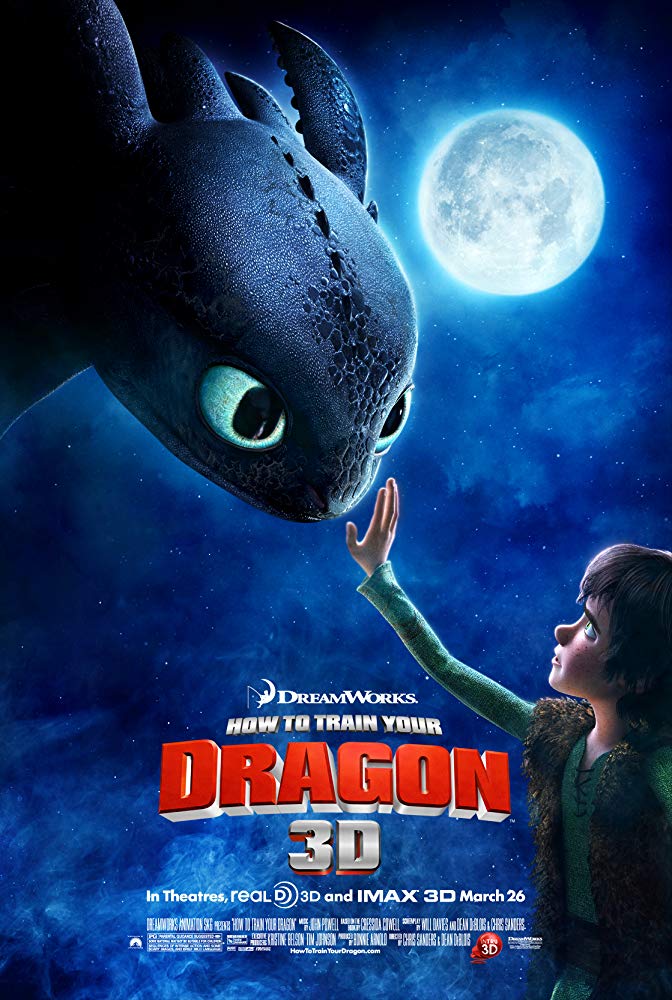
How to Train Your Dragon is an animated action-fantasy film; loosely based on the 2003 kids book of the same name. How to Train Your Dragon is set in a Viking esque world, where every night villages are raided by troublesome dragons. Most of the Vikings are brave warriors who face off against the dragons to protect themselves and their land. However, Hiccup, (Jay Baruchel) isn’t like them he can’t swing a sword or, an axe, but he has a big heart. One day Hiccup captures a dragon, one of the most feared types the dreaded Night Fury, however rather than kill it and embrace his inner Viking, Hiccup befriends the dragon that he call toothless and what follows is their story.

The themes of How to Train Your Dragon are universal, the ideas of not feeling as though you belong, being different to everyone else around you, everyone has felt like that at some point in their life; and that is what this film and it’s sequels capture so well.

The animation is beautiful, each dragon has it’s own unique design and every corner of the map is dripping with detailed Norse mythology. This is just one of the few reasons why How to Train Your Dragon is one of Dreamworks big three franchise, the others being Kung Fu Panda and Shrek.

The relationship between the Hiccup and Toothless will strike an emotional chord with anyone who has ever had a pet before. The pure love is so perfectly captured here, and the film is not afraid to go dark with this, showing just how dark Hiccup and Toothless are willing to go for each other.

Whatsmore the relationship between Hiccup and his father Stoick is also incredibly well done. Stoick, (Gerard Butler), is the clan chief, as well as this he is a Viking in the truest sense, he is tough, manly and slays dragons for fun. To him, Hiccup never made any sense, he was always keen to understand him, but the lack of anything in common always kept them apart. The scene in the final act of the film when Stoick thinks he has lost his son, after effectively disowning him not long before, and he breaks down and realises that his outlook is wrong and, that Hiccup was right all along; then it turns out that Toothless the dragon Stoick hated has saved his son and he thanks it, it is the most touching scene I have seen in a film in a long time.

Ultimately the world of the How to Train Your Dragon is beautiful the mythology is rich and well explored, but the greatest strength that How to Train Your Dragon uses so well is its use of heart and emotion. It is despite being about dragons and Vikings and very fanciful, an incredibly affecting film and, one that will leave an impression on you long after the credits roll.

5/5

Reviewed by Luke

The King: All Hail Robert Pattinson

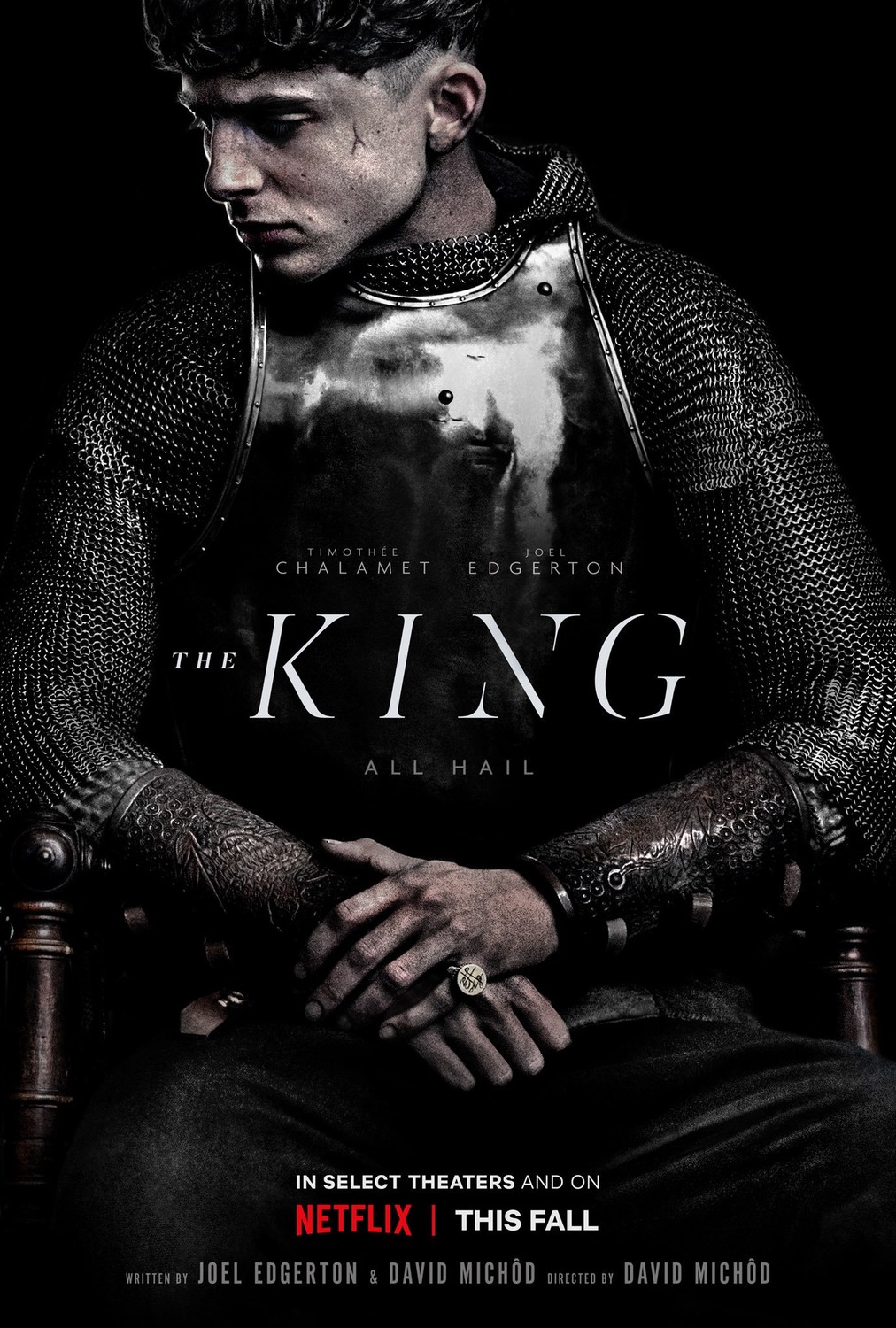
The King is a historical drama based on William Shakespeare’s ‘Henriad’ saga. The plot follows Hal, (Timothee Chalamet), the overlooked son of King Henry IV of England, who ascends the throne. Once there he faces the intrigue of the court as well as a looming war with France.

The King is one of my favourite Netflix originals, mainly because it focuses on a time in British History that isn’t much covered in glossy Hollywood epics. The period itself is fascinating.

The film is long and drawn out, which some people might find boring, but I thought the pacing was used thoughtfully and the plot moved along at a nice pace, focusing on a wide variety of different things. However, the final climactic battle, the Battle of Agincourt, is most likely my favourite sequence of the whole film; being superbly executed and choreographed.

The performances are all fantastic, lead performance excluded, Joel Edgerton makes the most of his short amount of screen time. His Falstaff takes a mentorship role to the young King and, it is incredibly endearing to see their friendship develop.

Likewise, Robert Pattinson’s performance of the villainous The Dauphin is fantastic, he steals the scene every time he is on screen and, my one request of the film would be to see more scenes of him. Pattinson’s accent has generated a lot of discussion surrounding the film, but I for one like it.

What’s more the ending of the film, in which it seems as though the Young King has been manipulated by forces at court, into going to war in France puts the whole film in a brand new context which makes it more enjoyable.

My one issue with the film is that I think Chalamet is miscast, he is one of the weaker members of the cast and, that is clear from the beginning. Moreover, he is also the least memorable part of the film, which is an extreme negative when the film is all about him, overall I think another actor should have been cast.

To conclude The King is a fascinating tale of war and duty set in one of the least covered periods in British History, with some incredibly memorable scenes, such as the balls scene with Robert Pattinson; you will know which I mean. However, a weak performance from the lead actor lessens what this film could have been. That said this is still one of the strongest Netflix originals.

4/5

Reviewed by Luke

Terminator Dark Fate: A Dark Day Indeed

*Spoilers

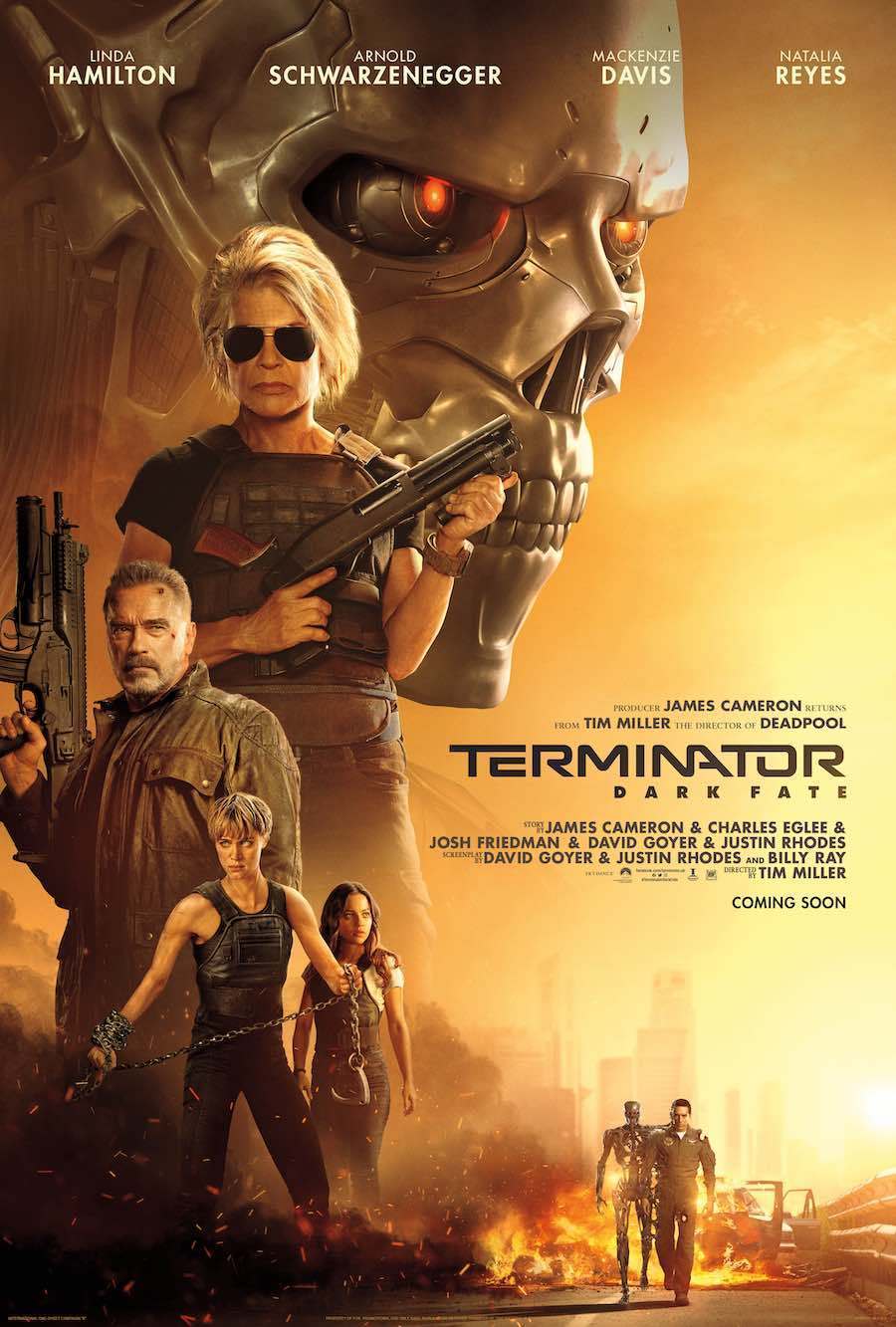
Terminator Dark Fate is the latest film in the Terminator series. Taking place in a world where Sky-Net was defeated, but the future threat still lingers in the form of Legion, the new evil machines.

To get the thing I hated the most about this film off my chest first, before I get into the review, the first ten minutes of this film kills off John Conner. Conner has been a staple of the franchise since Terminator 2 and is a favourite fan character. The death is such a massive slap in the face, as it makes all the previous film redundant and removes a beloved character simply to drive the plot forward; if they were going to handle it like this, they might as well have killed him off-screen.

We get a new hero in the form of Dani Ramos, (Natalia Reyes), who is everything John Conner was, which makes the need to kill him off seem even more needless. Dani, for the most part, is bland and inoffensive, she doesn’t induce any form of reaction good or, bad she’s just there. She is out shadowed by nearly every other member of the cast. Furthermore, and this isn’t a problem unique to this film, it baffles me to see these characters beat up villains twice their size and weight; it is as though no thought has been put into it at all.

The returning cast of Arnold Schwarzenegger and Linda Hamilton, as the T-800 and Sarah Conner respectively, are the best part of the film; despite only being brought back to encourage fan nostalgia. It is nice to see where Sarah Conner is mentally in a world after Judgement day. With Schwarzenegger being the life and soul of the film, much like he was in Genesis; proving that ultimately these are his films. The ending tries to send his character off on a high note but, ends up feeling more than a little inspired by the end of T2

The new protector Grace, (Mackenzie Davis), is also great. Her backstory is well done, and she provides an insight into what life in this post-apocalyptical world is like. Her character greatly upstages Ramos, which is a shame as they’re so tied together. I genuinely believe Grace would have been a better protagonist.

Overall this film has its moments, but nothing can make up for the decision to kill John Conner. Dark Fate is a nice if unnecessary epilogue to the series, it should not start a new trilogy if anything it should end it. It’s not the worst film in the series, but also far far away from the high point. Depending on his involvement in this, Dark Fate makes me actively worried about James Cameron’s Avatar sequels; if this is the sort of film, he releases these days.

Not worth watching at the cinema unless you’re a huge Terminator fan, wait for it to come out on streaming if you must see it. It is a dark day in the series, but not the darkest possible Fate for it.

2/5

Reviewed by Luke

The DCEU: Ghosts of Past, Present and Future.

In this post I will be discussing the DCEU, that is the DC expanded universe for those of you that don’t know, I will look at where they have been, where they are right now and what the future might hold for the cinematic shared universe.

It all began with Christopher Nolan’s Dark Knight trilogy; these films brought Batman back to the mainstream; after the debacle that was Batman and Robin. As well as this, Nolan’s tone and themes would go on to impact how Warner Brothers would deal with future projects and the overall aesthetic of the DCEU.
Furthermore, during the time of the Nolan trilogy, Marvel had assembled the Avengers and created the first cinematic universe. DC and Warner Brothers were on the back foot; they needed their own cinematic universe. Warner wanted Nolan to stick around to do more movies, maybe even to be the Godfather of the fledgling DCEU, but he said no.

In stepped Zack Snyder.

Snyder was known for his flashy film making bringing the likes of Watchmen and 300 to the big screen, both comic book properties themselves, so he seemed like a great man for the job. Snyder got to work making Man of Steel which would be a Superman origin story and set the groundwork for the wider DCEU. Snyder’s tone for this film carried on the dark, brooding atmosphere set by the earlier Nolan films, this set them apart from Marvel. However, Man of Steel was divisive some people loved it, I did, but others hated it, they didn’t like a lot of Snyder’s heavy-handed themes and the perceived lack of fun. To me personally, I think Man of Steel was excellent, it set up Superman and the wider world perfectly.

After this, Snyder got started on a followup, no it wasn’t Man of Steel 2 like a lot of people were expecting; it was Batman Vs. Superman. This film would introduce not only Batman to the young DCEU but also Wonder Woman, Aquaman and Cyborg; it was ambitious, to say the least. Batman Vs. Superman was even more divisive then Snyder’s previous film, and there was talk of Warner Brothers and Zack Snyder himself having very different visions for both the film and the wider cinematic universe. Though again I loved the film, it didn’t make as much money as WB would have liked, and the DCEU looked like it was in trouble.

After this Snyder went away to work on his two-part Justice League film, more on that later, and in stepped David Ayer to direct Suicide Squad. Regarded by some as the worst film in the DCEU, Suicide Squad followed a group of villains and anti-heroes as they were forced to fight for the US government. When the trailers came out people were cautiously optimistic, but when it released the film quickly divided the fans with most people not liking the way characters like the Joker were handled. Once again, the film didn’t do well financially.

After both of these were received poorly and rumours were rife of studio meddling, all seemed lost. However, there was a ray of sunshine, Wonder Woman. I loved all three films up till this point. I know that’s not the universal opinion. My favourite part of Batman Vs. Superman had been Gal Gadot’s Wonder Woman, and I loved her solo origin film. The WW1 setting added so much to it, it had charm and charisma, and Gadot was a fantastic Wonder Woman. Unlike the others, this film was received well and made money, and Warner Brothers were shocked. The reason a lot of people liked Wonder Woman was that it was more hopeful and cheery than Snyder’s previous films it had jokes and a more vibrant colour pallet, so WB had a drastic change of plans.

However, while Wonder Woman was being made Snyder was working on his Justice League film, cut down to just one part, so unlike the projects that followed WB couldn’t do much to change it after the success of Wonder Woman. After a tragic turn of event’s Avengers helmer, Joss Whedon was brought on to finish the film, but also to make it lighter. This resulted in the film feeling disjointed, a mismatch of two tones and styles, and a film that should have been a sure-fire hit for the DCEU blew back on them. After this, WB knew they needed to change gear.

Then the impossible happened again Aquaman, which many had thought was going to be bad, was a hit. People loved it, and the film made over one billion dollars, a first for the DCEU at this time. Again James Wan had moved the film’s tone away from that of the Synder films and made it lighter and jokier. Then a few months later, Shazam came out and carried on this trend, being lighter in tone, but also loved and profitable, though not as profitable as WB wanted it to be.

That brings us to now; The DCEU is on a hot streak. Warner Brothers have just released the Joker, which isn’t a part of the DCEU but features characters from DC comics, and once again people love it. The film is far darker than any of the previous entries, but it nails the character of the Joker himself so completely that it exceeds Nolan. Almost feeling like an art film Joker really has something to say. It is clear for all to see that DC and Warner Brothers might just be on the verge of turning it around.

Looking forward to next year, DC has a lot riding on the success of upcoming films like Birds of Prey, which features Margot Robbie’s’ Harley Quinn who was the most popular part of Ayer’s Suicide Squad. As well as the follow up to Wonder Woman, Wonder Woman 1984, which seems Gadot’s Dianna Prince now in the ’80s. Both of these films look to continue the DCEU’s trend of lightening the tone set by the earlier films, and both have people excited.

I had loved all the DCEU movies so far, and believe the misstep that WB took was trying to rush out of the gate before they had a plan before they had decided what they wanted their shared universe to look like. Still, through trials and error, I think WB have learnt what the fans want, and the DCEU has discovered its identity. This fills me with hope for the future and the upcoming films.

Zombieland 2: Sometimes Dead is Better

Zombieland 2, is the belated sequel to the cult classic horror-comedy of 2009. The film, much like the first follows our group of unlikely loveable survivors as they try and stay alive in the zombie apocalypse. Double Tap, a reference to one of Columbus’, (Jessie Eisenberg), rules for surviving Zombieland from the first film, takes place ten years after the end of the original. The plot revolves around Tallahassee, (Woody Harelson), Columbus and Wichita, (Emma Stone), as they try and find Little Rock, (Abigail Breslin) after she departs the group and tries to find herself and a cute guy; so she can have the idyllic family life.

If that message seems odd to you, it’s one of many. This film feels like it was made ten years ago, a lot of the jokes feel dated and in poor taste. I’m not saying every movie has to be PC and can’t say what they want to say; I’m just saying some of the messages in this film are troublesome.

The character of Madison, (Zoey Deutch), encapsulates this precisely, she is a new character to this film, and she first runs into the characters when she meets Tallahassee and Columbus in a mall. She then sleeps with Columbus despite him seemingly loving Wichita, who at this point in the film has run off for a month because the prospect of marriage scared her, but like many of the characters joke in the movie, he moves on really quickly and not only does his undercut the love between him and Wichita, but it also serves to assassinate his character. Which makes the final moments of the film feel cheap and unbelievable.

Furthermore, Madison is the embodiment of everything that is wrong with this sequel; the original main characters almost feel pushed to the side, just to focus on the film’s new characters who are all boring and underdeveloped. In addition to this, most of the new characters are only included to allow these tiresome recurring jokes. An example of this is Madison herself; her main character trait is that she is dumb, a bimbo, you’ll be damned to forget that in this film as there is a joke about her lack of intelligence every five seconds, something this film doesn’t seem to understand is that repetition doesn’t make a joke funny.

What’s more, as you have probably seen in those woeful trailers, there is a prolonged scene in which new survivors show up, who are basically copies of Columbus and Tallahassee and they can’t see it. Isn’t that funny? These characters are only included for that joke, and the film drags it out and drags it out, and it’s just not funny. We could have had more scenes that added to the story of our four main characters but, no we need this ten-minute unfunny joke.

I wish I could say that this was just a sequel that didn’t need to be made, but it is far far worse than that. This film tarnishes the original by making characters do things they wouldn’t do, just to set up a cliched boring narrative. This film spits in the face of the original and looks smug about it. Harrelson is the only person who looks like he wants to be there; he is the one saving grace. Double Tap has a joke about women Suffrage just casually thrown in, and it feels so out of place and out of touch. This film should have either come out ten years ago or, just not at all.

Sometimes dead is better.

1.5/5

Reviewed by Luke

Abominable: Dreamworks most surprising Gem

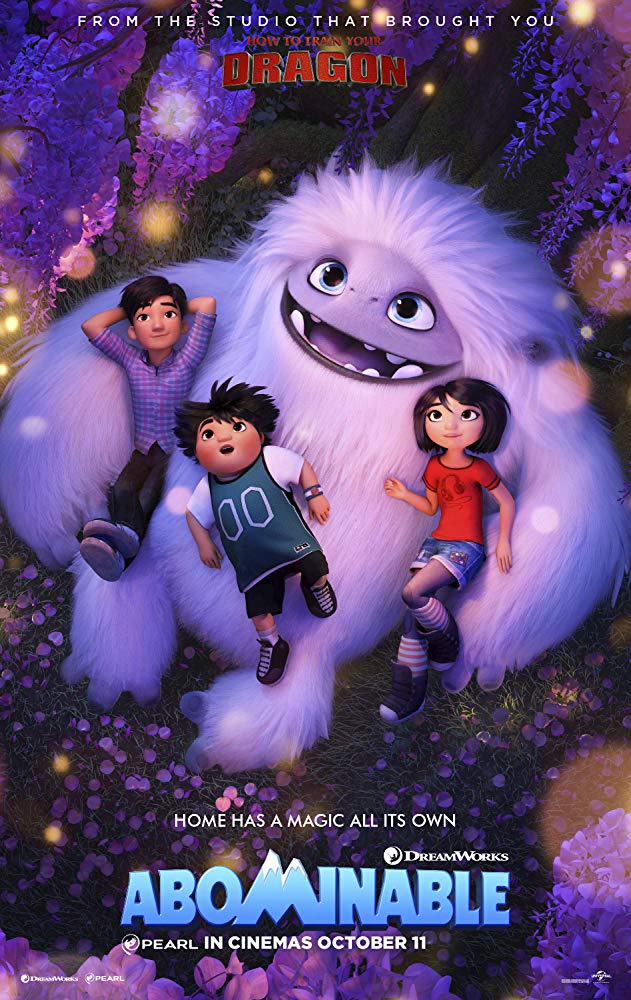
Abominable is an animated film from Dreamworks, about a young girl Yi, voiced by Chloe Bennet, who has shut herself off from the world after the death of her father. That all changes when an escaped Yeti takes refuge on the roof of her building. As she embarks on a mission to help him get home to Mount Everest, the Yeti helps her through her grief and reminds her of what a beautiful place the world can be.

I had low expectations going in, and I hadn’t heard much about the film, what I had heard was suggesting it was going to be incredibly average. However, I can honestly say after seeing the film that it’s a delight. Abominable is greatly influenced by Dreamworks other heavy hitters, Kung Fu Panda and How to Train Your Dragons. Though their respective influences are clear, I think this film rises to the same level as these two greats, if it doesn’t surpass them.

The central theme of the film is grief, and what this film does better than something like Coco, the emotion does not feel artificial or forced, but rather incredibly raw and genuine. So much so that you can relate to Yi’s level of grief and empathise, imagining the level of pain you would feel if you were in that situation.

Everest, the Yeti, doesn’t have much to say or do, apart from wanting to get home to the mountain of the same name, but he takes the traditional role of making all the kids realise who they are. Though this role is incredibly cliche, here it can’t help but make you smile as the dynamic between the kids and Everest is precious.

The one area this film falls down in is its’ villains. Said antagonist is Dr Zara, who the film first reveals to us as a sympathetic character who wants to study and protect this majestic creature. However, as we should all know because she has a British accent, she must be evil, and sure enough midway through the film this turns out to be the case. Her motivations are quite lacklustre wanting to capture the creature so she can sell it, and though Sarah Paulson is drafted in to voice her, she is given precious little to sink her teeth into. Something the film does well in the antagonist department is show how the character Burnish, who is presented as a nasty man who wants to recapture the Yeti to prove himself right, has a change of heart and realise that Everest needs to be protected. This shows how even the villains of the film can be redeemed. The main characters show elements of this as well, as they develop to become better people.

The world the film creates is beautiful and expansive, with a robust lived-in feel to it. Every destination the kids go to in their quest to get Everest home feels like it has a thousand stories to tell; leaving them aptly for a sequel.

Overall Abominable blew my expectations away and was one of the most charming, heartwarming animated films I’ve seen in a long time. Chloe Bennet deserves praise for her role as Yi, and the film as a whole deserves recognition for its positive messages about grief and coping with it, and the importance of family and being yourself. Abominable is a film I can’t recommend enough.

4/5
Reviewed by Luke

The Cornetto That Saved British Cinema

British Cinema has been around since 1888, British Horror nearly as long. For years Hammer Horror was the driving force in national terror, with the likes of the Christopher Lee starring Dracula films being international classics. However, as they reached the end of the 20th century, their influence began to wain. British Cinema as a whole began to diminish, yet there was still lifeblood in the old industry, and we got British Rave Culture Cinema with the likes of Danny Boyle leading the way.

However, internationally British Cinema and British horror wasn’t what it had been, becoming a series of tired, repetitive cliches. Then came along one man who would be instrumental in raising both aspects of British film to what they had been in the golden years; that man was Edgar Wright.

Wright began out directing the cult British sitcom Spaced, the show that would launch the career of his long-time collaborator, Simon Pegg. From there Wright would go on to head the Cornetto Trilogy, Shaun of the Dead, Hot Fuzz and The World’s End, three solidly good films.

With Shaun of the Dead, Wright resurrected British Horror and brought it back into the mainstream consciousness. British Horror had endured the end of Hammer and had kept going, but had become far more niche than it used to be; Shaun of the Dead changed all that. What is on its surface a silly film about a group of friends fighting off the Zombie Apocalypse, beneath the surface lay the hidden depths of a broader social commentary. Shaun of The Dead was so beloved domestically that it brought British eyes back to British Horror, and more impressively brought the eyes of the World to Edgar Wright.

The idea of Auteur Cinema is that a director can become so prolific that they begin to influence the very industry itself, their films are instantly recognisably and sell because of the Director name attached rather than the film itself, think Wes Craven or, John Carpenter; for British Cinema Edgar Wright was our Auteur.

Following on from the cult success of Shaun of the Dead, Wright released Hot Fuzz which instead of mocking the Horror genre mocked the Cop Action Film genre, this was even more of a success. One of the reasons at least to me that Wright’s work is so prolific is that he plays off the stereotypes the rest of the World has about Brits, in a way only a Brit could do.

Whatsmore, Wright highlighted to the World some of the best British actors of that generation, introducing us to the likes of Simon Pegg, Nick Frost, to name a few. That eye for talent has stayed with him throughout his career and doesn’t look to be going anywhere soon.

To conclude Wright’s importance to Cinema can’t be understated, he has brought the eyes of the British public as well as the World back to British Cinema and has shown what we are capable of. Even know as he has become more of a Hollywood director, he is still an inspiration and shows how British Cinema is still relevant in 2019.

Joker: There Is Hope For DC

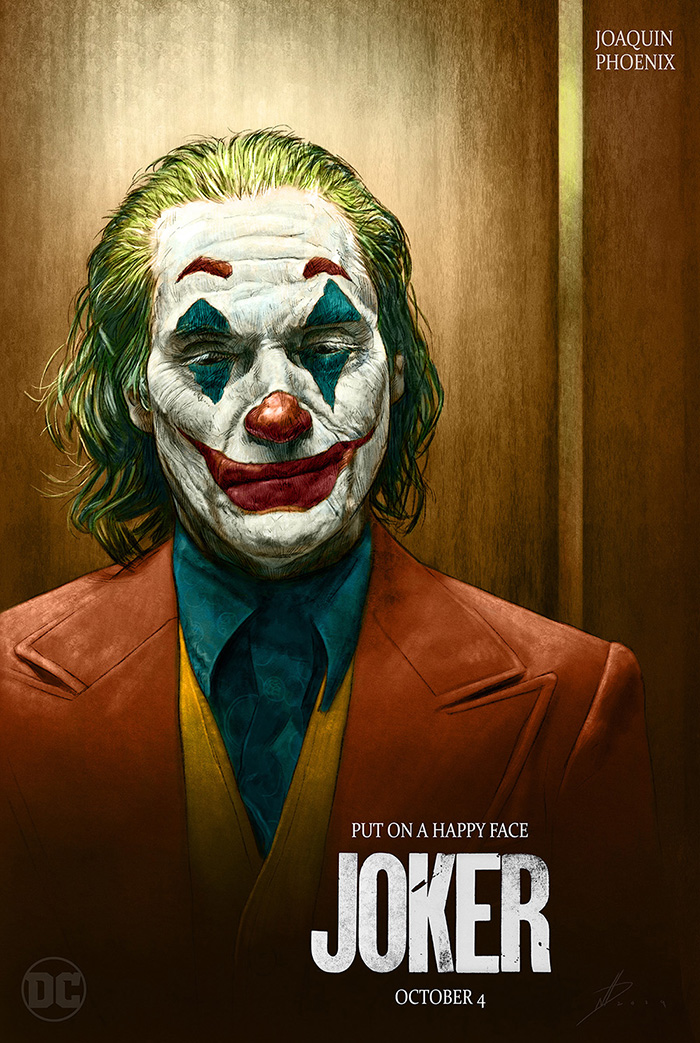
Joker is a film focusing on the origins of the iconic character who has never had in his whole history an agreed-upon backstory. This version of the character is not an interpretation or adaption of any specific comic book or film, but rather something new entirely. Joker sets itself apart from the DCEU, and is basically an Elseworlds story, taking more from the likes of the King of Comedy then from Batman Vs Superman.

The Scorsese influences on display here are undeniable; this lends the film a gritty edge- even more so than Snyder’s DC grit, and that’s saying something. The Joker’s Arthur Fleck could fit into the background of Goodfella’s or The Departed, just as easily as any other DC superhero film. That’s the beauty of this film: it’s incredibly real world while also being fantastical.

The Joker is an unrelentingly harsh film; there are a lot of scenes that will make you feel uncomfortable, maybe even distressed, but it’s all done with a purpose. These scenes heighten the subtext of the film; this idea about what happens to societies most vulnerable people when you spit on them and cast them out. It even ventures into themes of the limits of human endurance — showing the need for greater, more productive discussion and actions towards mental illness.

Joaquin Phoenix plays Arthur to perfection, perhaps being my favourite on-screen version of the Joker to date. You can see his vulnerability both physically and mentally through the early stages of the film, and you do feel bad for him. As the arc progresses, we see him more and more like a monster, but a monster that could have been avoided, had someone noticed sooner.

Phoenix delivers a career-best performance of a man who is coming apart at the seams, Phoenix nails all the mannerisms and emotions of the character perfectly, the naivety, the insanity and the laugh. The laugh is the best Joker laugh put to film; it is both tragic and menacing.

The violence is grisly and direct, and I’m glad of it, as the character in the comics is a very mature, very adult character. If this were a 12, or PG-13 for you Americans, then it would be a disservice to the character- he would effectively be neutered to keep to an age rating. Here his brutality and murderous rage are on full display- it is shockingly visceral.

My one complaint of Joker is that I don’t like some of the things it implies about Joker, or Arthur within this universe, or in DC lore. Some of the cannon events this film alters change the whole DC universe if this were an in-universe title. These changes also feel that they somewhat cheapen the events themselves.

Overall I think this is not only a strong comic book film, but a masterpiece in the crime/ character study genres. I have tried to keep this review as free of spoilers as I can, as I think you should go into the film with no expectations of what it’s going to be. This is my favourite film of 2019 so far, most certainly up there with the likes of John Wick 3, and is something I think you should all see.

5/5

Reviewed by Luke

*I’ve not mentioned the controversy because it’s irrelevant to the nature of the film.

The Problem With Shared Universes

*A cinematic universe for anyone who doesn’t know is when different series of films, as well as other forms of media, all exist within the same world and happen side by side with each other, with the events of one film affecting the others.

We live in a post-Avengers society; Disney and Marvel have proven that franchises can crossover and be instantly profitable. However, only one cinematic universe has done this, as many would say without fault, that is, of course, the MCU. In today’s post, I am going to talk about all the different variants and their issues, as well as the problems with having a shared universe in general.

The MCU is regarded by many as the best-shared universe, a lot of this comes not only from the fact the films are good, but also because they were the first to do it. However, the MCU is also a textbook example of a problem that a lot of shared universes have, and that is that all the films feel very similar. The Marvel formula is something that has been covered a lot, but to briefly sum up, it is the way a lot of, if not all, the Marvel Cinematic Universe films are structured and written- filled with humour and easter eggs. The issue with this formula is that it can stop a lot of the movies from feeling unique and instead makes them feel like a reskin.
The Solution: The MCU won’t change because they make a ton of money, why change that.

Secondly, we have the DCEU, that stands for the DC expanded universe, which is the other major comic book shared universe. Though I loved these films, mostly, they suffer from tonal inconsistencies. In a cinematic universe, all the films have to have similar tones and colour pallets from them to fit together. Removing the audience from this world the formula works in particular cases. Having a mismatch of tones and styles can be and has proven for the DCEU, to be jarring.
The Solution: Either to start afresh and keep to one creative vision or to give up on a shared universe and have everything standalone, with minor crossover

Thirdly we have the now dead Universal Dark Universe, which was going to be all the classic monsters, The Mummy, The Wolf-Man, Dracula, etc. existing side by side. The issue that plagued this universe is that it rushed to have everything done and set up as quickly as possible. To do a shared universe, you need layered characters and dense world-building, these things take time and effort. You can’t just force the shared world to exist- in one outing. Furthermore, Universal got ahead of themselves and planned out an entire slate before their first film had even come out; which was foolhardy, to say the least.

Finally, we have Legendary’s Monsterverse; this is the one with the giant fighting animals Godzilla, King Kong, arguably one of the best-shared universes. The Monsterverse does world-building very well; it has a clear world with rules. The only thing I can fault them for is that because of the world and the lore; they’re sometimes a hard sell for a mainstream audience; in a way, it’s a double-edged sword, hurting them at the box office.

To conclude the point I wanted to make here is that shared universe are hard to do, even harder to do right. While we may want to see our favourite characters interact on the big screen, it often comes at the cost of originality and fresh takes. What’s more, things that are better standalone end up being shoehorned into a more extensive franchise often hurting them in the process, looking at you Ten Cloverfield Lane. However, all the studios want the money that comes with a shared universe, so they won’t stop until they run all their franchises into the ground.

*I didn’t mention the Hasbro Universe, because it hasn’t happened yet when I see the G.I. Joe/ Transformers crossover I will say my thoughts then.
*I also didn’t mention Sony’s Spider-verse because it is in limbo and could go either way at any minute, especially now Disney has Spider-man himself back in the MCU

Once Upon A Time In Hollywood: A Love Letter To Tarantino

Preface: When I first saw this film, I didn’t like it, but after seeing it the second time I have much more of an appreciation for it.

Once Upon A Time In Hollywood, is the 9th film by acclaimed director Quentin Tarantino, and is in a sense a retelling of the real-life Manson Murders; all bit it with a twist, but I’m not going to spoil that here. The film itself reads like a love letter to the Golden Age of Hollywood, as well as to the 1960s.

The plot of the film revolves around three intersecting stories, each focusing on one of the three main cast members, Brad Pitt,( Cliff Booth), Leonardo DiCaprio, (Rick Dalton), and Margot Robbie, (Sharon Tate). Rick’s story focuses on him realising he is past his peak in terms of acting and, needs to adapt his ways to stay relevant. Booth is mainly a supportive figure to Dalton, being there to lend a hand, although his story line does bring about the Manson Family element which adds an exciting spark to the film*.

*I believe knowing about the events of the Manson Murders before going in to see the film, adds a sense of dread to the proceedings, with you knowing it’s just a matter of time before the killings happen; if you don’t know the history the final act of the film can feel like it’s just come out of nowhere.

The third and final main character, Robbie’s Tate is by far the weakest as she is given the least to do, and I didn’t notice this the first time around, but nothing much to say as well; her amount of dialogue compared to Pitt’s and DiCaprio’s is none existent; she mainly exists to dance around to various 60’s tunes and go on drawn-out trips to the movies.

On the flip side of that, the writing and the dialogue for both Booth and Dalton is well done, both of their characters seem like people, they’re relatable and easy to root for. Moreover, one of the final scenes of the film shows the relationship between these two men, in such a perfect away, it’s incredibly effective.

My biggest complaint against the film is the pacing of it. A lot, and I mean 60% + of the scenes feel like they could have been edited down, a lot of them weren’t vital and just served to reinforce and retell us things about the characters we already knew. Adding to this complaint, we only actually see Charles Manson, for one scene; which is incredibly brief. I don’t know if they shot more scenes and they didn’t make it in, but it leaves said scenes feeling oddly out of place.

Overall there are things to like about this film; both leading men are charming, there are some excellent celebrity cameos, but it doesn’t hide the fact that this is one of Tarantino’s weaker efforts.
The man has a stellar catalogue, with the likes of Django Unchained and Inglorious Bastards, but this seems like a mismatch of different things and ideas that don’t come together.
To summaries, I loved 40% of the film, but the other 60% was just too long, too dragged out and, dare I say it too self indulgent.

3/5

Reviewed by Luke