Jojo Rabbit: A Film Like No Other

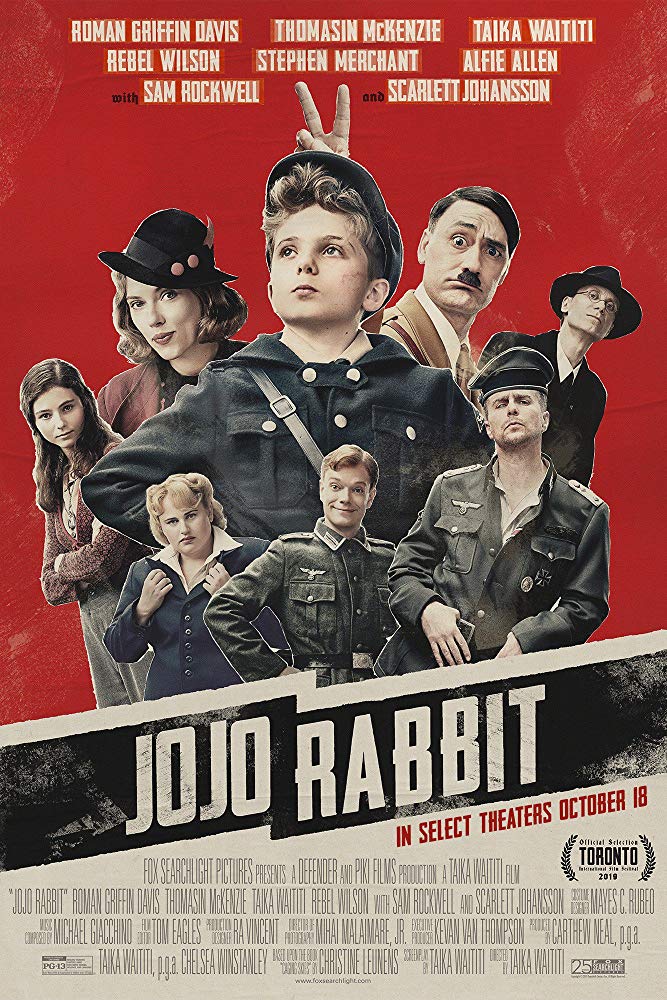
‘Jojo Rabbit’ is a comedy-drama film about a young boy called Jojo (Roman Griffin Davis), in Nazi Germany who has an imaginary friend. His imaginary friend is non-other than the infamous tyrant Adolph Hitler (Taika Waititi). When one day Jojo finds Elsa (Thomasin McKenzie), a young Jewish girl living in his attic and, his life is turned upside down. The film is based on the book ‘Caging Skies’ by Christine Leunens.

Jojo worships Hitler, though it is portrayed more like he is brainwashed, and he dreams of being the perfect German Nazi. However, as the film progress, we learn that Jojo isn’t a monster, rather he is a young boy who wants to belong and, is deeply naive.

However, where this film could have been very dark, it is played for laughs at every turn; with Waititi’s signature blend of humour. This is best shown in the relationship between Jojo and Hitler, Hitler himself is basically a big kid and, likes playing silly games with Jojo; who is often the more mature of the two. This film takes all the lies and, propaganda about Hitler, that paint him as a mythical being and laughs at each one, making them the butt of the joke.

The relationships that Jojo forms with both Elsa, as well as with his mother Rosie (Scarlett Johansson), are both moving and well done. With his relationship with Elsa, you can see Jojo realise more and more that his worldview is incredibly false as he grows to care for her. They look out for each other and, the familial bond they develop is quite touching. However, the scene-stealer in this film is Johansson she plays both the loving mother, as well as someone who is fighting against tyranny really well. When she dies, it is both abrupt and heartbreaking; reflective of the horrors of war.

Another thing this film does so well is it shows the humanity on both sides of the war as it humanises some of the Nazi characters. We should all hate Captain Klenzendorf as he is a Nazi officer but, the film goes for a more nuanced approach and, shows him help to save Jojo and Elsa on two separate occasions, making him far more layered than other Nazi characters previously in cinema.

Overall this is a beautiful film about love and learning to be a better person. It doesn’t paint in absolute of good and bad, rather it serves to try and show the best in everyone and, have a good laugh at the absurdness of the whole situation.

Pros.
The Message.
The Acting.
The Humor.
Johansson’s Performance.

Cons.
This Isn’t Going To Be Everyone’s Cup Of Tea.

5/5

Reviewed by Luke

Operation Finale: The Harshness of a 122 minute runtime, done badly

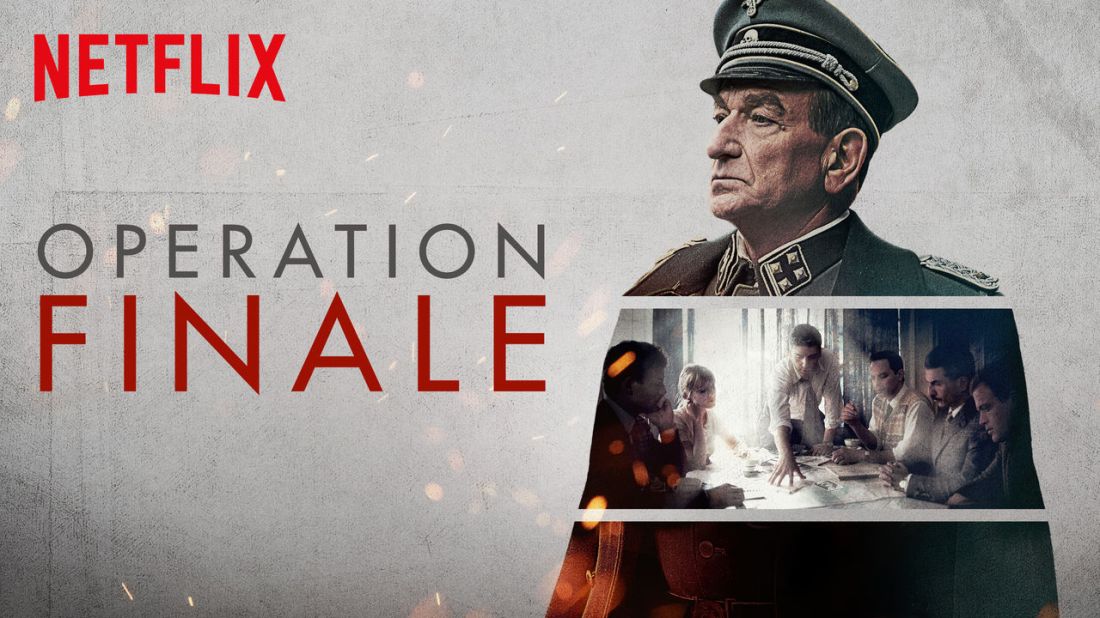
Operation Finale is a historical drama about the hunt for and, eventual capture of infamous Nazi Adolf Eichmann by Israeli Mossad agents; based somewhat on the memoir of Peter Malkin.

The premise for this film is intriguing there aren’t that many films detailing the fallout of World War 2 or, the hunt to capture the remaining Nazi officers who fled. So this one feels unique. However, despite the novelty of the film feeling like something I hadn’t seen before, it still came across as uninspired.

Once the film gets going and, we see the agents in Argentina hunting down and, capturing Eichmann there is a fantastic sense of dread and, tension as if you know something bad is going to happen; with every second before they get on the plane feeling tense.

This is greatly helped by Kingsley’s performance as Eichmann, Kingsley perfectly captures the role flirting with both desperation and, intense malice at times. There is something about Kingsley’s performance that makes your skin crawl.

However, the rest of the cast are so bland and, forgettable, you can’t remember a single one of their names after the credits roll, dragging down the film as a whole. Oscar Issac as Peter Malkin is serviceable, but not in any way good, anyone could have played that role and captured the same lifeless performance that Issac gives and, we know he is capable of giving a good performance. On top of this, we have Nick Kroll, of Uncle Drew and Big Mouth fame, as Rafi Eitan, in this film he plays it straight; he is not the comedic relief. This serious turn from Kroll is in a word jarring: because a lot of the time his performance doesn’t match that of the other actors as he can’t quite land the serious delivery.

The most offensive thing about Operation Finale is its runtime of 122 minutes; which feels oppressively long. The main story of the film might take up about an hour and a half at most; the rest of the film consists of subplots, that I suppose are intended to develop the characters and, their motivations, but instead just drag on and on. Ultimately that is the crux of the issue with this film, it can’t make the audience care about its characters, they remain tepid and, non-substantial throughout the film.

Despite my issues with the film, I am glad it got made as it is an important film and it is nice to see these brave men and women get their moment in the light, however they deserved better than this bland cookie-cutter historical drama treatment.
2.5/5

Horrible Histories, The Movie: Did We Really Need This?

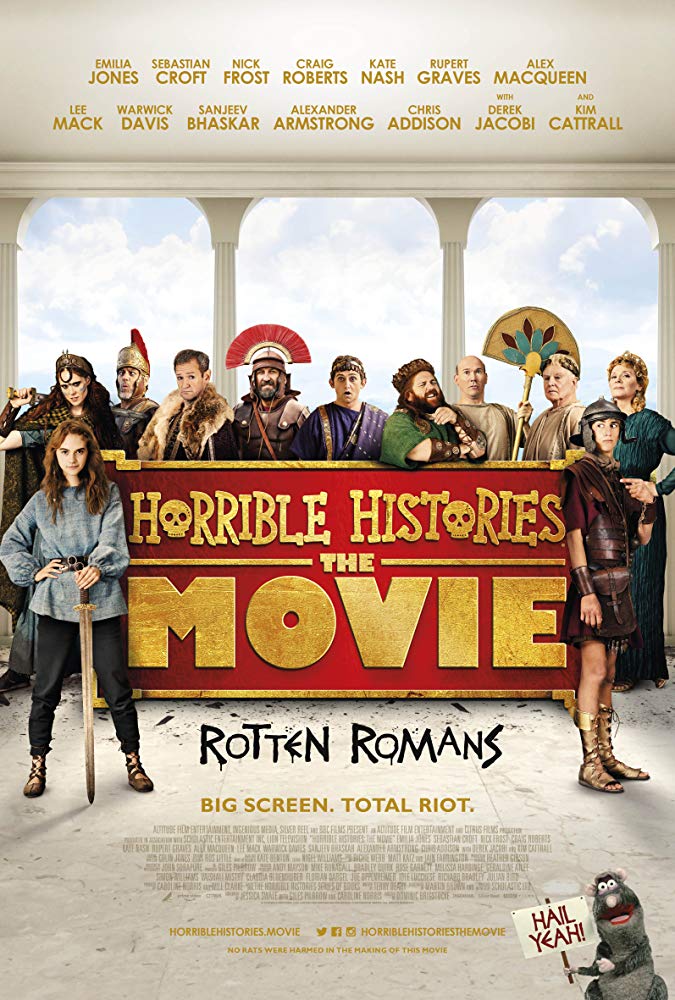
Horrible Histories: The Movie- Rotten Romans is a British historical comedy film, based on the best selling Horrible Histories books and the hit TV series. The plot follows a Celt girl called Orla, (Emilia Jones), and a young Roman boy called Atti, (Sebastian Croft), as they go from captor and captive to unlikely friends, all the while Boudica, (Kate Nash), and her Celtic tribe fight against the Romans.

Since I was young, I’ve been a huge fan of Horrible Histories, the original incarnation of the TV series is still some of if not the finest kids television out there. It is entertaining and informative; with a lot for people of all ages to enjoy. Needless to say, I went into this with pretty high expectations.

Straight off the bat, I was saddened by the fact that most of the original cast from the television show don’t make an appearance; not even a cameo. That certainly hurts the film. However, we do get some excellent newcomers mainly in Glow’s Kate Nash, who here plays British legend Boudica, Nash is incredibly cool and stylish and really sells the character. She steals every scene she is in especially when they do a rendition of the Boudica song from the series.

Therein lies another one of my complaints about the film, it feels too reliant on the TV series, it has many winks and nods to gags and songs that made the original so beloved, which isn’t in itself a bad thing. What makes it a bad thing though is that Horrible Histories the Movie has nothing new, it has nothing to offer besides these winks and nods. Except for Kate Nash’s Boudica, all the new characters we meet in this outing are utterly forgettable, which is a crying shame as the actors themselves are quite talented. Nick Frost and Craig Roberts are both capable of adding a lot to a film, but here feel hamstrung by a weak and predictable script.

The Show is broken up into sketches, these sketches cover everything from Vikings to Victorians, they don’t linger on any one period for too long. That is another thing this film falls prey to the entire runtime is dedicated to the ‘Rotten Romans’, and it becomes apparent after a while that there isn’t enough material to cover this length of time. This lead to long sequences that feel incredibly drawn out, not adding much to the overall plot instead just being boring.

Overall this film is the textbook definition of a missed opportunity, the absence of the original cast is felt strongly, and even a show-stopping performance by Kate Nash can’t change that. It is passable and inoffensive, but if you want to see the masterpiece that is Horrible Histories watch the 2009 series, I promise you won’t be disappointed.

3/5
Review by Luke

The King: All Hail Robert Pattinson

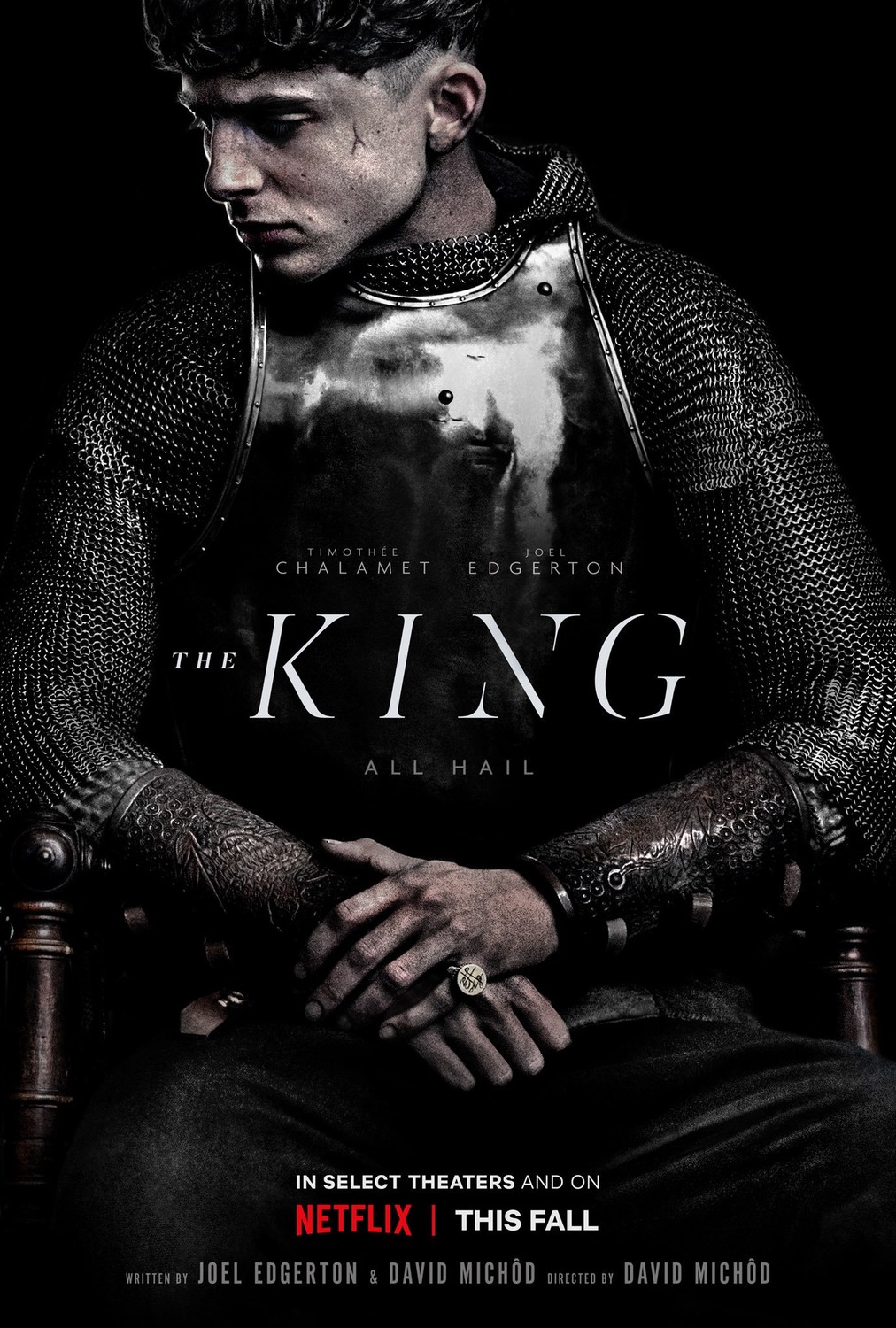
The King is a historical drama based on William Shakespeare’s ‘Henriad’ saga. The plot follows Hal, (Timothee Chalamet), the overlooked son of King Henry IV of England, who ascends the throne. Once there he faces the intrigue of the court as well as a looming war with France.

The King is one of my favourite Netflix originals, mainly because it focuses on a time in British History that isn’t much covered in glossy Hollywood epics. The period itself is fascinating.

The film is long and drawn out, which some people might find boring, but I thought the pacing was used thoughtfully and the plot moved along at a nice pace, focusing on a wide variety of different things. However, the final climactic battle, the Battle of Agincourt, is most likely my favourite sequence of the whole film; being superbly executed and choreographed.

The performances are all fantastic, lead performance excluded, Joel Edgerton makes the most of his short amount of screen time. His Falstaff takes a mentorship role to the young King and, it is incredibly endearing to see their friendship develop.

Likewise, Robert Pattinson’s performance of the villainous The Dauphin is fantastic, he steals the scene every time he is on screen and, my one request of the film would be to see more scenes of him. Pattinson’s accent has generated a lot of discussion surrounding the film, but I for one like it.

What’s more the ending of the film, in which it seems as though the Young King has been manipulated by forces at court, into going to war in France puts the whole film in a brand new context which makes it more enjoyable.

My one issue with the film is that I think Chalamet is miscast, he is one of the weaker members of the cast and, that is clear from the beginning. Moreover, he is also the least memorable part of the film, which is an extreme negative when the film is all about him, overall I think another actor should have been cast.

To conclude The King is a fascinating tale of war and duty set in one of the least covered periods in British History, with some incredibly memorable scenes, such as the balls scene with Robert Pattinson; you will know which I mean. However, a weak performance from the lead actor lessens what this film could have been. That said this is still one of the strongest Netflix originals.

4/5

Reviewed by Luke

Once Upon A Time In Hollywood: A Love Letter To Tarantino

Preface: When I first saw this film, I didn’t like it, but after seeing it the second time I have much more of an appreciation for it.

Once Upon A Time In Hollywood, is the 9th film by acclaimed director Quentin Tarantino, and is in a sense a retelling of the real-life Manson Murders; all bit it with a twist, but I’m not going to spoil that here. The film itself reads like a love letter to the Golden Age of Hollywood, as well as to the 1960s.

The plot of the film revolves around three intersecting stories, each focusing on one of the three main cast members, Brad Pitt,( Cliff Booth), Leonardo DiCaprio, (Rick Dalton), and Margot Robbie, (Sharon Tate). Rick’s story focuses on him realising he is past his peak in terms of acting and, needs to adapt his ways to stay relevant. Booth is mainly a supportive figure to Dalton, being there to lend a hand, although his story line does bring about the Manson Family element which adds an exciting spark to the film*.

*I believe knowing about the events of the Manson Murders before going in to see the film, adds a sense of dread to the proceedings, with you knowing it’s just a matter of time before the killings happen; if you don’t know the history the final act of the film can feel like it’s just come out of nowhere.

The third and final main character, Robbie’s Tate is by far the weakest as she is given the least to do, and I didn’t notice this the first time around, but nothing much to say as well; her amount of dialogue compared to Pitt’s and DiCaprio’s is none existent; she mainly exists to dance around to various 60’s tunes and go on drawn-out trips to the movies.

On the flip side of that, the writing and the dialogue for both Booth and Dalton is well done, both of their characters seem like people, they’re relatable and easy to root for. Moreover, one of the final scenes of the film shows the relationship between these two men, in such a perfect away, it’s incredibly effective.

My biggest complaint against the film is the pacing of it. A lot, and I mean 60% + of the scenes feel like they could have been edited down, a lot of them weren’t vital and just served to reinforce and retell us things about the characters we already knew. Adding to this complaint, we only actually see Charles Manson, for one scene; which is incredibly brief. I don’t know if they shot more scenes and they didn’t make it in, but it leaves said scenes feeling oddly out of place.

Overall there are things to like about this film; both leading men are charming, there are some excellent celebrity cameos, but it doesn’t hide the fact that this is one of Tarantino’s weaker efforts.
The man has a stellar catalogue, with the likes of Django Unchained and Inglorious Bastards, but this seems like a mismatch of different things and ideas that don’t come together.
To summaries, I loved 40% of the film, but the other 60% was just too long, too dragged out and, dare I say it too self indulgent.

3/5

Reviewed by Luke

Journey’s End

Spoilers ahead

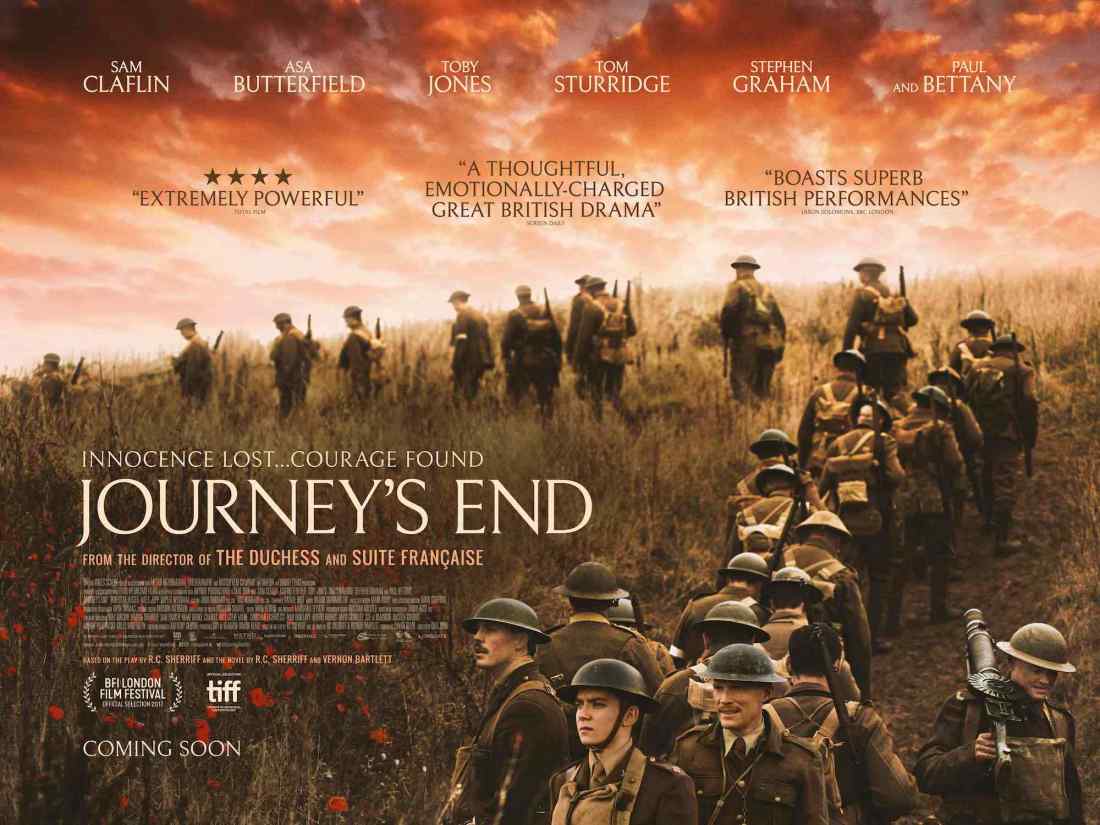
Journey’s End, is a harrowing film about a company of British soldiers that are stationed on the front line in France for 6 days during World War 1. This film is adapted from a play of the same name by R.C Sherriff, so the idea for this film has been around for a while. With the feature film itself being first announced at the British commemoration of WW1 back in 2014. Whilst the idea itself of soldiers on the front line waiting for an attack is fairly generic this film manages to capture all the emotions and the hopelessness the situation itself would bring. The film even in scenes where nothing much is happening, where there might just be a few lines of dialogue, has this overwhelming sense of dread and foreboding; as just like the soldiers themselves you are awaiting the German advance. What the director Saul Dibb achieves so effortlessly is this idea of contrast, this contrast is shown in many different forms throughout the film, eagerness vs hopelessness, naivety vs realism, the heroics and bravery vs the complete senseless loss of life. Through these contrasts the film explores a lot of themes in an intelligent way, not glorifying or overtly patriotic; but honest. The performances here are all standout with Sam Claflin’s Captain Stanhope, being a particular standout. Claflin’s character is haunted by the events he’s lead his company through and is quite noticeably an alcoholic. Stanhope as a character is completely 3 dimensional, as we see him fly through many different emotions such as paranoia, a real strong care for his men shown in quite a few compassionate scenes, as well as a very real sense of fear and doubt. Claflin handles all of these different emotions with complete ease, and never once did I view him as anything other than Captain Stanhope. Paul Bettany’s performance as Lieutenant Osborne is perhaps the heart of the film with him being the one who keeps everyone together and is a friend to both Claflin’s Stanhope and Butterfields Raleigh. Through Bettany’s performance, we see more of Stanhope flaws but we also see the trauma he’s been through to get them. My main criticism of the film, is the raid scene where Bettany’s character dies, during the scene which is one of the emotional peaks of the movie the cinematography is quite jerky and moves around very quickly, (perhaps this was a stylistic choice on the part of the director), which I personally found took me out of the moment and I didn’t quite understand what was going on.  On the whole, the cinematography and both the diegetic and non-diegetic music manage to paint quite an outstanding picture of what life in the trenches was like. Butterfield’s performance as Captain Raleigh is rather one note, personally, I believe he was only used as a contrasting figure to the character to Stanhope so that Raleigh could represent what Stanhope has left behind and will never be again. I believe that this film is a great insight into WW1 and one that doesn’t stray away from the dark pointless nature of war, it covers all the issues surrounding war such as loss and trauma with a well-rounded perspective. The film is at its core a drama film, as there isn’t much action in it when compared to something like 12 Strong, the character interactions and the interpersonal drama is amazing and obviously a result of a well-honed script based off fantastic source material. Overall I think this is a must-see film, as it so accurately shows all facets of war,  as well as focusing on the men behind it really taking its time to develop the characters. Whilst the film is let down by the cinematography in one sequence it doesn’t detract from the overall experience, and Claflin and Bettany are such commanding presences that you will never really notice the underused Butterfield.

4.5/5

Reviewed by Luke.

Darkest Hour

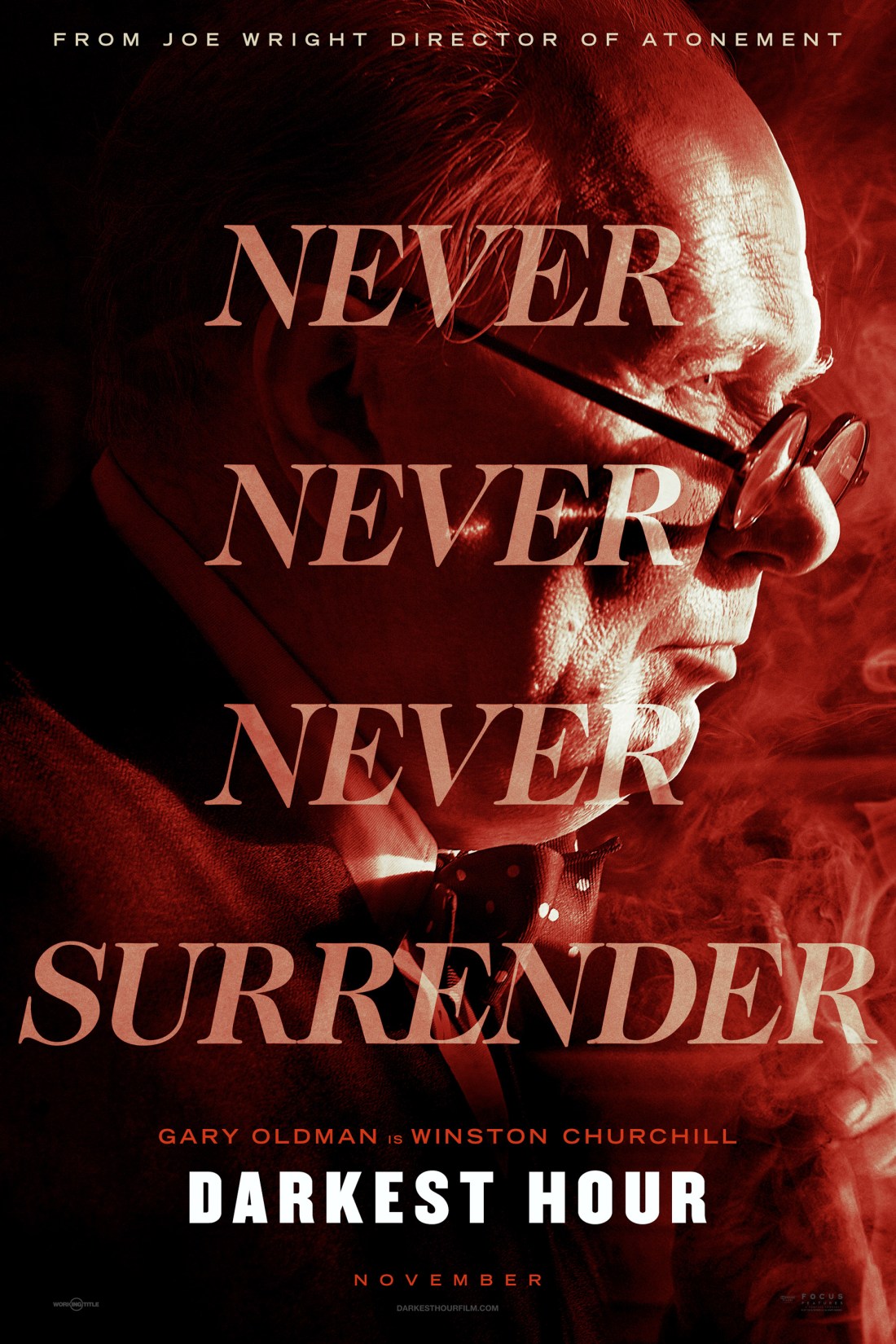
This film chronicles the early period of World War 2, through a time span covering roughly about a month. The period that the movie covers was before the Americans and Russians joined the war effort, a time when the British Empire was at its most vulnerable; and in many ways, this is reflected in the character of Winston Churchill himself. Gary Oldman portrays Churchill, a man synonymous with the British war effort. The director Joe Wright shows us a Churchill who is a far cry from the fearless war-time leader that we have come to know, we see a man who is loathed by his own party and has known many failures. The film acts as both a character study and also a new perspective on the previously trodden WW2 film. There are elements of a cat and mouse struggle throughout the film, with the hierarchy of the Conservative party made up of Lord Halifax, (in an excellent turn by Stephen Dillane), and the previous Prime Minister Neville Chamberlain, (Ronald Pickup) trying to force Churchill to enter into peace talks, when the man himself wants to fight to the bitter end. This film is incredibly accurate in its presentation of figure from the time period, such as Ben Mendelsohn’s King George the 4th, before I went to see this film I had been watching Netflix’s the crown which featured both King Geroge the 4th and Winston Churchill, and I had loved the job Jared Harris had done playing the late king but Ben Mendelsohn’s performance here made me completely forget about Harris’s iteration.  The film despite it’s PG age rating doesn’t stray away from the horrors of war with a Calais scene showing the sacrifice made and provoking an emotional response from anyone who sees it. It is in creating that emotional significants and capturing ideals and patriotism, that make this film as great as it is. Whether it is through Lilly James’s Elizabeth Layton, who experinces the horrors of war and carries on, or whether it is shown through the British public who have a bitter resolve to never surrender to Hitler no matter what. This film  has an air of hopelessness with the British position often looking bleak and that brings with it many sad moments, but it is with that the film also brings with it a sense of optimism, a sense that through the bad we can endure and come out stronger. Also Joe Wright dedicates quite a bit of screen time to exploring Churchill relationship with his wife Clementine, (played here by Kristin Scott Thomas), is shown to be the rock that held Churchill together when he most needed it, this emotional softer element of the film helps to keep it varied, and develops the characters in quite a satisfying way.  Overall this film is a well paced, well acted, well directed film and it deserves all the awards recognition it’s getting. This film inspired a strong sense of patriotism in me, what more can I say; except this film would make an excellent double feature with last years Dunkrik.

5/5

Reviewed by Luke