
Coco: A Pixar film without a Soul

British Cinema has been around since 1888, British Horror nearly as long. For years Hammer Horror was the driving force in national terror, with the likes of the Christopher Lee starring Dracula films being international classics. However, as they reached the end of the 20th century, their influence began to wain. British Cinema as a whole began to diminish, yet there was still lifeblood in the old industry, and we got British Rave Culture Cinema with the likes of Danny Boyle leading the way.
However, internationally British Cinema and British horror wasn’t what it had been, becoming a series of tired, repetitive cliches. Then came along one man who would be instrumental in raising both aspects of British film to what they had been in the golden years; that man was Edgar Wright.
Wright began out directing the cult British sitcom Spaced, the show that would launch the career of his long-time collaborator, Simon Pegg. From there Wright would go on to head the Cornetto Trilogy, Shaun of the Dead, Hot Fuzz and The World’s End, three solidly good films.
With Shaun of the Dead, Wright resurrected British Horror and brought it back into the mainstream consciousness. British Horror had endured the end of Hammer and had kept going, but had become far more niche than it used to be; Shaun of the Dead changed all that. What is on its surface a silly film about a group of friends fighting off the Zombie Apocalypse, beneath the surface lay the hidden depths of a broader social commentary. Shaun of The Dead was so beloved domestically that it brought British eyes back to British Horror, and more impressively brought the eyes of the World to Edgar Wright.
The idea of Auteur Cinema is that a director can become so prolific that they begin to influence the very industry itself, their films are instantly recognisably and sell because of the Director name attached rather than the film itself, think Wes Craven or, John Carpenter; for British Cinema Edgar Wright was our Auteur.
Following on from the cult success of Shaun of the Dead, Wright released Hot Fuzz which instead of mocking the Horror genre mocked the Cop Action Film genre, this was even more of a success. One of the reasons at least to me that Wright’s work is so prolific is that he plays off the stereotypes the rest of the World has about Brits, in a way only a Brit could do.
Whatsmore, Wright highlighted to the World some of the best British actors of that generation, introducing us to the likes of Simon Pegg, Nick Frost, to name a few. That eye for talent has stayed with him throughout his career and doesn’t look to be going anywhere soon.
To conclude Wright’s importance to Cinema can’t be understated, he has brought the eyes of the British public as well as the World back to British Cinema and has shown what we are capable of. Even know as he has become more of a Hollywood director, he is still an inspiration and shows how British Cinema is still relevant in 2019.
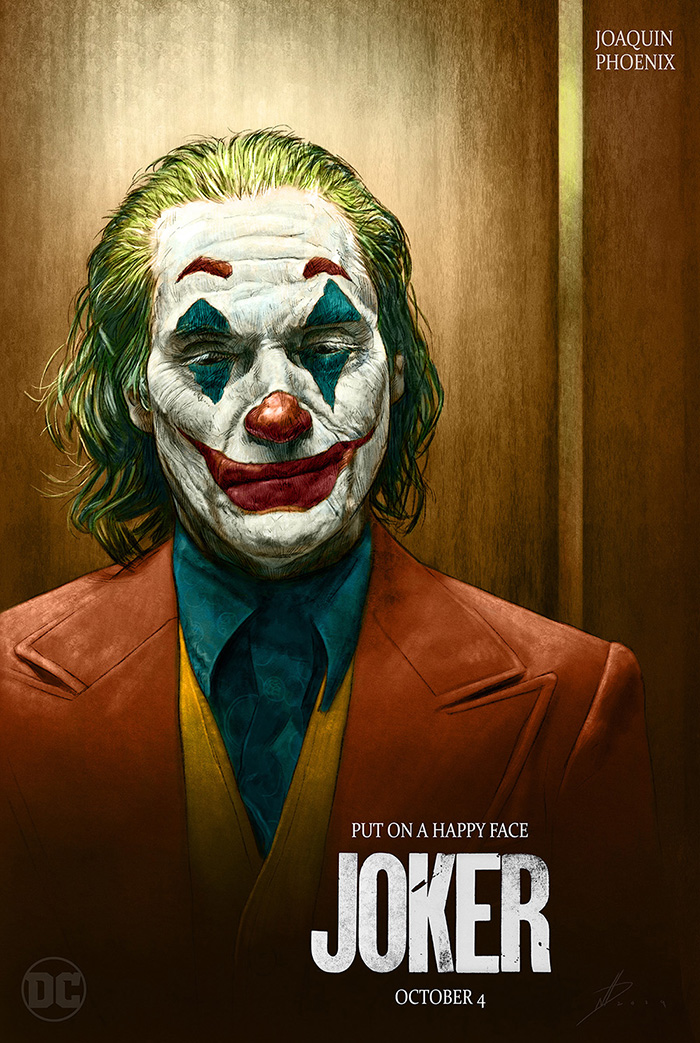
Joker is a film focusing on the origins of the iconic character who has never had in his whole history an agreed-upon backstory. This version of the character is not an interpretation or adaption of any specific comic book or film, but rather something new entirely. Joker sets itself apart from the DCEU, and is basically an Elseworlds story, taking more from the likes of the King of Comedy then from Batman Vs Superman.
The Scorsese influences on display here are undeniable; this lends the film a gritty edge- even more so than Snyder’s DC grit, and that’s saying something. The Joker’s Arthur Fleck could fit into the background of Goodfella’s or The Departed, just as easily as any other DC superhero film. That’s the beauty of this film: it’s incredibly real world while also being fantastical.
The Joker is an unrelentingly harsh film; there are a lot of scenes that will make you feel uncomfortable, maybe even distressed, but it’s all done with a purpose. These scenes heighten the subtext of the film; this idea about what happens to societies most vulnerable people when you spit on them and cast them out. It even ventures into themes of the limits of human endurance — showing the need for greater, more productive discussion and actions towards mental illness.
Joaquin Phoenix plays Arthur to perfection, perhaps being my favourite on-screen version of the Joker to date. You can see his vulnerability both physically and mentally through the early stages of the film, and you do feel bad for him. As the arc progresses, we see him more and more like a monster, but a monster that could have been avoided, had someone noticed sooner.
Phoenix delivers a career-best performance of a man who is coming apart at the seams, Phoenix nails all the mannerisms and emotions of the character perfectly, the naivety, the insanity and the laugh. The laugh is the best Joker laugh put to film; it is both tragic and menacing.
The violence is grisly and direct, and I’m glad of it, as the character in the comics is a very mature, very adult character. If this were a 12, or PG-13 for you Americans, then it would be a disservice to the character- he would effectively be neutered to keep to an age rating. Here his brutality and murderous rage are on full display- it is shockingly visceral.
My one complaint of Joker is that I don’t like some of the things it implies about Joker, or Arthur within this universe, or in DC lore. Some of the cannon events this film alters change the whole DC universe if this were an in-universe title. These changes also feel that they somewhat cheapen the events themselves.
Overall I think this is not only a strong comic book film, but a masterpiece in the crime/ character study genres. I have tried to keep this review as free of spoilers as I can, as I think you should go into the film with no expectations of what it’s going to be. This is my favourite film of 2019 so far, most certainly up there with the likes of John Wick 3, and is something I think you should all see.
5/5
Reviewed by Luke
*I’ve not mentioned the controversy because it’s irrelevant to the nature of the film.
Fandom means different things to different people, to a studio, a fan can be someone who helps to spread the good word about your film. Conversely, they can be an antagonist saying bad things about your movie online or, on social media. To fans themselves, the word reflects their dedication to something that means a lot to them, be it Stars Wars, Marvel or DC.
Fans are very passionate about the things they love, and their money and support can help a series thrive. We never would’ve got the MCU if it wasn’t for the fans who love it and see all the entries. In this regard, fans are a good thing, a thing every franchise wants to gather and accumulate.
However fans can also be testy; if the creative vision for a franchise or TV show takes a turn from what fans expect or want they will be very vocal about it, starting online discourse and perhaps even boycotts. In this respect, fandoms can be very entitled. Though fan money helps films to do well at the box office, fans are not entitled to have their own way or have what they want to see validated. Studios will do what they want, and fans can accept it or not.
That said, studios will do well to keep fans happy and onside because they can be great friends to have or terrible enemies to try and counteract.
Fandoms can be off-putting for more casual, mainstream audiences. There can be an element of gatekeeping to them with fans believing themselves to be better than other fans, based on some arbitrary little fact, like who has seen the film more, or who has the most figurines.
An example of the sort of thing I’m talking about was the bullying of Kelly Marie-Tran, the StarWars actress who left social media after harassment from fans, simply because they didn’t like her character in the last StarWars film.
However, fans have also positively impacted franchises, having helped to save cancelled shows, and help them find homes elsewhere. Thanks to active fan campaigns, my favourite TV program, Chuck was able to avoid cancellation and find a sponsor.
Overall, fandoms and the fans themselves are something that should always be kept in mind, but they also need to see where there is a line between wanting the best for something you love and destroying your own favourite franchise through sheer bile.
Everyone should try and be nice to each other online whether you like Playstation or, Xbox or, Marvel or, DC. We are all fans.

*A cinematic universe for anyone who doesn’t know is when different series of films, as well as other forms of media, all exist within the same world and happen side by side with each other, with the events of one film affecting the others.
We live in a post-Avengers society; Disney and Marvel have proven that franchises can crossover and be instantly profitable. However, only one cinematic universe has done this, as many would say without fault, that is, of course, the MCU. In today’s post, I am going to talk about all the different variants and their issues, as well as the problems with having a shared universe in general.
The MCU is regarded by many as the best-shared universe, a lot of this comes not only from the fact the films are good, but also because they were the first to do it. However, the MCU is also a textbook example of a problem that a lot of shared universes have, and that is that all the films feel very similar. The Marvel formula is something that has been covered a lot, but to briefly sum up, it is the way a lot of, if not all, the Marvel Cinematic Universe films are structured and written- filled with humour and easter eggs. The issue with this formula is that it can stop a lot of the movies from feeling unique and instead makes them feel like a reskin.
The Solution: The MCU won’t change because they make a ton of money, why change that.
Secondly, we have the DCEU, that stands for the DC expanded universe, which is the other major comic book shared universe. Though I loved these films, mostly, they suffer from tonal inconsistencies. In a cinematic universe, all the films have to have similar tones and colour pallets from them to fit together. Removing the audience from this world the formula works in particular cases. Having a mismatch of tones and styles can be and has proven for the DCEU, to be jarring.
The Solution: Either to start afresh and keep to one creative vision or to give up on a shared universe and have everything standalone, with minor crossover
Thirdly we have the now dead Universal Dark Universe, which was going to be all the classic monsters, The Mummy, The Wolf-Man, Dracula, etc. existing side by side. The issue that plagued this universe is that it rushed to have everything done and set up as quickly as possible. To do a shared universe, you need layered characters and dense world-building, these things take time and effort. You can’t just force the shared world to exist- in one outing. Furthermore, Universal got ahead of themselves and planned out an entire slate before their first film had even come out; which was foolhardy, to say the least.
Finally, we have Legendary’s Monsterverse; this is the one with the giant fighting animals Godzilla, King Kong, arguably one of the best-shared universes. The Monsterverse does world-building very well; it has a clear world with rules. The only thing I can fault them for is that because of the world and the lore; they’re sometimes a hard sell for a mainstream audience; in a way, it’s a double-edged sword, hurting them at the box office.
To conclude the point I wanted to make here is that shared universe are hard to do, even harder to do right. While we may want to see our favourite characters interact on the big screen, it often comes at the cost of originality and fresh takes. What’s more, things that are better standalone end up being shoehorned into a more extensive franchise often hurting them in the process, looking at you Ten Cloverfield Lane. However, all the studios want the money that comes with a shared universe, so they won’t stop until they run all their franchises into the ground.
*I didn’t mention the Hasbro Universe, because it hasn’t happened yet when I see the G.I. Joe/ Transformers crossover I will say my thoughts then.
*I also didn’t mention Sony’s Spider-verse because it is in limbo and could go either way at any minute, especially now Disney has Spider-man himself back in the MCU
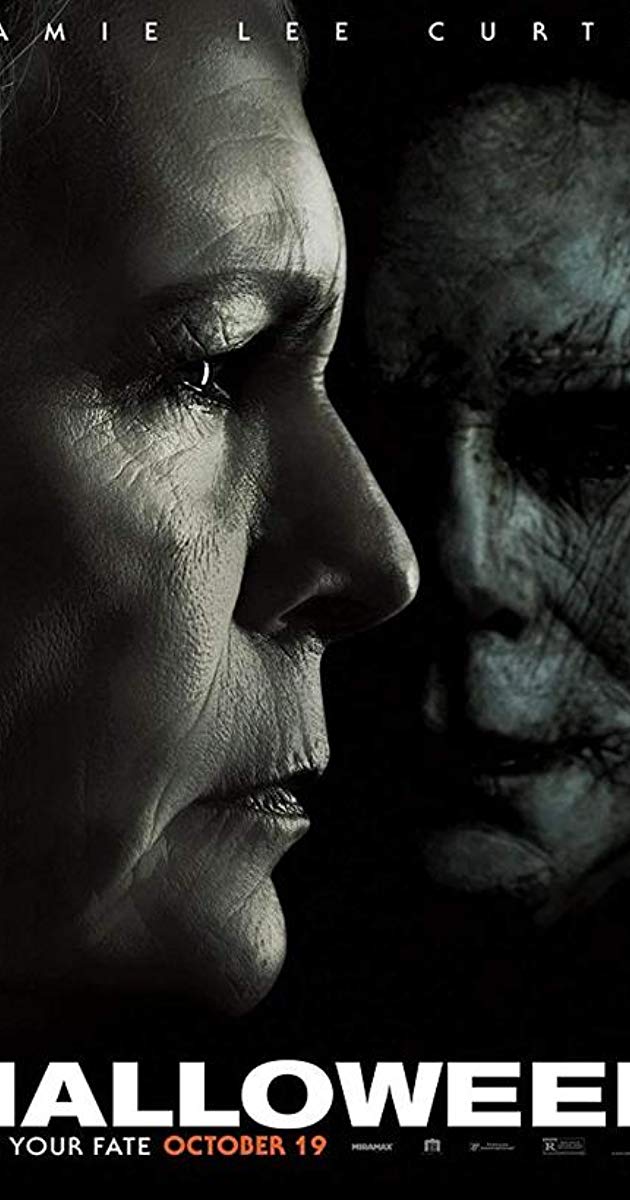
A ‘Slasher’ film for those of you who don’t know is a type of horror film usually focusing on a group of people, in most cases teens, who are hunted down one by and one and killed. Sometimes this can be done with the standard escaped lunatic trope, Halloween the original, or sometimes the killer can have more of a supernatural bend, like Freddy from the Nightmare on Elm Street series.
The Slasher sub-genre has been around in one form or another for decades, stretching all the way back to the 1960 release of Alfred Hitchcock’s Psycho. The film’s villain, Norman Bates, is the first example we see of what would become the horror staple slasher. Following on from this we had the release of Black Christmas, which is getting a 2019 remake, and the Texas Chainsaw Massacre, both released in 1974; this kicked the sub-genre off, and proved that these sort of films was where the horror was heading.
The film that would go on to solidify the identity of what a Slasher film can and can’t be, as well as bring about the trope of the ‘Final Girl’, was John Carpenters Halloween; this is seen as the first of the modern slashers and would become the template for what other horror movies and franchises would do down the line.
The 80s were the prime time for Slasher horror, with the release of Friday the 13th at the end of the 70s going into the 80s as well as more from the Halloween franchise, and a little film called Nightmare on Elm Street. All of these films put their spin on the slasher formula, with the 1980s release of Child’s Play being the most novel making the evil slasher a doll. However, franchise fatigue was beginning to set in.
Over the 1980s the market had become saturated with Slasher horror and audiences were starting to get sick of it. The big franchises had become more and more silly, as a way to try and keep the concept new and exciting; here’s looking at you Friday the 13th. As such, when the 1990s rolled around, a film was released which exposed as well as poked fun at all of the sub-genres rules and tropes; this film was Wes Craven’s Scream.
Scream was released to massive applause and praise, with it almost being a parody, but still remaining scary, and most importantly innovative. The release of Scream helped to breath new life into the Slasher genre, but this was only short-lived. With more schlocky slasher films like Wrong Turn and Hatchet being made in this brief window, but all of this was not enough to save the genre; as we reached the end of the 90s, the Slasher horror was on its way out. Another contributing factor in this decline was the late 90s release of The Blair Witch Project, which pushed horror cinema in a completely different direction, found footage.
Throughout the 2000s the big Slasher franchises continued to release films, whether reboots or, sequels no one asked for and a lot of them came out to minimal fanfare and even fewer ticket sales. All hope for Slasher movies coming back to the forefront of horror cinema seemed lost. Then the news was announced that Danny McBride, know for his comedy roles, wanted to write a new entry for the Halloween series, this film would ignore all the terrible sequels that followed the original; when the movie came out it was met with praise at every turn and made a large amount of money for the studio; naturally two sequels to this film were announced thereafter. Now at the time of writing there is talk of a new Friday the 13th film as well as a Nightmare on Elm Street film, and though there still are terrible Slasher movie sequels being released, 2019’s Child’s Play and the Leatherface origin story, the Slasher genre still has one last gasp in its lungs and, one last scare to give.
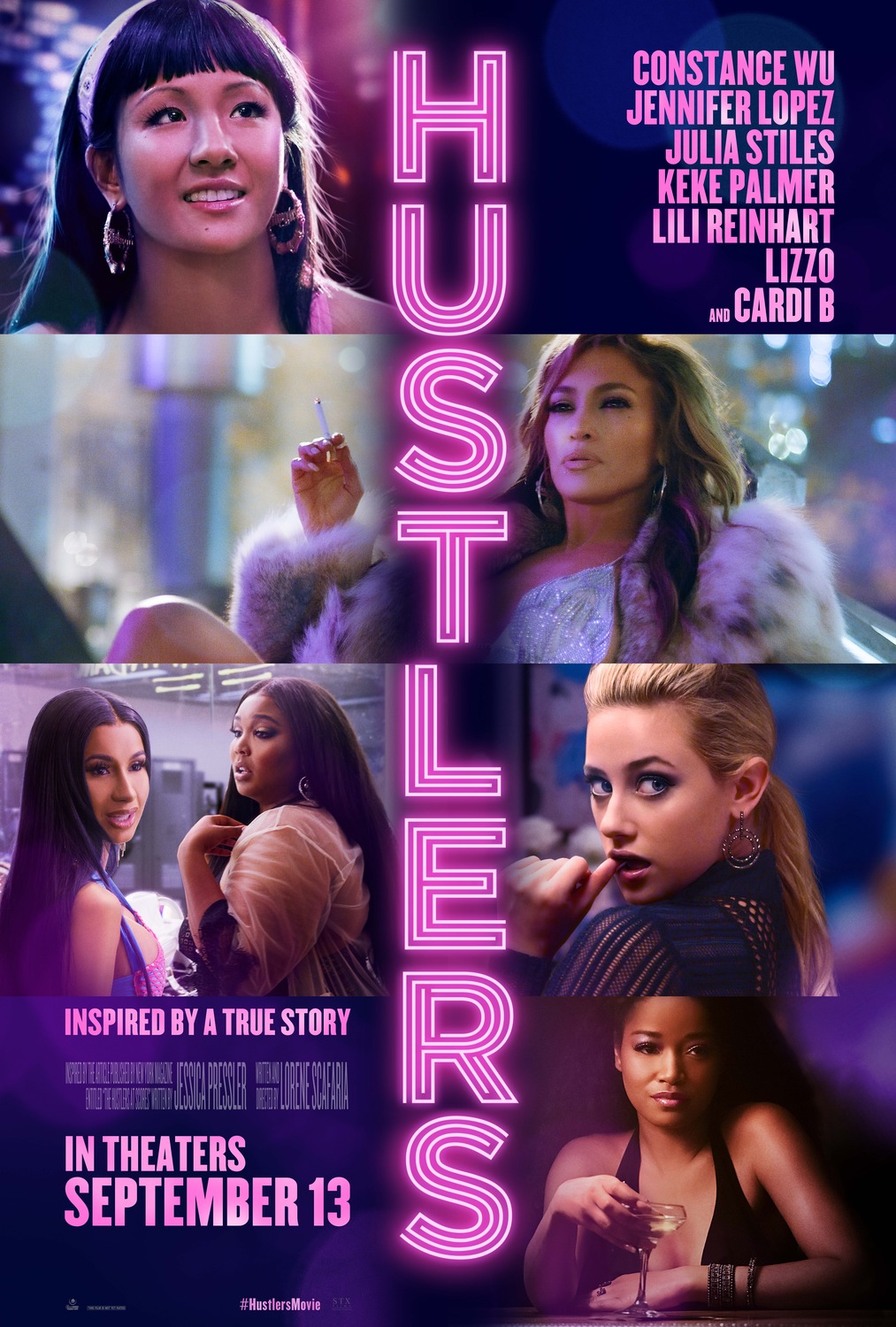
Hustlers is a 2019 crime thriller film, about a group of strippers that after the 2008 financial crisis decide to start drugging and robbing their clients to make some extra cash; apparently based on real events.
First things first, the film is handled tastefully, others who have reviewed it says it shows life as a stripper accurately, rather than overly glamorising it; which some movies do. At no point did the film become vulgar, or pervy; which is something that this film if done differently, could have been in danger of.
The main plot of the film revolves around Destiny, (Constance Wu), as a new girl in this particular strip club, who needs to make some money to pay for her grandmother’s debts. Enter Ramona, (Jennifer Lopez), a seasoned pro who knows how to make money and get what she wants. What then follows is a dive into the extreme as the girl’s actions become more and more sinister, and Ramona and Destiny become more and more at odds. On the whole, the film’s plot is quite novel as there haven’t been many crime films from the woman’s point of view.
Hustlers is Jennifer Lopez’s movie, as though she isn’t the main character, she is the most interesting and compelling. Lopez gives a hell of a performance and can switch between a caring mother and friend, to someone who will do whatever it takes to get what she wants. There has been talk comparing Lopez’s role in this to Matthew McConaughey’s character in Magic Mike, and if this is true than Hustlers might mark the beginning of a renaissance in Lopez’s acting career; she might even win an Oscar.
That is all the positives I can say about the film.
Other than Lopez there are a large amount of other supporting characters, such as Annabelle, (Lili Reinhart of Riverdale fame), all of these characters aren’t fleshed out or, developed beyond one or two memorable traits. In the case of Reinhart her gimmick, and that truly is an apt choice of word, is that she is sick whenever she is stressed and that she has a bad home life, those are the only two things you know about her character; so a developed supporting cast is something you can’t find here.
In my opinion, the main issue with Hustlers is Constance Wu; she is incredibly unlikable and doesn’t work as the main character we are supposed to root for. She is given various traits to make her more sympathetic, but all they seem to do is reinforce just how unlikable she is. I don’t know if she is just upstaged by Jennifer Lopez’s electrifying performance, but to me, Wu was incredibly miscast.
What’s more and it needs to be said, the film doesn’t view men in a good light at all, even one in the third act who is supposed to be sympathetic he is still treated with contempt; that said, though in the context of the film it makes sense why they have this view. At no point does it feel forced in, it makes sense from the character motivations; it just something that needs to be talked about in regards to this film.
Overall the film is worth seeing for Jennifer Lopez’s fantastic performance alone; it is just a shame the rest of the cast can’t live up to her. An average to good crime film.
3/5
Reviewed by Luke

Horror cinema has been around for decades, and over the years it has grown in popularity more and more, to the point that now when IT chapter 2 comes out, it can be a huge hit. I want to talk about why that is, and how horror has gone from a very niche thing to rising to prominence in mainstream culture; then I’ll touch on my thoughts for IT chapter 2.
Horror Cinema has always had a dedicated audience whether its kids and teenagers going to see matinees back in the 50s and 60s, to the rise of Hammer Horror. However, it has never been a genre that Studios have seen as viable for a broad audience, as it forgoes a lot of the profitable demographics. The reason for this is that not everyone likes to be scared, unlike comedy that can appeal to a lot of people, the desire to be scared and in effect horror, in general, is far more niche. Furthermore, horror can offend people they may not think that a film showing such a thing, should be viewed.
Despite that in recent years with the rise of giants like Blumhouse and A24, horror is very much in vogue; it continues to rise and rise with more and more people seeing it as not only profitable but also a creatively free genre, with marketing agencies and big studios realising there is a lot of money to be made off the dedicated fan base that there has always been for horror.
That brings us to the film I am going to cover today, IT Chapter 2.
Chapter 2 carries on from the 2017 release of IT, based off the Stephen King book of the same name, about an entity that preys on the townspeople of Derry, Maine; every 27 years. Where the first chapter focused on the Losers Club, the main protagonists, as children, Part 2 sees them returning as adults when Pennywise the Dancing Clown, the before mentioned entity, awakens from his slumber; to have one final showdown.
I believe in many ways, this film was not as good as the first chapter and a far cry from the 90s miniseries, but it was never going to be. IT Chapter 2 suffered from something a lot of big films do these days, that is being overhyped, these films get talked about and talked about to such an extent that they have to be a perfect film otherwise people are going to feel disappointed, and to a degree cheated; very few films can live up to this standard.
My thoughts on the film can be summed up like this, for a movie that runs for nearly 3 hours, it feels rushed. A lot of key scenes, in terms of character development, from the book are left out; such is the issue with trying to stuff a mammoth book into two films. Adding to this fact, and making it all the worse, is that this film suffers from severe pacing issues. Whilst there are elements of comedy in the original novel it is never front and centre, conversely in this film, there are scenes where comedy is artificially forced in, why this is done is beyond me as it takes away from any sort of tension.
Additionally, though the main characters are well cast and all the actors do a good job, Pennywise, for many people the selling point of these films, is mostly underused, with him being reserved mainly for the final act.
This leaves us with a lot of boring scenes of the Losers Club members walking the streets of Derry and reminiscing about their childhoods, with the occasional jump-scare put in to remind you, that although you may have forgotten, you’re watching a horror film.
Ultimately though there are good aspects, this film feels rushed and also overly drawn out at the same time, and that is something that ruins the movie overall; with it needing a tighter focus.
3/5
Reviewed by Luke

Preface: When I first saw this film, I didn’t like it, but after seeing it the second time I have much more of an appreciation for it.
Once Upon A Time In Hollywood, is the 9th film by acclaimed director Quentin Tarantino, and is in a sense a retelling of the real-life Manson Murders; all bit it with a twist, but I’m not going to spoil that here. The film itself reads like a love letter to the Golden Age of Hollywood, as well as to the 1960s.
The plot of the film revolves around three intersecting stories, each focusing on one of the three main cast members, Brad Pitt,( Cliff Booth), Leonardo DiCaprio, (Rick Dalton), and Margot Robbie, (Sharon Tate). Rick’s story focuses on him realising he is past his peak in terms of acting and, needs to adapt his ways to stay relevant. Booth is mainly a supportive figure to Dalton, being there to lend a hand, although his story line does bring about the Manson Family element which adds an exciting spark to the film*.
*I believe knowing about the events of the Manson Murders before going in to see the film, adds a sense of dread to the proceedings, with you knowing it’s just a matter of time before the killings happen; if you don’t know the history the final act of the film can feel like it’s just come out of nowhere.
The third and final main character, Robbie’s Tate is by far the weakest as she is given the least to do, and I didn’t notice this the first time around, but nothing much to say as well; her amount of dialogue compared to Pitt’s and DiCaprio’s is none existent; she mainly exists to dance around to various 60’s tunes and go on drawn-out trips to the movies.
On the flip side of that, the writing and the dialogue for both Booth and Dalton is well done, both of their characters seem like people, they’re relatable and easy to root for. Moreover, one of the final scenes of the film shows the relationship between these two men, in such a perfect away, it’s incredibly effective.
My biggest complaint against the film is the pacing of it. A lot, and I mean 60% + of the scenes feel like they could have been edited down, a lot of them weren’t vital and just served to reinforce and retell us things about the characters we already knew. Adding to this complaint, we only actually see Charles Manson, for one scene; which is incredibly brief. I don’t know if they shot more scenes and they didn’t make it in, but it leaves said scenes feeling oddly out of place.
Overall there are things to like about this film; both leading men are charming, there are some excellent celebrity cameos, but it doesn’t hide the fact that this is one of Tarantino’s weaker efforts.
The man has a stellar catalogue, with the likes of Django Unchained and Inglorious Bastards, but this seems like a mismatch of different things and ideas that don’t come together.
To summaries, I loved 40% of the film, but the other 60% was just too long, too dragged out and, dare I say it too self indulgent.
3/5
Reviewed by Luke

Summer 2019 has, in terms of film, been one of the most disappointing in recent memory. We’ve seen unwanted remakes and reimaginings; beloved series shoot themselves in the head, looking at you Men In Black International and, your genius decision to not bring Will Smith back. Overall Summer 2019 has been in a word- meh.
The highlights would probably include, Brightburn for sheer originality, Toy Story 4 for not being a blatant cash grab and, Spider-man Far From Home, which let’s face it is only really cared about now because it might be the last one in the MCU.
Horror was in pretty good form over the summer though, with Scary Stories to Tell in the Dark and Midsommar both being fantastic films, sadly the horror front was let down by the lacklustre Annabelle Comes Home from the Conjuring Universe, but at least 2 out of 3 isn’t bad.
However, one film stood above all as the best film of the summer, at least to me, that film was Yesterday. Yesterday is a British ‘Feel Good’ Romantic Comedy, focusing on talented but, overlooked musician Jack Malik, (Himesh Patel), as he, after a bike crash, wakes up in a world where no one remembers the Beatles, except him and two others. What follows is Jack’s rise to fame as he takes credit for writing and singing all of the Beatles most famous songs, along the way he learns what’s important to him, and that fame isn’t all it’s cracked up to be.
Though the premise, Beatle-less world aside, has been done a million and one times before, there is something about Yesterday, so endearing and undeniably positive, that you can’t help but smile. It hits on a lot of different emotional cores and leaves you happier than when you went in; there is no doubt about that.
The film is well-executed and planned out, with each musical sequences feeling needed and relevant to the plot of the film, rather than just feeling like it’s there to be “remember this song”, as so many other musicals do. This goes to show that Director Danny Boyle hasn’t lost his streak for making great films, said streak brought us the likes of Trainspotting 1 and 2 and is still very present here.
A significant plot point of the film focuses on the will they won’t they, relationship between Jack and his childhood best friend Ellie, (Lilly James). The chemistry between James and Patel is palpable, which makes the eventual relationship not only believable but, also one you can’t help to root for and, become invested in. The interesting twist on the standard unrequited or, overlook love angle here is that it’s James’ Ellie who is madly in love with Jack, but he can’t see it and, thinks they are just friends. This twist on the standard gender roles this story angle usually has is fascinating and, something more films should do.
Finally, the film’s music is infectious, even if you don’t like or, for some reason don’t know the Beatles, their music is used in such a heartfelt and touching way here; that you can’t help but, sing along. Yesterday is a love letter to the Beatles and to music in general and, that fact shines brightly in every scene.
If you haven’t already, you should see this film, as I can guarantee it will put a smile on your face and, make just a little bit happier.
5/5
Review by Luke
 Another Millennial Reviewer
You must be logged in to post a comment.