Once Upon A Time In Hollywood: A Love Letter To Tarantino

Preface: When I first saw this film, I didn’t like it, but after seeing it the second time I have much more of an appreciation for it.

Once Upon A Time In Hollywood, is the 9th film by acclaimed director Quentin Tarantino, and is in a sense a retelling of the real-life Manson Murders; all bit it with a twist, but I’m not going to spoil that here. The film itself reads like a love letter to the Golden Age of Hollywood, as well as to the 1960s.

The plot of the film revolves around three intersecting stories, each focusing on one of the three main cast members, Brad Pitt,( Cliff Booth), Leonardo DiCaprio, (Rick Dalton), and Margot Robbie, (Sharon Tate). Rick’s story focuses on him realising he is past his peak in terms of acting and, needs to adapt his ways to stay relevant. Booth is mainly a supportive figure to Dalton, being there to lend a hand, although his story line does bring about the Manson Family element which adds an exciting spark to the film*.

*I believe knowing about the events of the Manson Murders before going in to see the film, adds a sense of dread to the proceedings, with you knowing it’s just a matter of time before the killings happen; if you don’t know the history the final act of the film can feel like it’s just come out of nowhere.

The third and final main character, Robbie’s Tate is by far the weakest as she is given the least to do, and I didn’t notice this the first time around, but nothing much to say as well; her amount of dialogue compared to Pitt’s and DiCaprio’s is none existent; she mainly exists to dance around to various 60’s tunes and go on drawn-out trips to the movies.

On the flip side of that, the writing and the dialogue for both Booth and Dalton is well done, both of their characters seem like people, they’re relatable and easy to root for. Moreover, one of the final scenes of the film shows the relationship between these two men, in such a perfect away, it’s incredibly effective.

My biggest complaint against the film is the pacing of it. A lot, and I mean 60% + of the scenes feel like they could have been edited down, a lot of them weren’t vital and just served to reinforce and retell us things about the characters we already knew. Adding to this complaint, we only actually see Charles Manson, for one scene; which is incredibly brief. I don’t know if they shot more scenes and they didn’t make it in, but it leaves said scenes feeling oddly out of place.

Overall there are things to like about this film; both leading men are charming, there are some excellent celebrity cameos, but it doesn’t hide the fact that this is one of Tarantino’s weaker efforts.
The man has a stellar catalogue, with the likes of Django Unchained and Inglorious Bastards, but this seems like a mismatch of different things and ideas that don’t come together.
To summaries, I loved 40% of the film, but the other 60% was just too long, too dragged out and, dare I say it too self indulgent.

3/5

Reviewed by Luke

Journey’s End

Spoilers ahead

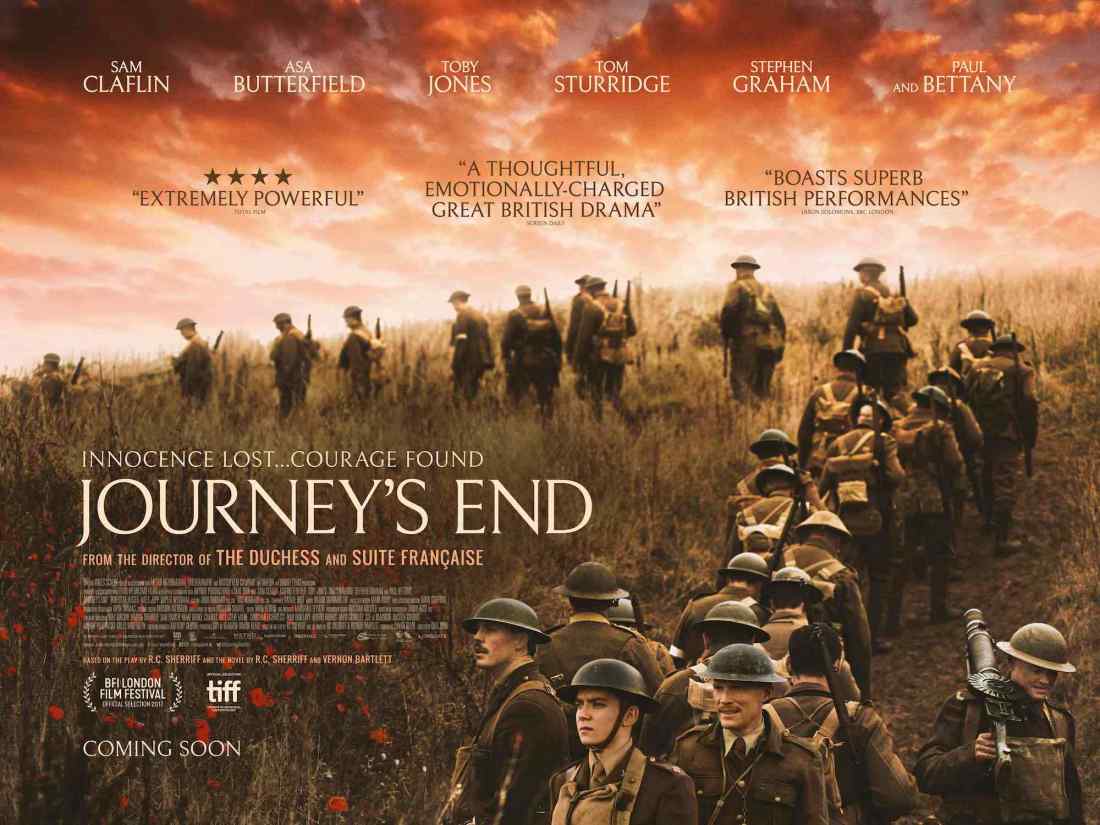
Journey’s End, is a harrowing film about a company of British soldiers that are stationed on the front line in France for 6 days during World War 1. This film is adapted from a play of the same name by R.C Sherriff, so the idea for this film has been around for a while. With the feature film itself being first announced at the British commemoration of WW1 back in 2014. Whilst the idea itself of soldiers on the front line waiting for an attack is fairly generic this film manages to capture all the emotions and the hopelessness the situation itself would bring. The film even in scenes where nothing much is happening, where there might just be a few lines of dialogue, has this overwhelming sense of dread and foreboding; as just like the soldiers themselves you are awaiting the German advance. What the director Saul Dibb achieves so effortlessly is this idea of contrast, this contrast is shown in many different forms throughout the film, eagerness vs hopelessness, naivety vs realism, the heroics and bravery vs the complete senseless loss of life. Through these contrasts the film explores a lot of themes in an intelligent way, not glorifying or overtly patriotic; but honest. The performances here are all standout with Sam Claflin’s Captain Stanhope, being a particular standout. Claflin’s character is haunted by the events he’s lead his company through and is quite noticeably an alcoholic. Stanhope as a character is completely 3 dimensional, as we see him fly through many different emotions such as paranoia, a real strong care for his men shown in quite a few compassionate scenes, as well as a very real sense of fear and doubt. Claflin handles all of these different emotions with complete ease, and never once did I view him as anything other than Captain Stanhope. Paul Bettany’s performance as Lieutenant Osborne is perhaps the heart of the film with him being the one who keeps everyone together and is a friend to both Claflin’s Stanhope and Butterfields Raleigh. Through Bettany’s performance, we see more of Stanhope flaws but we also see the trauma he’s been through to get them. My main criticism of the film, is the raid scene where Bettany’s character dies, during the scene which is one of the emotional peaks of the movie the cinematography is quite jerky and moves around very quickly, (perhaps this was a stylistic choice on the part of the director), which I personally found took me out of the moment and I didn’t quite understand what was going on.  On the whole, the cinematography and both the diegetic and non-diegetic music manage to paint quite an outstanding picture of what life in the trenches was like. Butterfield’s performance as Captain Raleigh is rather one note, personally, I believe he was only used as a contrasting figure to the character to Stanhope so that Raleigh could represent what Stanhope has left behind and will never be again. I believe that this film is a great insight into WW1 and one that doesn’t stray away from the dark pointless nature of war, it covers all the issues surrounding war such as loss and trauma with a well-rounded perspective. The film is at its core a drama film, as there isn’t much action in it when compared to something like 12 Strong, the character interactions and the interpersonal drama is amazing and obviously a result of a well-honed script based off fantastic source material. Overall I think this is a must-see film, as it so accurately shows all facets of war,  as well as focusing on the men behind it really taking its time to develop the characters. Whilst the film is let down by the cinematography in one sequence it doesn’t detract from the overall experience, and Claflin and Bettany are such commanding presences that you will never really notice the underused Butterfield.

4.5/5

Reviewed by Luke.

Darkest Hour

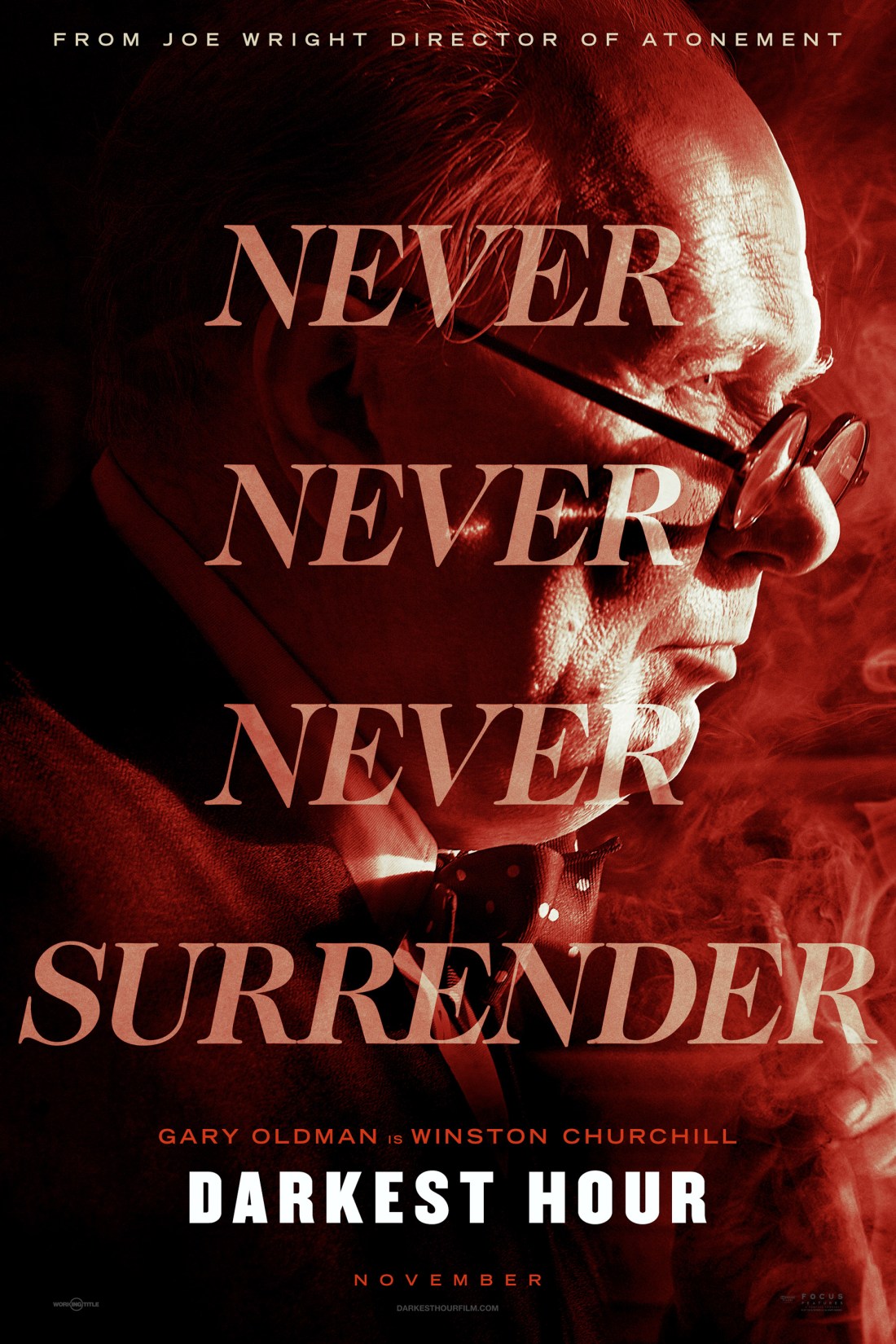
This film chronicles the early period of World War 2, through a time span covering roughly about a month. The period that the movie covers was before the Americans and Russians joined the war effort, a time when the British Empire was at its most vulnerable; and in many ways, this is reflected in the character of Winston Churchill himself. Gary Oldman portrays Churchill, a man synonymous with the British war effort. The director Joe Wright shows us a Churchill who is a far cry from the fearless war-time leader that we have come to know, we see a man who is loathed by his own party and has known many failures. The film acts as both a character study and also a new perspective on the previously trodden WW2 film. There are elements of a cat and mouse struggle throughout the film, with the hierarchy of the Conservative party made up of Lord Halifax, (in an excellent turn by Stephen Dillane), and the previous Prime Minister Neville Chamberlain, (Ronald Pickup) trying to force Churchill to enter into peace talks, when the man himself wants to fight to the bitter end. This film is incredibly accurate in its presentation of figure from the time period, such as Ben Mendelsohn’s King George the 4th, before I went to see this film I had been watching Netflix’s the crown which featured both King Geroge the 4th and Winston Churchill, and I had loved the job Jared Harris had done playing the late king but Ben Mendelsohn’s performance here made me completely forget about Harris’s iteration.  The film despite it’s PG age rating doesn’t stray away from the horrors of war with a Calais scene showing the sacrifice made and provoking an emotional response from anyone who sees it. It is in creating that emotional significants and capturing ideals and patriotism, that make this film as great as it is. Whether it is through Lilly James’s Elizabeth Layton, who experinces the horrors of war and carries on, or whether it is shown through the British public who have a bitter resolve to never surrender to Hitler no matter what. This film  has an air of hopelessness with the British position often looking bleak and that brings with it many sad moments, but it is with that the film also brings with it a sense of optimism, a sense that through the bad we can endure and come out stronger. Also Joe Wright dedicates quite a bit of screen time to exploring Churchill relationship with his wife Clementine, (played here by Kristin Scott Thomas), is shown to be the rock that held Churchill together when he most needed it, this emotional softer element of the film helps to keep it varied, and develops the characters in quite a satisfying way.  Overall this film is a well paced, well acted, well directed film and it deserves all the awards recognition it’s getting. This film inspired a strong sense of patriotism in me, what more can I say; except this film would make an excellent double feature with last years Dunkrik.

5/5

Reviewed by Luke