Have we abused 80’s Nostalgia

The 1980’s as a period is fascinating, so many things we know and, love came from this decade and, many events that would shape the course of history; especially pertaining to ‘Pop Culture’ happened herein. In the year 2019, the 80s are long over. No one seems to know this better than film and television executives, who seem all too happy to cash in on the nostalgia and fond remembrance people have for this part of the 20th century. Though a statement of fact it is not intrinsically a bad one, as due to this 80’s nostalgia we have Glow and Stranger Things, two outstanding shows in their own rights.
However, as I was sat watching the recently released third season of Stranger Things, I began to think have we seen enough from this decade? I’m starting to think we have. Somewhere around the 30th reference to some obscure 80s trend, I realised the entertainment industry needs to find a new decade to mine. The popularity of decades come and go we’ve had 60’s and 70’s phenomenons before that have for the most part come and gone, and in time the ’80s will do that as well. That said, Hollywood has used the 80’s, and more specifically, the nostalgia of this period for as long as almost 20 years. Freaks and Greeks the hit Jud Apatow series that kicked started the career of a lot of famous actors today was the first example of a show that harkened back to that period, though little over 10 years later. So this trend of glorification has been happening since the late 90s. Since then we have had 100s of projects that have been inspired by the period, with everything from Red Oaks to Wet Hot American summer. I think nostalgia can work well, in small doses, but when done to an obscene degree can become not only tacky and cheap but a hallmark of bad writing. A reference to something popular in the 80s can be easily thrown into a script to both pad a shows runtime and also force the audience to feel some emotion. To that end I think this is no longer working, the reasons for this are two-fold, one people are starting to wise up to these blatant tugs on the nostalgia cords and secondly a considerable part of the movie-going public wasn’t alive in the 80s so can’t relate and don’t understand the references. So with all that said I think we need to move a decade later and start milking 90s nostalgia instead. Now I’m not saying that shows like Stranger Things and Glow need to end, just that with new and upcoming shows maybe they should lean away from the 80s because it’s tapped out. To an extent, we can see this generational shift happening around us, mainly in comic book action films like Venom, with the titular symbiote being a mainstay of the 90s, add to this that Captain Marvel is set for a large part in the 90s and you can see the change coming. Ultimately to answer the questions I posed at the start of this post, yes I think we have overused the 80s, and we do need to move on, but at the same time the period a film is set in should help to sell the world, the time period should never be the main focus to the extent it takes away from the story. We need films about characters, not time periods.

The Evolution of Sex Comedies: Book Smart and the Good Boys

For those of you who don’t know a “Sex Comedy” is a type of comedy film usually revolving around a teenager coming of age and going through puberty; generally with a quest to change the protagonist’s life, or lose their virginity as the main plotline. These sort of films have taken on many different forms over the decades they’ve been around, rising to feature film prominence in the mid-’50s to late ’60s, with films starring Marilyn Monroe, before breaking through with the release of Animal House in the ’70s. However, modern teenage sex comedy films can trace their origins to the 1983 release of Risky Business; which turned the movies away from the Romantic Comedy elements of the past and towards the Coming of Age themes the genre would become tied to, leading to where we are now. The year 1999 would be huge for the Sex Comedy genre as it saw the release of American Pie, the film where a man has sex with a pie, which became a huge hit and saw every studio trying to get in on the action, starting the boom off. However, history aside, in recent years the genre has faded from prominence, perhaps replaced by the Slacker or Stoner genre? That is until recently when they have been reborn; they are mostly no longer crass and over-reliant on gross-out humour; now, they are more mature and thoughtful. I believe this renaissance began with the Netflix comedy series Big Mouth. Big Mouth focuses on a group of teens as they navigate the waters of puberty, and while the show does use some puerile jokes, it is also incredibly accurate and at times reflective on the nature of being a teenager.
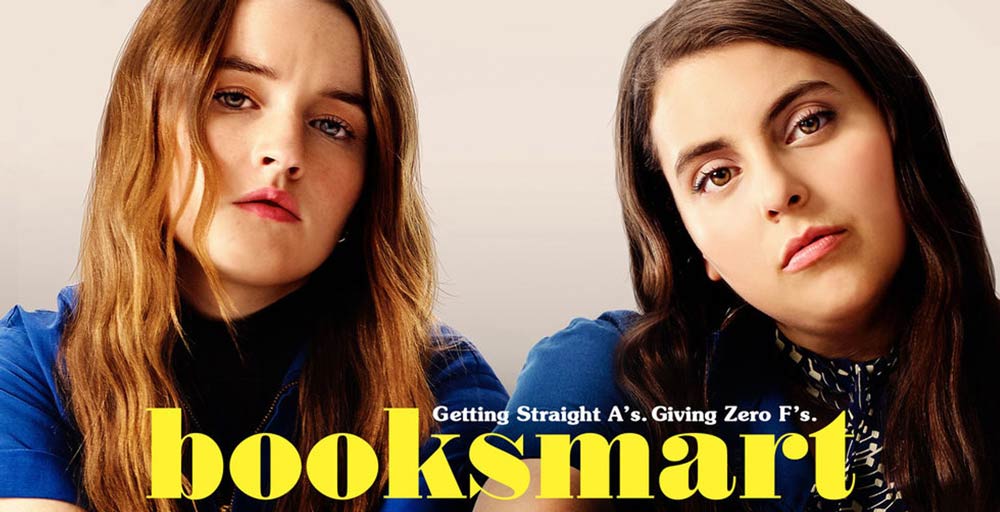
Furthermore, a milestone in the genre was the release of Blockers last year, that gender-swapped the standardised male-driven story of “I need to lose my virginity on Prom night” to show it from the girl’s point of view. To that end, I think Blockers revitalised the Sex Comedy genre and added some much-needed weight to the themes of growing up and moving on with your life; even presenting it from the parent’s viewpoint at times of not wanting to see their children grow up and leave them. This trend carried on to this year’s Book Smart, which showed what it’s like to be something you’re not and to realise it’s okay to be who you are.
Self-identity was always a theme that was at the heart of these sort of films, with the idea that just being you will get you what you want; the protagonist may try and be someone else or assume different personality traits to get what they want, but ultimately it’s who they really are that shines through in the end; and that’s the point that’s the arc, learning to love yourself and knowing that even when you grow up you’re still you. As I am writing this, I am waiting on a chance to see Good Boys the latest film in the Sex Comedy genre, and I am both intrigued by it, but also disheartened. In some ways, this film may well add something new to the style as the protagonists in it are younger than we’ve ever seen in a movie of this sort before. Sadly though from what I’ve seen thus far, I doubt this film with have the maturity or, thoughtfulness to say much about the teenage or, in this case, preteen experience. Hopefully, we see more films like Blockers and Book Smart in the future.

The Lion King and Disney’s Live Action Craze.

Remakes, the word probably causes some form of emotional response in you, whether its optimism at seeing a film done again or a tired cynicism and disbelief in Hollywood’s lack of new ideas. Over the last two decades, we have seen remakes of everything from The Evil Dead to Ghostbusters. Some add to the original in some meaningful way while others are just a transparent cash grab, it is in the latter category that we find the subject of today; Disney’s The Lion King. Disney has been on a quest to seemingly remakes as many of their classic animated films as quickly as they can, with 2019 having not only the Lion King but, also Alladin and Dumbo. The results are inconsistent; Dumbo was a bland mess of a film, while Alladin was surprisingly good and provided something new on the original animated film, The Lion King follows in the footstep of Dumbo. The 90’s Lion King was an undeniable classic, and no one seems to know this more than Disney. The 2019 live-action Lion King, while technically impressive, is also shot for shot the same as the original down to some of the lines of dialogue. They add nothing new; except for one or two new songs. This is not wholly a bad thing as it is nice to hear all the old songs again and see all the old characters, but it does make you question why this film was made as it does not justify its existence, which is the primary thing a remake needs to do. The only achievement of the Lion King remake is it shows the heightened form of near hyper-realistic CGI. When you realise how much of this film is CGI, you understand just how impressive it is. A justification of the remake would be to lure in new audiences and make a new version for the younger generation, and that would be an excellent reason for this film to exist if there was anything wrong with the original, but there isn’t. While this does work as dumb summer blockbuster fun, the same result could be achieved by having a re-released the original.
In many ways, this film is the inferior of the two, the cast highlights this; the new voice cast composing of the likes of Beyonce, and Donald Glover is just not memorable and a lot of the big-name stars who are in the film almost sound like they aren’t trying, perhaps they just couldn’t turn down that sweet Disney paycheck. This makes me worry about Disney’s upcoming live-action films like Mulan; hopefully, these films will follow after this years Alladin and add something to the original movie, otherwise, these films are going to start rubbing people the wrong way, and people will stop being interesting in them. The Lion King is by no means a bad film, nor is it a good film, it is a film that has no reason to exist. If you want to watch a film that captures all the same notes as the first Lion King, watch the classic animated film. Ultimately remakes aren’t going anywhere, in the end, Hollywood will remake all of our favourite films if there is still money in it for them. Hopefully, we can get more films like the Evil Dead, where the creative team want to add something to the property rather than do it for money’s sake.

5/5 (For the Original)

Luke

The Darkest Minds

The Darkest Minds is a young adult film, taking place in a world where a disease has killed most of the child population; those who have survived have it the worst of all they gain superhuman powers- at the cost of their freedom. So far so standard YA dystopia.

I want to say that the YA genre is dead, to me Maze Runner Death Cure was the genre’s last gasp, The Darkest Minds proves me right at every turn. What this film amounts to is a collection of YA tropes, all the worst ones at that, seemingly lacking anything original. What this film strikes me as is a cynical attempt to resurrect a dead genre, probably because: some executive still thought there was money to be made.

Everything about this film feels forced, from its needless romance subplot to the even more unnecessary love triangle. The most egregious example of this: being how this film is trying to set up a franchise, that no one wanted.

The similarities between this film and 21st Century Fox’s other property X-Men are more than a little obvious. However, where X-men mostly get social commentary and feelings of isolation correct, Darkest Minds does it in the most hollow, cheap way possible. In many ways, this film is a second-rate X-men.

The acting and the script are also both incredibly weak. Having not read the source material, I don’t know to what extent the poor writing is the fault of the film, I also can’t say, if this is a faithful adaptation. The dialogue feels overly teenage angsty, with it often resulting in cringey, or offensively terrible scenes. The “acting” doesn’t ever amount to more than brooding.

Perhaps worst of all is Amandla Stenberg’s Ruby. Stenberg’s character doesn’t have a lot to work with script wise, but what she does get often feels annoying- to be blunt she may be the worst character in the film.

I’m not even going to go into how a lot of the decisions the characters make are bafflingly stupid, or how they waste a great supporting cast.

Overall, don’t go and see this film, don’t waste your time, money or effort- let the YA genre die in peace.

0.5/5

Reviewed by Luke 

The Festival

The Festival is a British comedy film centring around two friends who attend a musical festival. One Nick, (Joe Thomas) goes to the festival to recover from a messy breakup and the other Shane, (Hammed Animashaun), goes to meet his hero DJ Hammer Head- hijinks ensue. Those who are familiar with the Inbetweeners, (a British comedy tv series), will find a lot of similar tissue here, due to similar creative teams. These similarities are my biggest issue with the film, many of the gags and jokes seem a little too familiar, and Thomas’s Nick is a near replica of his character of Simon from the Inbetweeners. However, that said, these similarities are not wholly a detriment to the film. If anything, they show this film for what it was a missed opportunity, as it could have easily been called the Inbetweeners 3 and it would have gained more fanfare.

The film’s humour is a perfect mix of cringe comedy and hilarious moments; working to great effect throughout. The standout character in this regard is Shane’s stepfather Robin, (Jemaine Clement), who steals every scene he is in; never failing to make me laugh.

As well as the film’s humour it also shares what the inbetweeners did so well, relatability. A false Hollywood esque studio comedy this is not.  The film also manages to make most of the characters memorable and likeable, with the obvious example here being the effortlessly charming Amy, (Claudia O’ Doherty). Amy easily has some of the best lines of the film, and the relationship between her and Shane felt very genuine; O’Doherty is the breakout star of the film. Sadly, this likeability is not shared by the film’s lead. Thomas’s Nick is an annoying character in many ways, as such he is hard for root for; though I do think this was a conscious choice on behalf of the writers.

Finally, this film is a treasure trove of cameos from British comedians, with the likes of Nick Frost and Noel Fielding making terrific appearances.

Overall, if you loved the Inbetweeners, this is more of the same. The film’s greatest sin is that some of the side characters, like Amy, don’t get the attention they deserve, but this pales in light of the funny and relatable tale told.


3.5/5.

Reviewed by Luke

How to talk to girls at Parties

How to talk to girls at parties focuses on 3 boys who go to a punk rock after party, only to find themselves wrapped up in an alien race’s visit to Earth. With the main plotline focusing on, Enn, (Alex Sharp) and his relationship with alien Zan, (Elle Fanning). Said relationship is very believable and endearing, as you truly care for both the characters. This is in no small part a result of fantastic performances from both Fanning and Sharp. This is a unique film that benefits from a very strong sense of identity. This strong sense of identity is not surprising considering that, How to talk to girls at Parties is adapted from a Neil Gaiman short story. This film builds upon the source material in many ways, fleshing out the universe and its characters. However, I do feel like the origin of the aliens could have been explored more as I was left with a lot of questions at the end of the film. Sharps portrayal of Enn, is very reminiscent of a lot of people awkward teenage years, minus the aliens, of course, making him easily very relatable. Fanning manages to capture the curiosity of an alien coming to our world perfectly, whilst also being very warm and easy to root for. This warmness is shown in her relationship to Queen Boadicea, of the punk scene, played with relish by Nicole Kidman. In terms of characterisation, this film is very strong, all the main cast have well-defined arcs and, you can see the character progress throughout the film. How to talk to girls at Parties, mostly manages to blend coming of age and the science fiction together well. Although this is by no means a perfect film, as there are a lot of plot lines and characters that don’t really go anywhere. Furthermore, there were some pacing issues as the movie felt a bit too long. Overall this film is very hard to describe, it is something that must be seen to be understood. However, it is most certainly not for everyone.
3/5
Reviewed by Luke.

Love,Simon

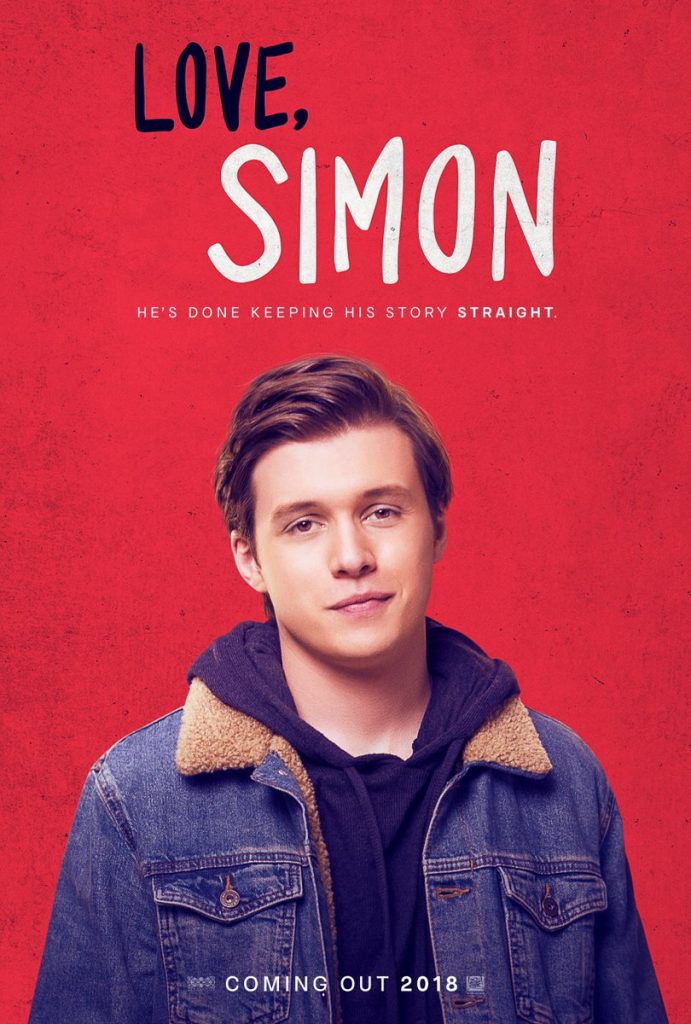
Love, Simon focuses on a young man, who is in the closest, as he embraces his sexuality, all the while trying to find out the identity of the mysterious Blue. The plot is very well adapted from the source material, managing to be both funny and, insightfully deep at times. Truly there is no other movie quite like this, that is what makes Love, Simon so unique. The script is a commentary on the process of finding yourself and coming out in general; being incredibly well done. The characters are incredibly three dimensional to the point where you feel like you know them. Simon, (Nick Robinson), in particular, is an incredibly well-written character, with the trials and tribulations that happen to him striking an emotional chord with the audience: creating a deep emotional bond between you and the character. The search for the identity of Blue is one that keeps you constantly invested, with the emotional pay off at the end being the most heart-warming scene I’ve seen in years. My only critique of the film is that it’s a glamorized Hollywood version of adolescents, being a far cry from more relatable genre fare such as last years Lady Bird. The humour and especially some of the awkward scenes seemed incredibly real; reminding me of my own formative years. Robinson’s delivery is outstanding with every ounce of emotion he conveys feeling genuine. The acting in this film is fantastic to the point that even minor characters such as Simon’s father played by Josh Duhamel have great scenes and feel developed as characters. Duhamel was a standout for me, with the scene in which he embraces his son’s sexuality being the best in the film; bringing more than a few tears to my eye. The direction by Greg Berlanti was fantastic, with each character getting a chance to shine and, have their own meaningful character moments. To conclude this film is a must-see, for the simple fact that it’s message of acceptance is beautiful and, this film is truly unique. Love, Simon almost feels like what John Hughes would make if he was still around today. This is a beautiful film that will make you laugh, make you cry and, quite probably make you cheer. This is a wonderful meditation on growing up in the 21st century and, feels incredibly relevant. Just a very sweet heartfelt film that I guarantee will put a smile on your face.
5/5
Reviewed by Luke

Blockers

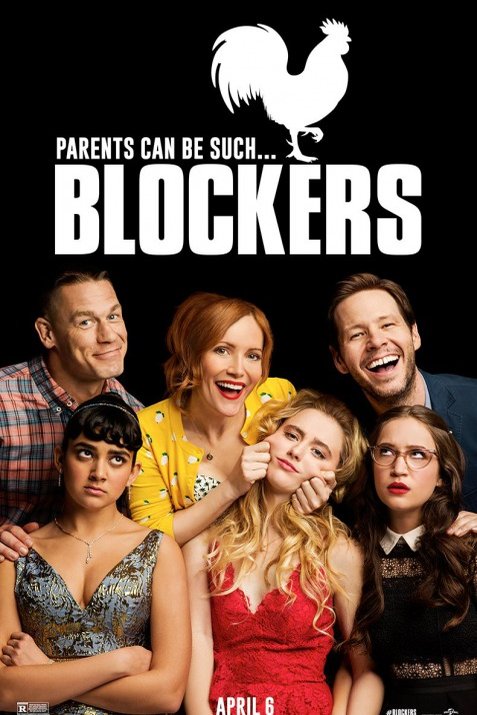
To preface this review: I had no intent on seeing this film but, after I heard all the positive reception it was getting, my interest was peaked. Blockers is a sex comedy film, very much in the same vein as something like American Pie, now what makes this so refreshing is that it is a from the perspective of a group of teenage girls. This unusual for the genre gender shift is not cheap, tacky or done just to be different, but actually as a means to tell a fresh story. It is this freshness that makes this film shine; vastly exceeding my expectations at every turn. The general plot focuses on a group of three teenage girls Julie, Kayla and Sam, (Kathryn Newton, Geraldine Viswanathan and Gideon Adlon) who plan to lose their virginities on prom night, so far so generic sex comedy. The other half of the cast is made up of the parents Lisa, Hunter and Mitchell (Leslie Mann, Ike Barinholtz and John Cena) who try and stop their daughters from their sex pact, and it is these two sides coming together that elevate this film to another level. The film is as much for a teenage audience as it is for parents, by this I mean that there are two themes running parallel the first: is what it means to grow up and become an adult, the other is what it is like to let your children go; both of these themes work well together. The script for this film is phenomenal being both incredibly funny, with Cena’s Mitchell and Hannibal Buress’ Frank being the two standouts, but also incredibly deep. The emotional beats it this film are all very genuine and real, with Barinholtz’s Mike being the most impacting. Mike at first seems to be a bad dad caring more about sleeping around then he does his daughter Sam, (Adlon), but as the film goes on and you learn more about his character, you see past his façade, seeing him as much more. That is the genius of this script: it creates these incredibly fleshed out, three-dimensional characters completely subverting your expectations. Furthermore, the plotline about Sam discovering her sexuality was very well done, and the touch of having her dad (Marinholtz) always knowing about it, without being told; made it feel incredibly sweet and heart-warming. My only issue with this film is that some of the jokes between the main teenage cast fell flat, with some even making me cringe, but these were very far and few between. Overall I strongly recommend you go and see this film: because it will make you laugh, think and at times even cry. Finally, the message this film has is very timely and worth listening to. This is a far cry from crude, dumb gross-out humour, with the under-reliance on constant sex jokes in favour of a more thoughtful plot helps to make this one of the best comedies I’ve seen recently.
4/5
Reviewed by Luke

The Florida Project

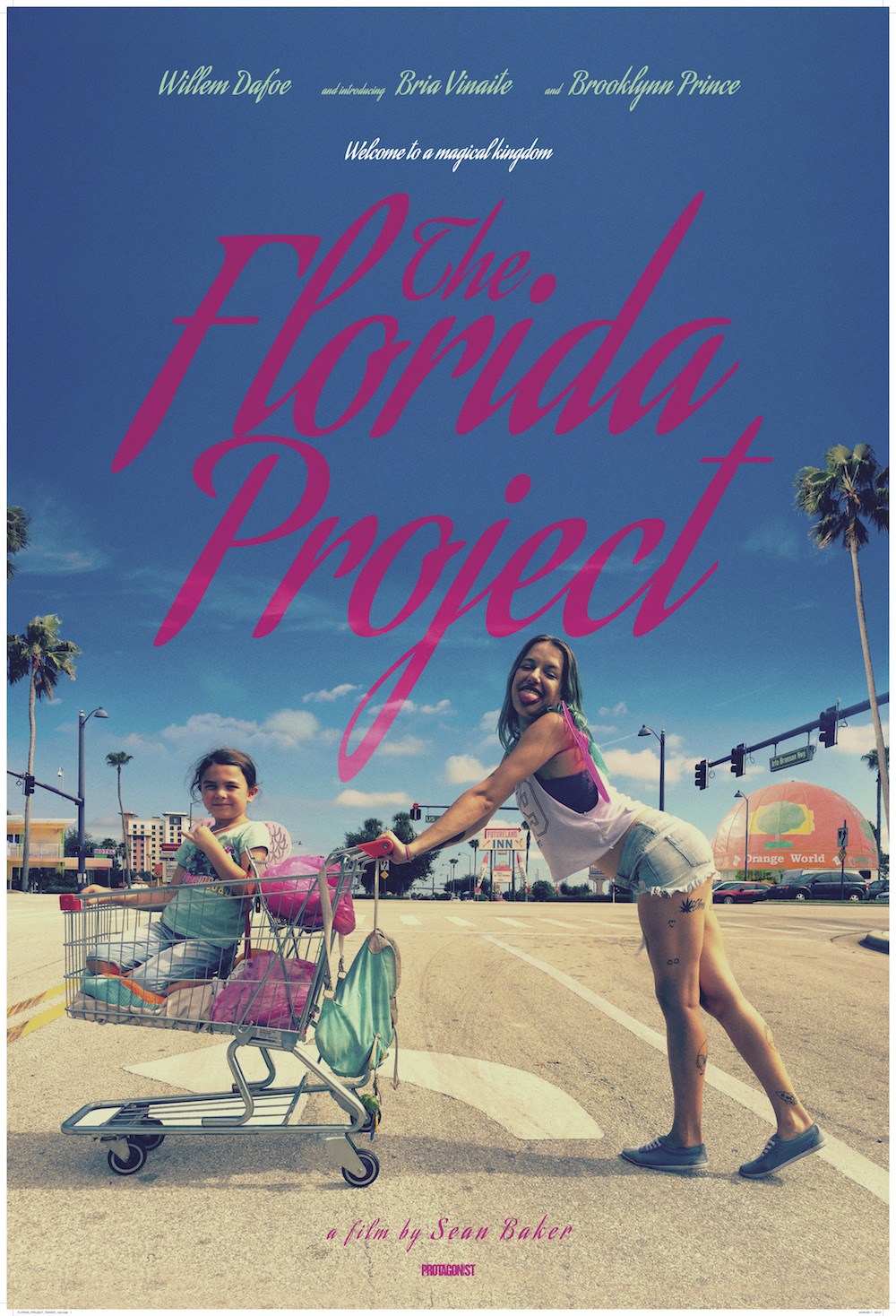
The Florida Project is an Oscar-nominated drama film, starring Willem Dafoe. The plot centres around the lives of Moonee, (Brooklyn Price) and other residents of the Magic Castle. Moonee is incredibly sweet, charming and thoroughly likeable throughout; being the emotional soul of the film. Seeing the film through her eyes makes for an excellent contrast to the adult characters, but more specifically Willem Dafoe’s Bobbie. Dafoe’s performance is outstanding because you can see a great sadness in his character: a sadness perhaps reflective of dreams he’s let go along the way. The film examines the childish innocents of Moonee, showing that she is completely oblivious to the heartbreaking world in which the adult characters reside. Perhaps the most standout performance is newcomer Bria Vinaite as Hailey Moonee’s mum. In many ways she is a truly tragic character; forced by bad choices to do unpleasant things to survive. Vinaite sells this desperation throughout making you sympathetic to her character; greatly complementing the emotional climax of the third act. The direction by Sean Baker is very strong; with each moment being used to develop the characters making them feel very real. The cinematography is beautiful: with some stunning wide-angle shots that capture the abandoned by time feeling of the Magic Castle. My only issue with the film is that there are some plot lines that feel needless. The final thing I’ll say is that the ending of this film is one of the most affecting, heart-breaking endings I’ve seen in a long time. This film is probably one you won’t watch again, but one that will stay with you for a long time. The best thing that the Florida Project does is that it starts a conversation about parenting, hell about life; leaving you after the credits roll with a broken heart and a lot on your mind. A must see.
5/5
Reviewed by Luke

Lady Bird

Lady Bird is a comedy-drama coming of age film, directed by Greta Gerwig. This film is a wonderful contrast, being both painfully earnest and honest in its depiction of growing up. Whilst also being heartfelt, charming and deeply funny. The screenplay which was also written by Gerwig, is incredibly strong, making the film effortlessly relatable. The humour of the film all lands very nicely and I was either laughing or smiling near constantly. The drama and emotion that runs through the film also feel very genuine and real. The majority of this drama comes from the relationship, between Lady Bird or Christine, (played by Saoirse Ronan), and her mother Marion, (Laurie Metcalf). It is a testament to both actresses that this very personal relationship feels completely real, the up and downs of the pair’s interactions carry much more emotional weight as a result of this. You can feel the love, but also the teenage resentment and the desperate need for understanding, and believe every minute of it. The film covers themes such as discovering your sexuality, it does this in a genuine and heartfelt way. Lucas Hedges’ character of Danny is Lady Bird first boyfriend, he is likeable and loveable and wonderfully played by Hedges. Later on, in the films second act after Lady Bird catches him kissing another boy in the toilet, there is an interaction between the two when Danny is scared and doesn’t know what to do, this is painfully real and heartbreaking in the most genuine way. My greatest praise for the film is just so accurately the film depicts adolescents. An example of this is when Lady Bird finally has sex and is let down because it wasn’t the special magical thing she had built it up to be in her head. This so accurately captures how it is for a lot of people. The film doesn’t just tackle teenage issues with Tracy Letts’s character of Larry, (Ladybird’s father), showing how life can be cruel and knock you down. What makes Lett’s performance so rounded is that he still has an underlying sense of positivity. This film doesn’t try to make the teenage years seem overly glamours, which a lot of other bildungsroman films do, but rather shows you the reality. The score is also amazing, with the short songs from the plays being really good and well done. The film does waste some of its characters with Jordan Rodrigues character of Miguel not having much to do. This film is a triumph of writing, with every scene accurately capturing the teenage condition. Despite a few underused characters, this is a well-acted film on the part of the two female leads. I can guarantee it will have you laughing, crying and maybe even thinking back to your own childhood.

4/5
Reviewed by Luke.