Thirteen Ghosts: The Devil’s Fun House

Written by Luke Barnes

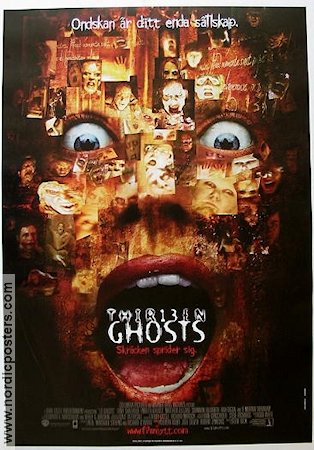
Thirteen Ghosts is a horror film directed by Steve Beck. It serves as a remake of the sixties film of the same name, and sees a family move into a house they gain through inheritance, only to realise that the basement is housing angry spirits.

I love the creativity of this film. Each ghost feels unique and has an established backstory to go along with them, which creates this feeling of love towards the monsters of the film that really runs throughout. Likewise the creature design of each ghost is also terrific, not only is each distinct and memorable in its own way, but the look of these characters gives off a sense of personality without them even having to say anything which further enhances the world and the wider lore.

The performances are also fairly good, Matthew Lillard plays the rogue with a heart of gold well and has several moments that feel like peak early noughties gold. Similarly F. Murray Abraham, is milking the hell out of his role as the main villain, getting every single ounce of evil fun out of the character that he can.

In terms of horror I would not say this film is all that scary, yes there are some strong horror moments, but as a whole it feels a bit light. Maybe suggestive of tonal problems, as there are comedic moments and scary ones trying to compete against one another for our attention here.

Overall, a fun thrilling ride with an excellent performance from Matthew Lillard.

Pros.

Lillard

Abraham

Elizabeth

The care, love and strong design work that goes into the ghosts

Cons.

Slight tonal inconsistencies

4.5/5

Interview With Terence Elliott: Writer/ Director Of Devil In The Woods

Written by Luke Barnes

Hey Everyone!  I recent had a chat with writer/director Terence Elliott about his new horror feature Devil In The Woods, which follows a group of film studies students out in the woods who soon run into something supernatural, in our conversation we talk about, the creepiness of the woods, Ti west, and a shared remembering of our days as film studies students.   

Q: How would you describe the film in a word?

TE: That’s a tough one, I guess I’d say tragic. Yeah, tragic. I think that really covers some events that predate the story, along with the path that follows.

Q: Who is your filmmaking inspiration?

TE:  Ok this is a 2 fold answer. My first inspiration has to be John Carpenter. I remember as a child seeing Halloween for the very first time on BBC 2. Mark Kemode presented an intro to the film and I was aw struck. Carpenter has such a unique classic look to his films, and he is the master of creating suspense and dread. I’d have to also say Peter Goddard. I met Peter working in retail many years ago, and he asked me to help fill a small role in his debut feature film ‘Season of the Witch’. It was so inspiring to see someone just getting out there and making a film, something I’d wanted to do but didn’t think a real possibility. From there I’ve been fortunate to work with and learn a lot on subsequent films.

Q: Do you have any funny on set stories?

TE: Yes! On the final large shoot, which had been plagued with Delays due to recent lockdowns and Covid restrictions, we were finally able to get going. Nicholas Carter, who plays Officer West, had stepped up to help out with gore fx at the last minute, but first he’d overslept when I’d gone to pick him up, then he got an Uber from 30 miles away, got dropped off but took the wrong turning and was lost in the woods! He found us eventually.

 Q: How important is natural horror to you in the film?

TE:  Whilst I love all sorts of horror, even cross genres with things like sci fi, I think there’s something instinctively scary when that horror could be close to home, based in reality. Saying that, a big influence on the script for the Harvest of the Dead films was H.P. Lovecraft, and that’s some of the most out there stuff!

Q: Did you focus on atmospheric horror over jump scares? And if so how did you strike the balance between the two?

TE: Atmospheric horror for sure. I find jump scares more often than not just a bit on the nose. Yes, I tend to jump at them myself 9 times out of 10, but when writing I focus more of creating that sense of unnerving, I find that far more interesting

 Q: What was your catalyst for making this film?

TE: So I’d co-written and played the killer in Peter Goddard’s Harvest of the Dead and had a greater involvement in the script on its sequel, along with helping more and getting more involved, so really I felt that I needed to challenge myself with writing a feature script myself and trying my hand at directing.

 Q: For me this film brought back a lot of memories of shooting short films in the woods, was that the idea to capture a sense of nostalgia within film students?

TE: Yes it was a trip down nostalgia avenue for me as my first media assignment was a short horror filmed in the local woods over a decade before. With zero budget filmmaking you have to be practical with what you can shoot and where, it just so happened that I’d wanted to create this film project within a film and went to my roots with the location.

Q: Sequel ideas or future projects?

TE: I’d deliberately left the ending lingering on a particular item as all the answers for the surviving characters could be found on that (being vague to avoid spoilers!) but I don’t know if I’ll ever be returning to those characters and that world. I like the ambiguity of it and there’s a direct starting point to pick things up from but right now I have no plans for a sequel.

Q:  How would you describe the current state of horror?

TE: There’s a lot of interesting projects going on currently. Ari Aster is a big inspiration with his features Hereditary and Midsommar so I’m looking forward to what he makes next. Also I’d heard Ti West is returning to horror which is very exciting. Peter Goddard and I have just finished a script for our next collaboration which we’re both very excited to get started filming. I think horror is in a good place, you just have to keep your ear to the ground and know what to look out for, as there’s some real gems recently.

 Q:  If you won an award or Oscar for this film who would you thank?

TE: I’d obviously thank the cast and crew, without their tireless effort none of this would be possible. Again, Peter Goddard for helping me really from day one, whether loaning me equipment, offering editing advice or filming a lot of the action scenes, I’m indebted to him. Also my mum. Me and my sister, Cari Payne who operated the boom and played Judy Lench, lost our mum about a month after production started. It was a really tough time but also brought us closer together so if this won an Oscar, it’s for you Mum!

If you would like to watch Devil In The Woods you can find it on DVD or on BD-R via Vipco and as always you can find my review of the film on site now.

Devil In The Woods: A Film Studies Project Brings More Kids To The Woods

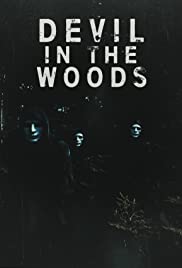
Devil In The Woods is a British horror film directed by Terence Elliot. The plot sees several film studies students go out into the woods to shoot a project however, as they go about their business they soon realise that they are not alone, and that something other worldly is in their too.

An aside, this film takes me back to my days as a film studies student in college, though I am still one now at University level, when I would be doing very similar things to the characters in this film- the only difference is that no monsters were stalking me. Still, there was a lot of fun reminders of my own experiences in this film. 

Setting to one side my own life experience this film reminded me quite a bit of films like The Blair Witch Project and another British horror film The Borderlands, I saw this as a compliment as not only does this film manage to live up to those, in some ways it improves on them.

The acting from across the cast is quite strong, you believe these are real people, real students and as such you become that bit more engaged in the film. Likewise, as things start to turn sinister you can’t help but root for the characters to survive as they feel like you’re friends.

Personally, I have always found woods creepy, and this film manages to perfectly capture that as it brings to the forefront that quiet feeling of dread and silence that is never too far away on any visit to the woods, or maybe that is just me.

I applaud this film for building its scares through atmosphere rather than forcing in jump scares, it is always more effective, and that is shown here. I think the quietly increasing oppressive nature of the atmosphere is what makes this film unsettling.

Overall, a strong effort that highlights a primordial horror in nature through an oppressive atmosphere that never lets up.

Pros.

A strong cast

A relatability, especially if you are a film student

Good scares

Well-paced

Tapping into the horror of nature, the silent unease

Cons.

None

5/5

Interview With Michael Caradonna (Producer) And Geoff Ryan (Writer/ Director): Blood From Stone

Written by Luke Barnes

Hey Everyone! I recently had the chance to chat to Michael Caradonna (the producer) and Geoff Ryan (the writer/director) about their neo-noir, western, vampire flick Blood From Stone. We talk about

Q: How would you sum up Blood From Stone in a word?

MC:  Honest. I have been a fan of the Vampire genre for as long as I’ve been a fan of film. Blood From Stone shows the realistic problems today’s vampires would deal with should they really exist.

GR: Unique. I wanted to make something different from anything else out there – for better or for worse – and judging from both critic and audience reviews it seems like we succeeded. 

Q: Who is your filmmaking inspiration?

MC – I enjoy films of all genres which has opened the door to appreciating the likes of Soderbergh, Kubrick, Scorsese, Lucas and Spielberg, but looking at a whole catalogue, I’d have to say Quentin Tarantino. From writing True Romance to his latest Once Upon a Time in Hollywood, he inspires me as a Producer.

GR – So many to choose from! With this one I’d have to say the most overt influence would be Tarantino. From the genre-blending to the character banter punctuated by extreme violence, to the non-traditional story structure… it’s got a lot of his early works influencing it.

Other big influences would be Peter Greenaway, Paul Verhoeven, Robert Altman, The Coen Bros, and on and on…

Q: Other than your film, what is your favourite vampire film?

MC – Many films come to mind, but I would say Kathryn Bigelow’s Near Dark. There was always something gritty and honest with that film and one of the first films I thought of when I read Blood From Stone.

GR – Let the Right One In. I love that it’s a great movie that perfectly balances being a beautiful character story and a haunting vampire tale.

Q: How did you gauge the emotional tone of this film, between having the character seem sympathetic whilst also being a blood thirty monster? 

MC – I defer this question to my writer/director Geoff Ryan.

GR – As anyone who has been in a toxic relationship knows, the emotions can go from deep love to vicious hate in a matter of seconds. Or, at the big picture level, how a society with so many enlightened and progressive advancements is still capable of primal brutality, selfishness, and tribalism. To me, vampire lore was a perfect way to explore these ideas: It was a way to explore the way our own worst impulses, no matter how much we try to deny them to ourselves or bury them in the past, still make up so much of who we truly are. None of the characters want to be monsters and go to great lengths to convince themselves they are good people (and in many ways they are), but their actions matter. I wanted to really show how actions have consequences no matter our good intentions.  It is something all of us do. I personally might not be a vampire or a killer, but I am a citizen of a nation that wages wars, I buy products from exploitive companies, I eat once living animals, I’m sometimes a crappy friend, and so on. These are things I don’t want to define me but to those who are impacted by these actions it is who I am. And, so, in the story it’s about the search for balance and how we live with the monster inside of us. 

Q: Do you have any funny on-set stories?

MC – Oh my, where do I start?  The crew that worked together on this film was full of its own great characters. From the encounters with the Las Vegas Police Department when I get pulled over while getting the crew food at 3am and they discovered “blood” all over the back seat, to casino security, with hand on gun, following up on a video feed showing dead bodies being dragged down a hall where there were supposed to be no people. We had such a great time on set. While getting every shot that Geoff required, there were infinite moments of fun, laughter and comradery.

GR – So many funny stories! This was really a once-in-a-lifetime type of film for me because the team that came together to work on this was a phenomenal group of fun people. Add to that the ridiculousness of what we were filming, and it made for some funny moments. Like when casino security had to do a safety check because they saw us dragging dead bodies through the hallways or having to explain to a policeman who pulled us over why there were blood stains all over our car (my car’s backseat is still a blood stained mess). On the Blu-Ray there’s a bloopers segment that captures some of the fun but nowhere near the almost constant state of joking, hijinks, and lunacy we went through. 

Q: How would you describe the current state of the Vampire horror sub-genre?

MC – Just as in the myths and legends, vampires will never die. While I am biased, I think that Blood From Stone is up there with many other great vampire films throughout filmmaking history. There are many bad vampire films that are good and many good ones that do not get the attention they should. Every once in a while there is a film that truly stands out like The Hunger, The Lost Boys and even What We Do In the Shadows. These films draw us in and, as fans, we suck it all up. The current state of the Vampire films is alive and well.

GR – Just like all movie genres, there’s a ton of mediocre-to-bad with some exceptionally unique and amazing work shining through. Plus, there’s some really exciting new Dracula/Nosferatu films in the pipeline that I’m eagerly anticipating. Much like vampires themselves, the genre won’t ever die, and great artists will continue making great vampire films while some will suck the corpse dry for whatever cash-grab potential it has. 

Q: Was there a message you were trying to communicate with the film? And if so what was it?

MC – I defer this question to my writer/director Geoff Ryan.

GR – I kind of touched on it in the early question about tone but the primary theme I wanted to explore was about our interconnectedness. It’s why the two main characters only share two scenes together: I wanted to tell a story of how their lives are connected even when their actions aren’t directly to each other. And, I intentionally told the story in a way that offers a lot of ideas in a way that will allow the audience to create their own opinions on it. It’s been fascinating to hear from audiences about how they see the characters and the story. Some see it as a tragedy, some as a love story, some as a dark comedy. Some people think Jure is a monster and others think Darya is the real monster. 

But the most important line of the film to me is when Viktoria tells Jure, “There are no endings, only cycles. It’s your choice: Creation or destruction, vengeance or forgiveness.” This to me is the message of the film. We all have those choices in our lives. Are we creators or destroyers? Do we seek forgiveness for our own sins, or do we seek vengeance for wrongs against us? The choices we each make will shape the future for humanity. Do we circle back to another dark ages or do we progress forward into a brighter future? 

Q: How important were western and neo-noir elements to you as you were filming? 

MC – I defer this question to my writer/director Geoff Ryan.

GR – To me they were very important! For Jure, the movie is a western. For Darya, it’s a noir. Even the score represents this with Jure’s music being composed of guitar, banjo, and lap steel to evoke that country/western vibe. And Darya’s music is reminiscent of Bladerunner with pulsing Moog and sparkling synth Arpeggios. He’s rooted in the old world and she aspires for the future. 

Westerns especially are iconic American stories. The lone hero is a trope that has its virtues but also has been used to justify some of the worst elements of our society from our wars (“You’re either with us or against us”) to our gun culture (“Only way to stop a bad guy with a gun is a good guy with a gun”). Jure sees himself as this lone hero. At the beginning, he’s riding into town to save the girl, and at the end: He’s riding off into the sunset (or sunrise). He sees himself as the good guy, even a god amongst men, but modern society has forced him into the shadows. He resents this new era where he can no longer act with impunity. It was often joked that Jure should wear a hat that says, “Make Vampires Great Again”. 

Similarly in noir it was often a “damsel in distress” that turned to the guy to save her, but she was usually hiding a dark secret. And Darya at first is portrayed to be that “damsel in distress” but over the course of the film she evolves into a force of nature. She is from an old world and holds an old idea of who she should be. She hides her true self just wanting “to be normal”.  But over the course of the story there are glimmers of light showing her breaking through that and discovering her power to shape her own destiny. 

Q: Sequel ideas and future plans?

MC – I defer this question to my writer/director Geoff Ryan.

GR – I would love to! It kind of sets itself up for one and I have notes for where the story will go. Much like this one had a yin & yang between Jure and Darya, the sequel would have that between past and present. It would juxtapose life for the vampire women of the story after Jure (spoiler!) and life for him before modern society – and how those timelines impact each other. Sort of like a hybrid of Unforgiven and Thelma & Louise told through Aronofsky’s The Fountain! But, unless Blood From Stone develops a much bigger fan base than it currently has, the prospects for a sequel are unlikely. 

Q: If Blood From Stone ever won an Oscar or other award who would you thank in your acceptance speech?

MC – First and foremost, Geoff Ryan for trusting me to produce this project for him followed by the rest of the amazing Blood From Stone family. Geoff Black, Nika, Adeshola, Sarah, Alethea, Carl, Steven and, of course, our solid cast, including our stars, Vanya and Gabriella. Thanks to all of you!

GR – My BFS Family: Our small and wonderful team who put so much of their trust, time and talent into helping make my crazy fever dream a reality on a budget that did not merit the scale of what we made. Linda & Michael of Indie Rights who believed in this film back when it was just a concept in my brain. The people of Las Vegas who opened their doors and contributed so much to this movie. And, my cat Pafoofa who passed before the film came out, but her voice is immortalized in the music score. 

If you would like to check out Blood From Stone you can find it on all good digital media marketplaces, Vudu, Amazon and of course you can buy the Blu-ray and DVD director’s cut as well. As always I have a review up of the film on my site now, so check that out as well!

Beware The Slenderman: A Look Into The Dark Heart Of The Internet

Written by Luke Barnes

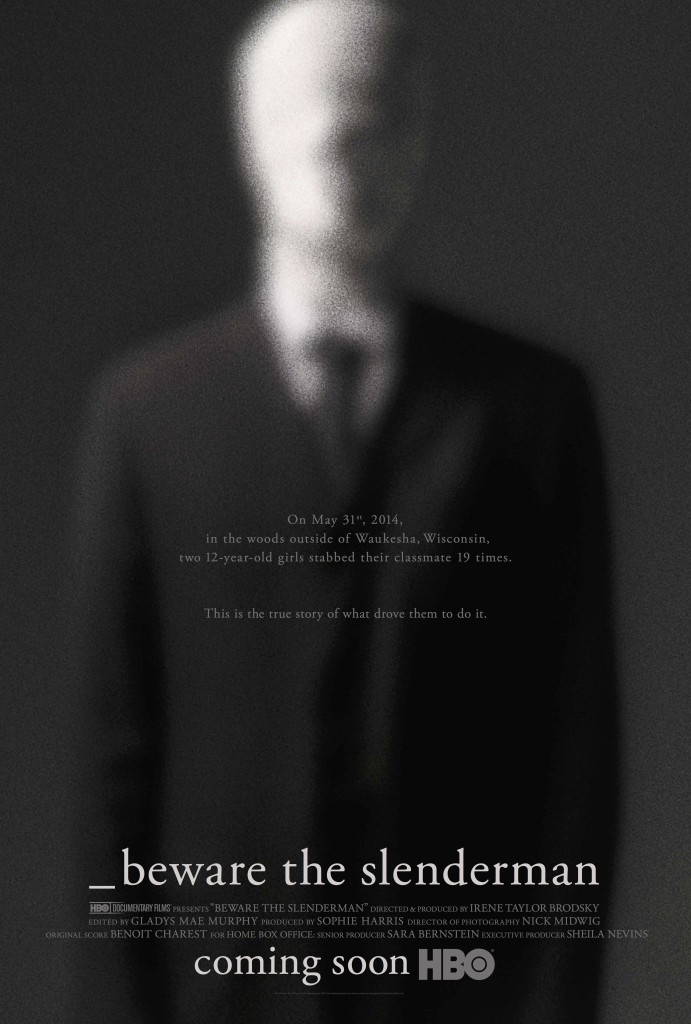
Beware The Slenderman is a documentary directed by Irene Taylor, centring around the internet creepypasta figure of Slenderman, and the real world nightmare that saw two young girls stab one of their classmates multiple times in an effort to appease the fictional being.

I remember when I was a teen and Slenderman was all the rage, it was a huge moment in internet folklore history. I think the idea of a shared communal myth is so fascinating, and that is really what Slenderman is, an idea added to over and over again and turned into something much bigger than it began as.

This documentary is very bleak, but you knew that coming in. Tragic is the word I would use to describe the events that this documentary highlights, it raises questions around how does the content we view affect us on a psychological level and, where is parental accountability when it comes to policing what your kid watches and doesn’t watch?

I think the documentary does quite a good job in explaining what Slenderman is, they also have folklore experts as talking heads to talk about the idea of building and creating myth which I think is a truly strong choice in this regard.

I think using the girl’s families as talking heads to explain the events that transpired is both a pro and a con, it is a con in that there will inevitably be a degree of bias there especially when it is parent child as it is here, however, it is also a pro as it allows us to have a uniquely personal view into the incident.

Overall, a strong documentary that raises a number of good points and provides a thorough and well thought out investigation into internet urban legends.

Pros.

The personal access to the case

A good explanation of Slenderman and the internet urban legend

A number of thought provoking questions are raised

A solid pace throughout

Cons.

Bias creeps in

4/5

Slaxx: Skinny Jeans Really Will Be The Death Of You

Written by Luke Barnes

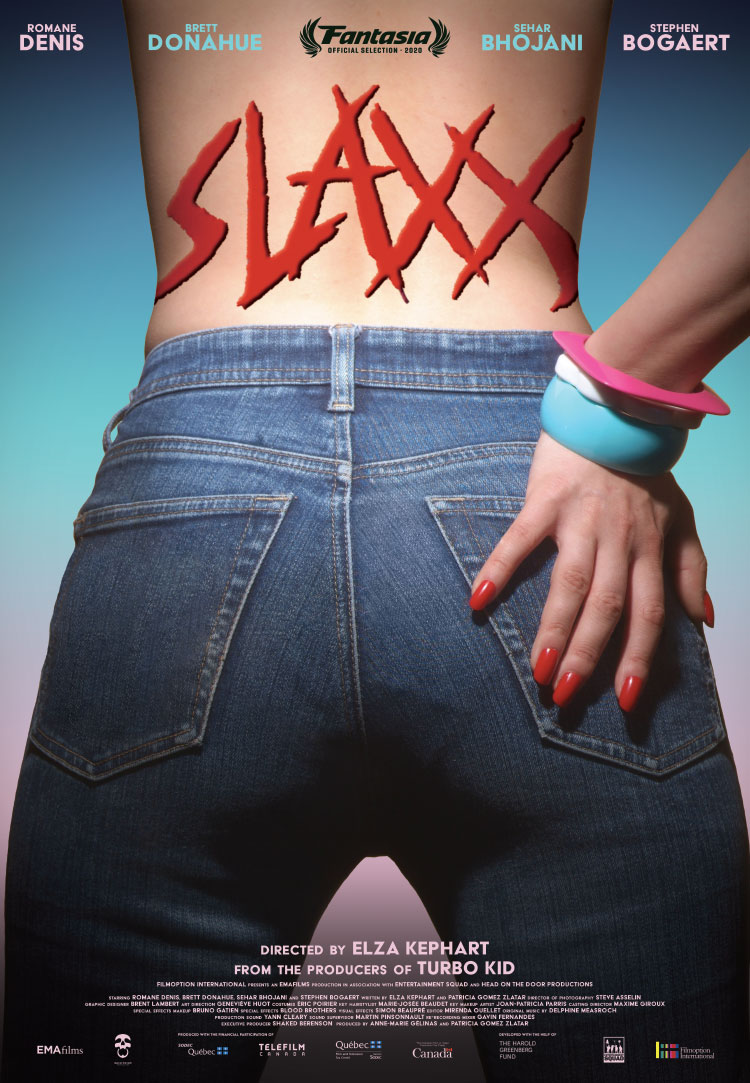
Slaxx is a horror comedy film directed Elza Kephart. The plot sees the workers of a fashion store come under attack when a possessed pair of jeans goes on a murderous rampage.

This is one of the best surprises I’ve had recently. Though this film’s premise sounds absurd it is actually surprisingly well executed, and actually quite thoughtful as well. The backstory of how the jeans came to be possessed, and yes there is a significant backstory put in place for this, which I won’t spoil as this is a fairly new film is actually inspired and has a spot on message behind it.

The jean kills, are hilarious in the best way. A few made me laugh out loud, and the rest made me chuckle, they are so comically over the top and gory it is perfect. The unique nature of watching a pair of jeans kill someone is something that really hasn’t been covered much in the horror genre and this film makes up for that in a big way.

The acting is serviceable, and they manage to sell the serious threat of the possessed jeans rather than breaking down laughing so I will give them props for that.

Overall, a hilariously silly horror comedy film that you should definitely check out.

Pros.

The hilarious premise

A surprisingly deep backstory for the jeans

The jean kills

The gore

Cons.

The characters are a bit thin

4.5/5

Interview With Andrew J.D Robinson: The Writer/ Director Of Confessions Of A Haunting

Written by Luke Barnes

Hey Everyone! I recently had the chance to chat to Andrew J.D Robinson, the writer director behind Confessions Of A Haunting, a short film wherein a grieving character receives a message from the other side. We talk, ghosts, ghouls and of course David Lynch, I hope you like it.

Q: If you had to sum the film up in one word what would it be?

A: ‘Catharsis’.

 Q: Who is your filmmaking inspiration?

A: Cinema is a powerful medium that’s both provocative and a rewarding trade to create in. It brings in all of my passions with the arts, and any project can demand different elements. When it comes to what inspires me to have storytelling be one of my callings in life, I’m inspired by the need to reach others whether it’s to arrive to some nuanced deeper feelings together or simply to entertain (which the horror genre has been a lot of fun to dedicate to) as if these stories are little amusement park rides. There’s been many filmmakers who’ve inspired me or helped me find my voice, but pound-for-pound David Lynch’s work, despite how many times I continue to revisit them, continues to fan that ember in me to want to take something familiar and twist it; to in a sense boil it down to its roots, in an attempt to really connect something for the viewer that they perhaps may not arrive to with your regular scheduled programming.

Q: What was your catalyst for making this film?

A:  I certainly strived to create an inner dialogue for viewers who could see themselves relating to this push-pull angst experienced between loved ones, but also in hopes they receive to its bottom line message.

 Q: What was your message with this film?

A: Its bottom line message is ‘Don’t become the evil that this world gave you and give it to someone else’. In this case it’s those feelings of neglect, abandonment etc that our protagonist expresses that her late father caused her; how it’s haunted her up until this point in her life despite, yet her daughter tries to play with her and she sidelines, implying his ‘cycle’ of a lack of expressed and attentive love is generational, which many can relate to. Its supernatural twist, that her father tells her to break the cycle, is his way of wishing better for her and hers.

Q: Do you have any funny on set stories from the production?

A: Hehe well this film was produced remotely so there was no face-to-face anecdotes. Julie, however, is a great personality, but we executed the project virtually via text where we carved it out and after some back-and-forth she went ahead and recorded what is the only take she sent me. She killed it and then I handled the rest in post-production.

 Q: How much is your film a comment on grief and coping?

 A: The film is absolutely a commentary on grief and coping; a showcase of it. I find too there’s people I’ve met in my life who aren’t as upfront or confronting with ‘how they feel’; they’re more lost in subtext, which always motivates me to write characters who get right to it and ‘let you in’, especially about grief which permeates through everything. It’s almost the elephant in the room.

 Q: How did you decide to include the supernatural twist in the film?

A: To have the father’s ghost tell her to ‘break the cycle’ is a paradox where (1) if you believe in ghosts, then this is a lovely ‘arrival’ for the protagonist in her life, but (2) I’m certain many of us feel that life won’t work out this way like it does in the movies where we may catch onto having a second chance… so for those who receive to it, they can reflect how ‘they themselves’ have to recognize they need to understand the past in order to not repeat it.

Q: If you could go back in time to when you were a novice filmmaker first starting out what advice would you give yourself?

 A: For one, where I am now is one of the most happiest places I’ve been with filmmaking where I know my ‘why’. My why isn’t to turn profit, to chase Hollyweird, or to ‘prove something’, rather, I just enjoy doing it. I enjoy the people I can meet. Naturally you’ll run into all sorts of ‘characters’, but for the most part I can say with a straight face that I’ve collaborated with some of the most genuine people who love stories, love becoming part of stories, just as much as I am. The fact we can ‘create art’ and not just be machines or something is wonderful, and it doesn’t have to take a lot to make a project. So what I’d tell myself back then would be that the enjoyment won’t come at the ‘destination’, but in ‘the journey’; the journey shared with your peers and viewers who receive to your weird little movies lol. Nevermind about trying to be ‘the best’ or if you have the right gear etc etc… find out asap ‘why’ you even do this just like when you were younger when you’d draw ‘just because you enjoyed to; absent of any well if you’re going to spend so much time on something, you better be making money from it’ mentality so rampant. ‘Passion’ should always be Plan A with our limited time here. That’s what I would remind the very stressed, hyper, and insecure past filmmaker I was coming up lol.

Q: If you ever won an Oscar or other award who would you thank in your acceptance speech?

 A: I’d have to thank my family for always telling me they just want me to be happy with whatever I do in life, with never expecting me to go to University and become a doctor or something. I’d thank everyone who not only ‘believed in me’, but invested their dreams into me, entrusting themselves in me to lead them through the unknown and these ‘visions’, these projects together. For everyone inside and outside of filmmaking who give me their time and energy, that’s the most valuable thing you can give to someone: their time. Let alone finding people along this adventure who wish to ‘share time’ with you, I owe everything to them, because it’s immeasurable how much and how far that can take someone.

If you would like to check out Confessions Of A Haunting you can find it on Youtube now, and as always I have a review of the film up of site now!

Confessions Of A Haunting: Passing On

Written by Luke Barnes

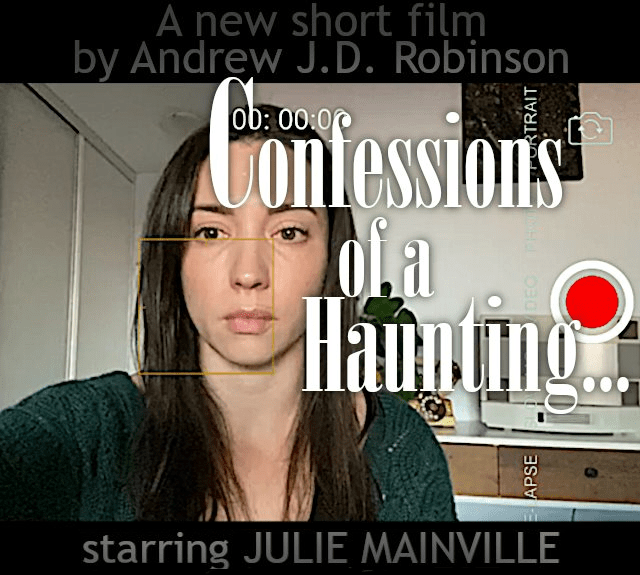
Confessions of a Haunting is a horror, drama short film directed by Andre J.D Robinson. The plot sees a woman (Julie Mainville) talk into an online confessional about a recent loss she has suffered in her family, as she does a voice can be heard talking back- presumably a voice from the other-side.

I will never cease to be surprised by the wonders filmmakers are achieving during lockdown. Though the premise and set up of this film are quite simple, they are used to great effect, both in terms of horror and drama.

On the drama side of things, the monologue delivered by Mainville is deeply personal and touching. We have all lost someone in our lives, or most at least, and can relate to what she is going through. The dialogue manages to become affecting and have an emotional impact which is always a positive sign.

In terms of horror, when we first hear the voice from the other-side it is shocking, because as you approach the midpoint you think that the short will be about this person coming to terms with their loss and that the horror on display will be emotional. However, when it does take a supernatural turn it is surprising and unnerving and you being to question what is happening.

Overall, a sad and creepy affair that is made as strong as it is by the writing.

Pros.

It is well written

It makes you feel something

The supernatural turn is unexpected

Mainville

Cons.

Could do with further expansion, maybe a few extra minutes

4/5

Interview With Hunter Farris: Writer, Director, Producer and Actor For Cursed Camera

Written by Luke

Hey Everyone! I recently had the chance to sit down and chat to Hunter Farris about his new horror shot Cursed Camera, which is a delightful play on the found footage demonic possession genre, with the camera itself being possessed by a demon and killing anyone who goes off screen. We chat about, curses, found footage horror and Martin Scorsese’s quotes on cinema. I hope you enjoy.

Q: If you had to sum your film up in one word what would it be?

A: Experimental.

 Q: Who is your filmmaking inspiration?

 A: Todd Strauss-Schulson. I love how he used movies about movies to explore deep, universal themes.

Q: Do you have any funny on set stories?

A: I forgot to write the last scene until almost the last day of shooting. It wasn’t even in the outline; it was just an afterthought. But because of that, our cinematographer/editor was unable to plan the shot properly. So he solved the problem by taking a single screenshot and focusing on that with everything in voice-over.

Q: If you could travel back in time to when you were first starting in filmmaking out what would you say to your younger self?

 A: First starting out in filmmaking. Slash your budget down to nothing. Then work with what you get. First starting out on this video? Everything will work out just fine. There were a few issues with production that caused me a lot of stress in the moment (like recasting someone on the day of filming), but none of them ultimately affected the finished product.

Q: What would you do if you were caught on the cursed camera?

A: Oh gosh… The whole point of a horror movie is that you can’t win. I mean, sure, I could try to outsmart it by following the rules and staying onscreen… until the rules change, and the camera starts randomly turning off and on. So I guess the best thing to do is turn the camera toward the wall and report the camera to the rental house so they can take care of it.

Q: What was your catalyst for making this film?

A: Honestly? I just wanted to make something that could go to a festival, without spending a dime on production. A found footage movie seemed like the most narratively interesting excuse for no budget and killing off characters was an easy way to make sure people only had to show up for a few hours of filming. So when I asked how they could die without spending money on makeup, effect, props, or costumes, I remembered Martin Scorsese’s quote (“cinema is the art of what’s in the frame and what’s not in the frame”) and decided to play around with the relationship between the character and the camera.

Q: Are there any particular films you are homaging, referencing, or spoofing with curse camera?

A: I’m gonna be honest, I haven’t watched a single found footage movie or possession movie yet, and pre-production went so fast that I didn’t have time to research. So I didn’t want to comment on any movies I hadn’t seen, so I was more commenting on the very idea of a camera. Not many movies make the camera diegetic, and I wanted to make the camera as diegetic as possible to play around with the idea of the interaction between character and camera.

Q: What is your favourite possession film?

A: I wish I could give you a good answer, but I don’t think I’ve seen any possession movies yet. I look forward to watching a lot of possession movies.

Q: How would you describe the state of modern horror?

A: It seems to me that modern horror is splitting into 2 camps: One wants to use horror as a vehicle to explore a theme, and the other wants to use horror as a vehicle to have fun with fear. And I think those are equally valid camps.

Q: If you ever won an Oscar or other award who would you thank in your acceptance speech?

A: I’m always deeply grateful to *every* member of the cast and crew. If I can, I always like to express gratitude to each one by name. And I’d definitely be thanking the people who financially support me while I’m chasing my dreams of filmmaking.

If you want to check out Cursed Camera you can find it on Youtube, and as always there is a review of the short up on my site now!

Cursed Camera: Video Killed…. Well Everyone

Written by Luke Barnes

Cursed Camera is a horror short directed by Hunter Farris. The plot sees a group of budding filmmakers become the unwitting victims of a demon after they start using a cursed camera that kills those who appear on its lens.

This is what horror cinema is all about, the wonderful shorts that breath life back into the genre! I greatly enjoyed this film for the short time it was on, as I thought it was very clever and it made me laugh.

If you have ever made a short yourself before, then you will find the premise itself quite hilarious and more than a little relatable. Moreover, I think the film’s lampoon of possession tropes is spot on, and I was laughing for the entire runtime of the film.

 I thought the acting was also quite good, and even though each character was only on screen a minute amount of time before they are killed off most still have their moment to shine and for the most part nail it.

Overall, this was a lot of fun to watch and if you have a spare few minutes you should definitely check it out, eagerly awaiting what the filmmaker does next.

Pros.

A novel premise

A strong lampoon

Many funny scenes

The cast are strong

The ending perfectly sets up more fun

Cons.

None

5/5