The Shape of Water

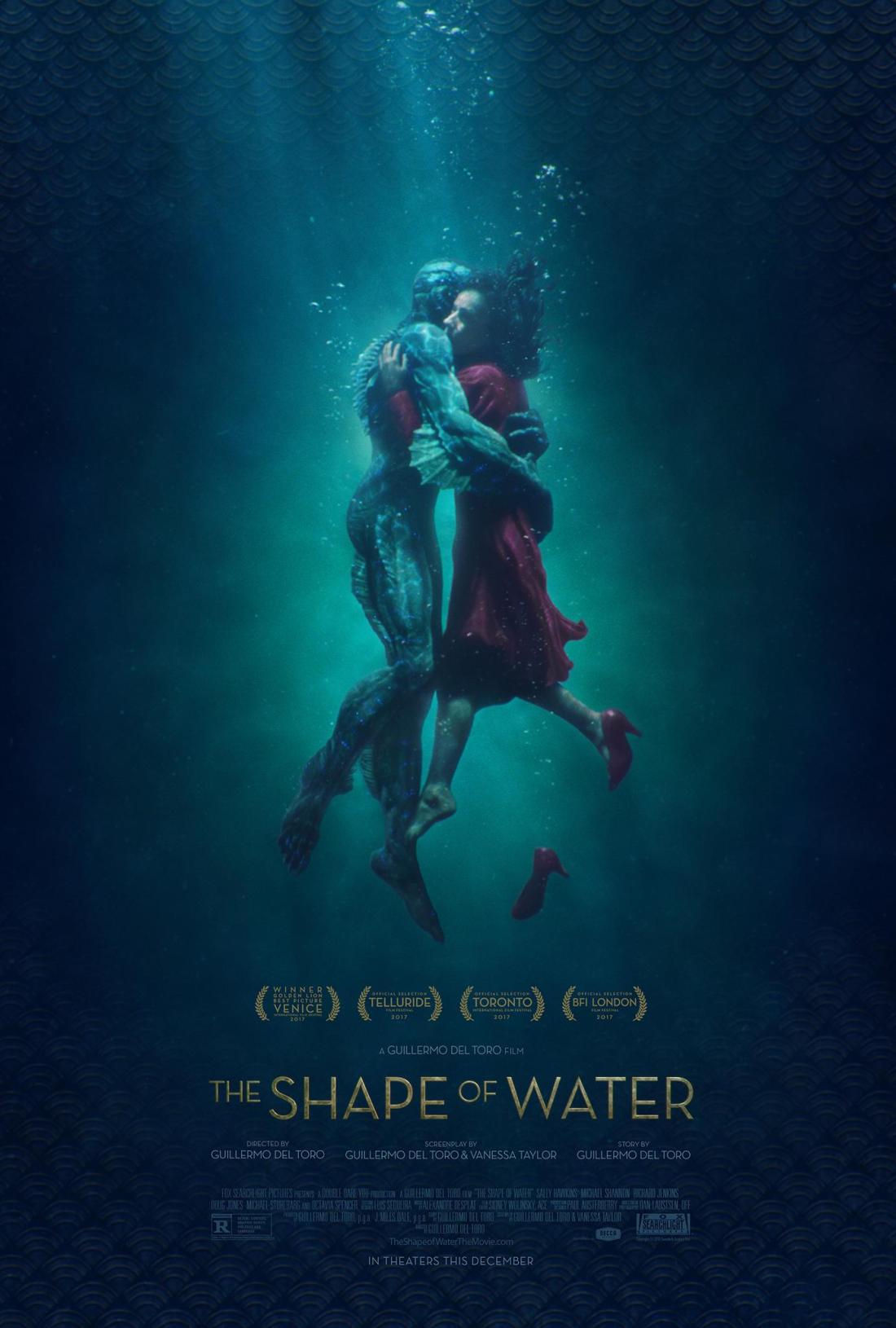
The Shape of Water is a dark fantasy romance film, by legendary film veteran Guillermo del Toro. To vastly simplify this is a very strange film but in the best way possible. The uniqueness and overall sense of originality set it apart not only from most other films; but from a lot of del Toro’s other works. The score for this film is excellent exquisitely capturing the 1960’s time period and creating the feeling that you are really in it. I found myself completely immersed in this film and that says a lot about the overall quality of the experience. The cinematography by Dan Laustsen is exceptional, with a lot of beautiful shots, in particular, a low angle shot during the gunfight scene later in the film. The film is built around the relationship between Sally Hawkin’s character of Elisa Esposito, and the man-fish God-like being, simply known as the Amphibian man. As silly as this central premise sounds, it truly is the heart and soul of the film and works surprisingly well. Even the sex scene between the two characters doesn’t come off as just being there for the shock value, but instead as tender and in a way even romantic. The director’s passion for monsters shines through every scene of the film, thus making the romance not only believable but also in a very strange way relatable. The script written by del Toro and Vanessa Taylor, is outstanding, with each character being fully flushed out and developed into a true whole. Unlike a lot of other films, no characters here feel wasted or underdeveloped. With a prime example of this being the mainly comedic support character of Zelda Delilah Fuller, played by Octavia Spencer, her character is developed and has an interesting backstory. The film like a lot of del Toro’s other works deals with a lot of heavy themes, in this particular case homophobia. Like a true master del Toro shows these themes through his character of Giles played by Richard Jenkins; who we see being the victim of homophobia. Though the scene is only brief, you still get a strong emotional response, and it helps to add context to the time period. Sally Hawkins performance is inspired despite being mute, (except for one fantastic musical number), her character is still wonderfully complex. Hawkins manages to convey nearly every emotion in this film in a sincere and believable way and her performance is a master class. Whats more del Toro features a subplot about the 1960’s space race, which manages to be both a wonderful capturing of the cold war rhetoric of the time, whilst also adding another level of depth to the narrative. Whilst lesser directors might let all these themes and subplots distract from the main narrative, del Toro weaves them together so that each subplot and theme, compliments the main story in a spectacular way. Also, Michael Shannon’s performance as Colonel Richard Strickland manages to be menacing and unpredictable, with his character most likely being a comment on the unhappiness of the idyllic suburban American dream. To conclude this film is a love letter to the weird and the strange, and celebrates everything about it, managing to create real emotions and stakes as well as being funny and charming. This is a must-see for everyone, especially fans of del Toro, I can’t recommend it enough. This is now my number one pick for best picture, it really does deserve to win.

5/5
Reviewed by Luke.
The 15 17 to Paris

Spoilers ahead.

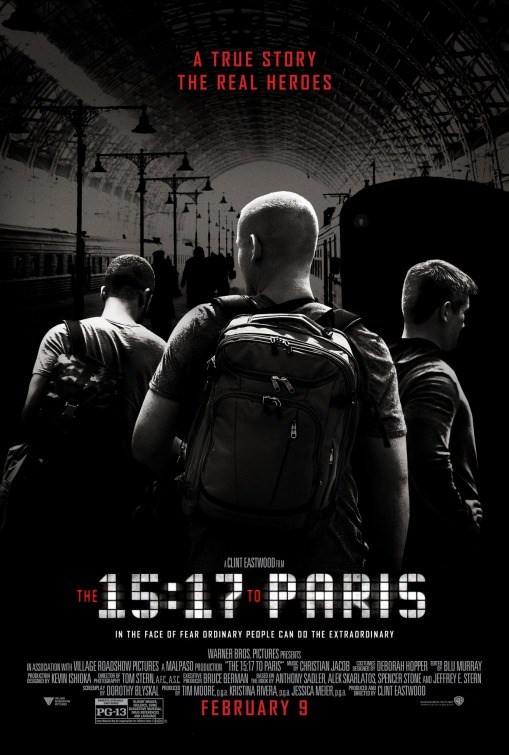
Firsts thing first, let just give Clint Eastwood some praise for the ballsy decision to cast the real-life soldiers in his film; rather than hiring actors. It was this factor that was always going to make or break the film, they might be heroic soldiers, but could they act? Surprisingly they can, with Anthony Sadler and Alek Skarlatos, being particularly good. However, that is where the positives end for this film. The first half an hour when the 3 men are children, is painfully hard to watch, with none of the child stars being at all likeable. Furthermore, there is some needless political and religious message shoved in for the what feels like the sake of it. This continues to be a problem throughout the film. The writing for this film often sets up a theme or plotline and then just moves on to the next one, never satisfyingly delivering on them, and all these subplots and anecdotal things just feel tacked on. What is the ultimate negative of this film, is the titular train is only about 15 minutes of the overall 1 hour, 30 minutes run time. Everything else that encompasses the other 1 hour and 15 minutes is glorified filler, that tries to establish the soldier’s lives and what motivates them but ultimately falls flat. In addition, it seems that Eastwood knows most of his film is filler as he foreshadows, (in almost a teasing way) the train journey throughout. This is shown when Spencer says “I feel like life is catapulting me towards something” about halfway through the runtime, they have a whole conversation about it, it’s the most blatant, badly used foreshadowing I’ve seen in quite some time. Another issue with the film is that a lot of the dialogue feels trite and unbelievable, this is again mainly presented in the section when they are children. The lines that particularly brought me out of it, were when the children were introducing each other by their last names, as well as an emotional scene where a young Spencer and Alek are saluting each other that just feels wrong and out of place. The film is really split into 3 parts when they are all children being the first, (which is damn near unwatchable, with Judy Greer performance as Joyce Eskel being it’s only saving grace). The other two were the trip around Europe that the 3 men were on, and then finally the train ride. Whilst the trip around Europe is well shot and to a degree enjoyable, it has an unmistakable feeling of filler and feels weirdly off base with what the rest of the film is about, and makes you question why Eastwood put it in. However, the final section when they’re on the train is where Eastwood shines, with it being an incredibly well shot, and having a very real, visceral, believable feel to it; that manages to capture the seriousness of the situation. It just as shame that this good sequence is only about 15 minutes of the film. Overall, I left questioning a lot of things, mainly whether this would have been better as a documentary rather than a feature film? Secondly why a lot of scenes has been included? Thirdly why the script rammed political and religious messages down your throat? If I had to point out the biggest issue the film has it would have to be the script, which was wildly, and I mean wildly all over the place, with some of the worst dialogue and foreshadowing, I’ve possibly seen in years. The only redeemable qualities the film has are, Judy Greer’s performance, the 3 soldiers were all convincing and performed well, and the final section of the film on the train is well-done and believable. To conclude I can’t suggest you go out and see this because it just has so many problems, and the only enjoyable part of the film is the last 15 minutes; that’s just a bad investment for your money.

1/5
Reviewed by Luke.

The Mercy

Spoilers ahead
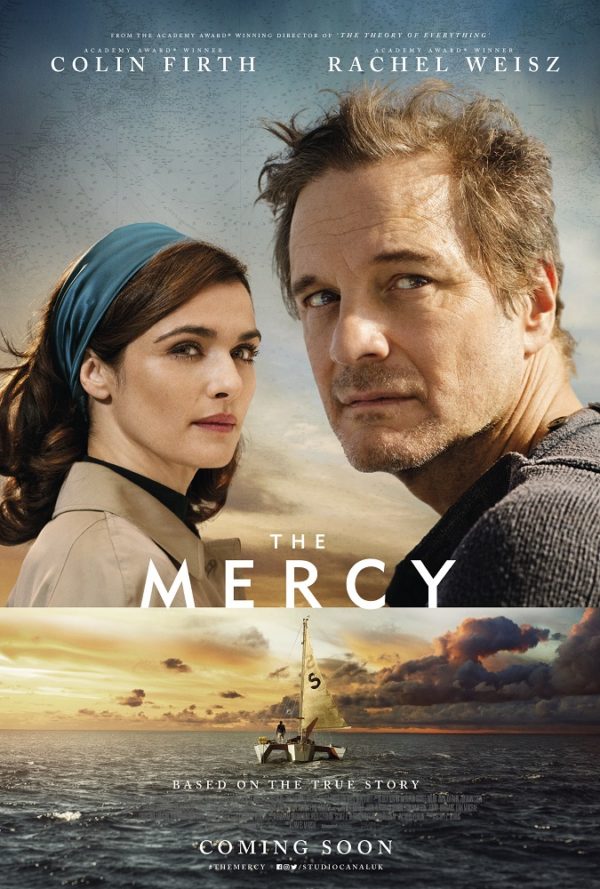
The Mercy is based on the life of sailor Donald Crowhurst, who was a weekend sailor who decided to participate in the Golden Globe race in 1968. When I went to see this film, I had no idea about the real-life story or the events that had happened, as a result, all the twists and turns were quite surprising to me. However, I believe this film biggest reveal that he decided to lie and fake his progress because he couldn’t go on was ruined by the trailer; so, when this was revealed my emotional response was tapered because I was waiting for it to happen. Furthermore, I think the plot suffers from some leaps in logic, with the ending being an example of this, with me questioning the characters motivations a lot of the time as I don’t believe that character’s motivations were properly established. In terms of tone the film is quite melancholy and even depressing, with the trailers seeming to suggest that it was going to be much more inspirational then it was. The film itself did two things that impressed me. The first was the use of digetic sound, to accurately present this idea of isolation out at sea, this was done to a masterful degree by Johann Johannsson who did the music design. This triumph of sound design is shown in one particular scene when Colin Firth’s character of Donald is playing the harmonica around Christmas time, and the scene perfectly captures the isolation and loneliness the man would have been feeling. The second thing that impressed me was the use of monologues, through these monologues we see the slow slip into madness that Donald goes through and we see his inner thoughts, this helps to empathises the emotional impact and helps the audience to emote and feel sorry for his character, as we can see the tole this adventure takes on him. Furthermore, the deconstruction of the character of Donald Crowhurst himself is quite interesting here, as we are first presented we a man who a family man is, who isn’t a proper sailor, but then we see him sacrifice more and more towards his ultimate end and we begin to question his character and decisions. The director James March does this deliberately to show these two contrasting ideas of Crowhurst, making the audience reach their own conclusions about what type of man he was. There are also quite a few nice montage scenes here which are used quite effectively and to great impact. The performances here from, Colin Firth (Donald Crowhurst), Racheal Weisz (Claire Crowhurst) and David Thewlis (Rodney Hallworth), are all top calibre. With the standout performance being by David Thewlis, who though not heavily featured managed to be charming, funny and memorable in his small role. I think this film also suffered from thinking it was cleverer then it was, and almost had an Oscar bait tone towards it; that it never quite managed to live up to.

Despite some plot holes and leaps in logic, the strong performances manage to improve the overall film. Still, with many other Oscar bait films out at this time of the year, I wonder if you’re time wouldn’t be better served watching something else. Whilst a riveting tale, this film also manages to be depressing and at time dull and ultimately a disappointment.

2.5/ 5
Reviewed by Luke.

Three Billboards Outside of Ebbing Missouri

Three Billboards is a drama crime film by Martin McDonagh, (In Bruges, Seven Psychopaths). This film is a very dark film from the offset, with it having many sad and even to an extent deeply upsetting moments in the film, (even ones bringing a tear to my eye). However, it also has a sense of determination that is shown through the characters, which is almost inspirational, as well as a few comedic moments. This sense of determination is shown through Frances McDormand’s character of Mildred, as she continues to search for her daughter’s killer months after the case has gone cold, never giving up hope of finding him. Much like McDonagh’s other works the character of Mildred is wonderfully 3 dimensional, as she is portrayed as strong and tough, sometimes even too much so, but the motivation for why she is like that is so believable and understandable that you don’t question it for a minute. What’s more, she is also shown to have a vulnerable side, which she displays during a few exceptional emotional scenes. McDonagh’s other recurring collaborators are also back, with both Rockwell, Harrelson and Cornish (all from Seven Psychopaths). Whilst her character is only very minor Abbie Cornish’s Anne shows one of the most accurate portrayals of grief I’ve seen in a long time, as well as being a memorable character. Furthermore, her character is the best embodiment of what this films keys themes are, with said themes being grief and trauma and the way on after that. Rockwell’s character of Jason is easy to hate within the first hour and of the film, however where the genius of McDonagh’s writing comes in is that he isn’t left as a 2-dimensional villain, by the end of the film we see him as a man who is deeply flawed but is trying to better himself. Finally, Woody Harrelson’s character of Chief Willoughby, is the emotional core of the film at least for me personally, as he is easy to root for, and you do feel bad for him in the early stages of the film you really do, but that is where this film is at its best, in the moral quandaries. Such moral quandaries are things like, how far is too far? With who to blame for tragedy is another strong one. This film very intelligently communicates its themes and message to the audience, without the need to rub it in, as many other films do, or making it blatantly obvious. The score for this film is also very impressive with it being able to capture this idea of small-town America near perfectly. The character of Penelope, played by Samara Weaving, is easily my favourite character of the film. Penelope is the 19-year-old girlfriend of Mildred’s abusive ex-husband. the reason her character works so well is that she is a comic relief character, as she is inserted into a few very tense scenes where she manages to not refuse the tension with her comedy but elevate it to another level. Her character along with near everyone else, are testaments to McDonagh’s writing ability. That brings me to my only criticism with the film, and that is Peter Dinklage’s character of James, unlike everyone else who’s character serves a purpose, James felt like a plot device in one specific scene, in addition, his inclusion felt not needed and oddly out of place at times.
Overall this is a well written, well-executed triumph and everyone should see it, for the great character and great moral questions.
4/5
Reviewed by Luke.

Journey’s End

Spoilers ahead

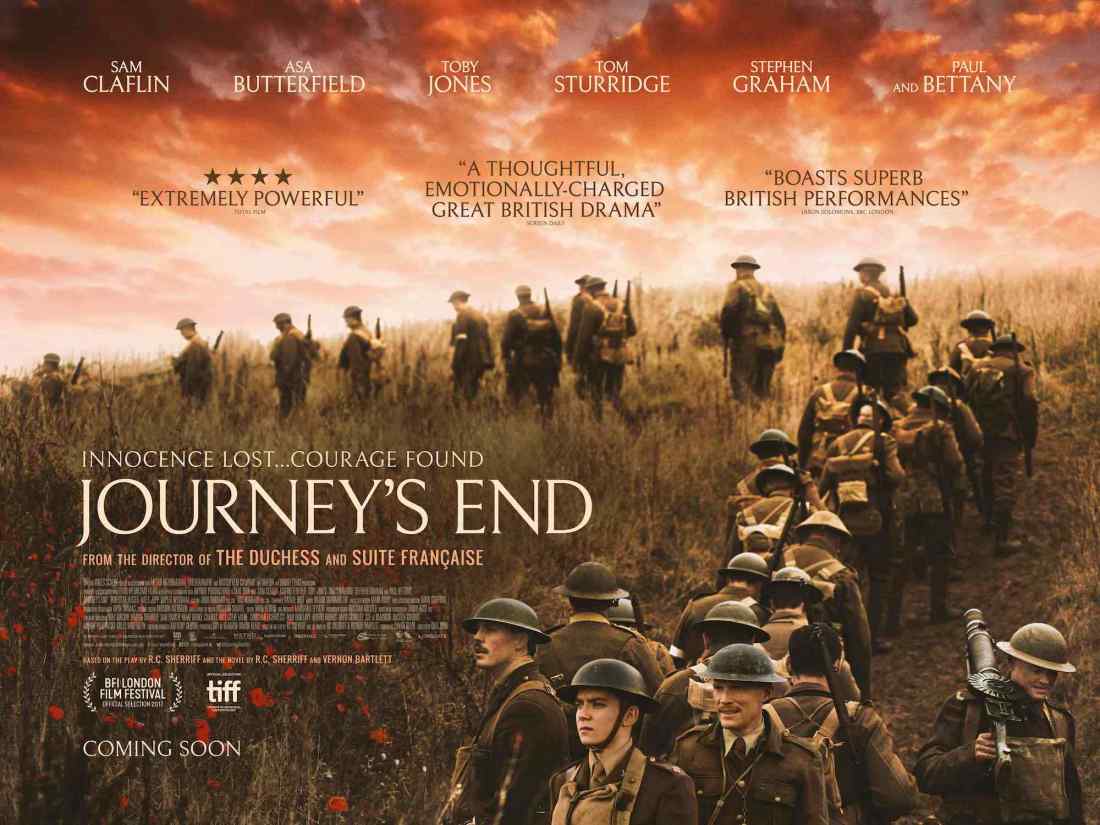
Journey’s End, is a harrowing film about a company of British soldiers that are stationed on the front line in France for 6 days during World War 1. This film is adapted from a play of the same name by R.C Sherriff, so the idea for this film has been around for a while. With the feature film itself being first announced at the British commemoration of WW1 back in 2014. Whilst the idea itself of soldiers on the front line waiting for an attack is fairly generic this film manages to capture all the emotions and the hopelessness the situation itself would bring. The film even in scenes where nothing much is happening, where there might just be a few lines of dialogue, has this overwhelming sense of dread and foreboding; as just like the soldiers themselves you are awaiting the German advance. What the director Saul Dibb achieves so effortlessly is this idea of contrast, this contrast is shown in many different forms throughout the film, eagerness vs hopelessness, naivety vs realism, the heroics and bravery vs the complete senseless loss of life. Through these contrasts the film explores a lot of themes in an intelligent way, not glorifying or overtly patriotic; but honest. The performances here are all standout with Sam Claflin’s Captain Stanhope, being a particular standout. Claflin’s character is haunted by the events he’s lead his company through and is quite noticeably an alcoholic. Stanhope as a character is completely 3 dimensional, as we see him fly through many different emotions such as paranoia, a real strong care for his men shown in quite a few compassionate scenes, as well as a very real sense of fear and doubt. Claflin handles all of these different emotions with complete ease, and never once did I view him as anything other than Captain Stanhope. Paul Bettany’s performance as Lieutenant Osborne is perhaps the heart of the film with him being the one who keeps everyone together and is a friend to both Claflin’s Stanhope and Butterfields Raleigh. Through Bettany’s performance, we see more of Stanhope flaws but we also see the trauma he’s been through to get them. My main criticism of the film, is the raid scene where Bettany’s character dies, during the scene which is one of the emotional peaks of the movie the cinematography is quite jerky and moves around very quickly, (perhaps this was a stylistic choice on the part of the director), which I personally found took me out of the moment and I didn’t quite understand what was going on.  On the whole, the cinematography and both the diegetic and non-diegetic music manage to paint quite an outstanding picture of what life in the trenches was like. Butterfield’s performance as Captain Raleigh is rather one note, personally, I believe he was only used as a contrasting figure to the character to Stanhope so that Raleigh could represent what Stanhope has left behind and will never be again. I believe that this film is a great insight into WW1 and one that doesn’t stray away from the dark pointless nature of war, it covers all the issues surrounding war such as loss and trauma with a well-rounded perspective. The film is at its core a drama film, as there isn’t much action in it when compared to something like 12 Strong, the character interactions and the interpersonal drama is amazing and obviously a result of a well-honed script based off fantastic source material. Overall I think this is a must-see film, as it so accurately shows all facets of war,  as well as focusing on the men behind it really taking its time to develop the characters. Whilst the film is let down by the cinematography in one sequence it doesn’t detract from the overall experience, and Claflin and Bettany are such commanding presences that you will never really notice the underused Butterfield.

4.5/5

Reviewed by Luke.

All the Money in the World

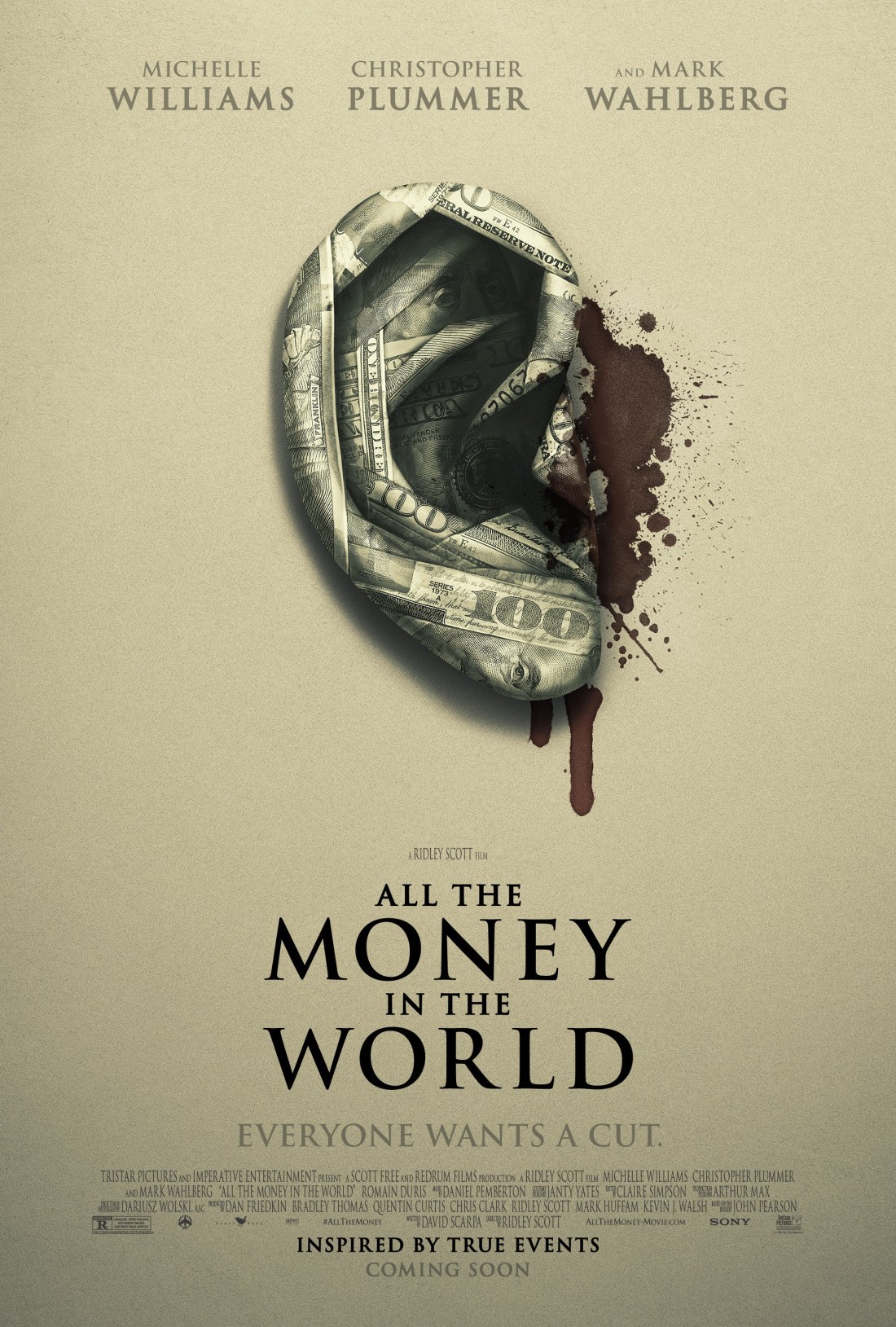
This film is a testament to Ridley Scott as a director, with him replacing an actor and reshooting all his scenes only months before release. Whats more these scenes are hard to tell apart from the rest of the feature, blending in well; in contrast to other recent releases such as Justice League. Christopher Plummer portrays the role with equal parts ruthlessness, and a sheer sense of greed that perfectly encapsulates the character of  J. Paul Getty. The film itself centers around the kidnapping of Getty’s grandson Paul, (played here by Charlie Plummer), and Getty’s refusal to pay any money in random. At its core, this film is defined by 3 key performances, Christopher Plummer’s Getty, who is tremendous throughout. With the performances of Michelle Williams, (Gail Harris), and Mark Wahlberg, (Fletcher Chase) also being critical. This is where the film fumbles, Michelle Willimas is perfect with her performance of a mother in crisis, trying to get her son back being both believable and the emotional backbone of the film. For anyone who has read any of my other reviews, they will know that so far this year I ‘ve been a big Michelle Willimas fan, with her role in the greatest showman being one of the best and most believable parts of that movie. However, it is the third key role that falls flat and that is Mark Wahlberg’s Chase Fletcher, who feels bland and uninteresting, really his role could be played by anyone. The strange standout social relationship of this film is between Charlie Plummers Paul and Romain Duris as Cinquanta, who are both excellent characters in their own right, but together they’re somewhat of an endearing pair. Duris’s Cinquanta is a sort of father figure to Paul and provides an interesting contrast to the usual stereotype of the despicable criminal. Through the character of Cinquanta, Scott explores the idea of a family with this man who is a criminal, who is one of the men who abducts Paul ultimately caring about him just as much as his mum. Furthermore, Cinquanta, when juxtaposed with Mr. Getty, is shown to be far more caring towards Paul than his own grandfather. This portrays one of the victims of the film as ultimately one of the antagonists.  The negatives for this film really come from pacing, the film is paced badly, with the second act feeling dull and ultimately unnecessary, with too much time spent looking at the Chase, Getty relationship which ultimately goes nowhere. There were points in this film where it lost my interest to such a point, I debated the merits of going to the toilet for a prolonged break. Also, there were subplots with characters such as Pauls father which again feel like they go nowhere, with his character going through big changes in the first act without much explanation.  The film could have benefited greatly from focusing more on Michelle Willimas’s character, and ditching Wahlberg outright. This is a gripping story sadly it’s just too long and not interesting enough, though I did appreciate the unusual captive captor relationship.

2/5

Reviewed by Luke

Darkest Hour

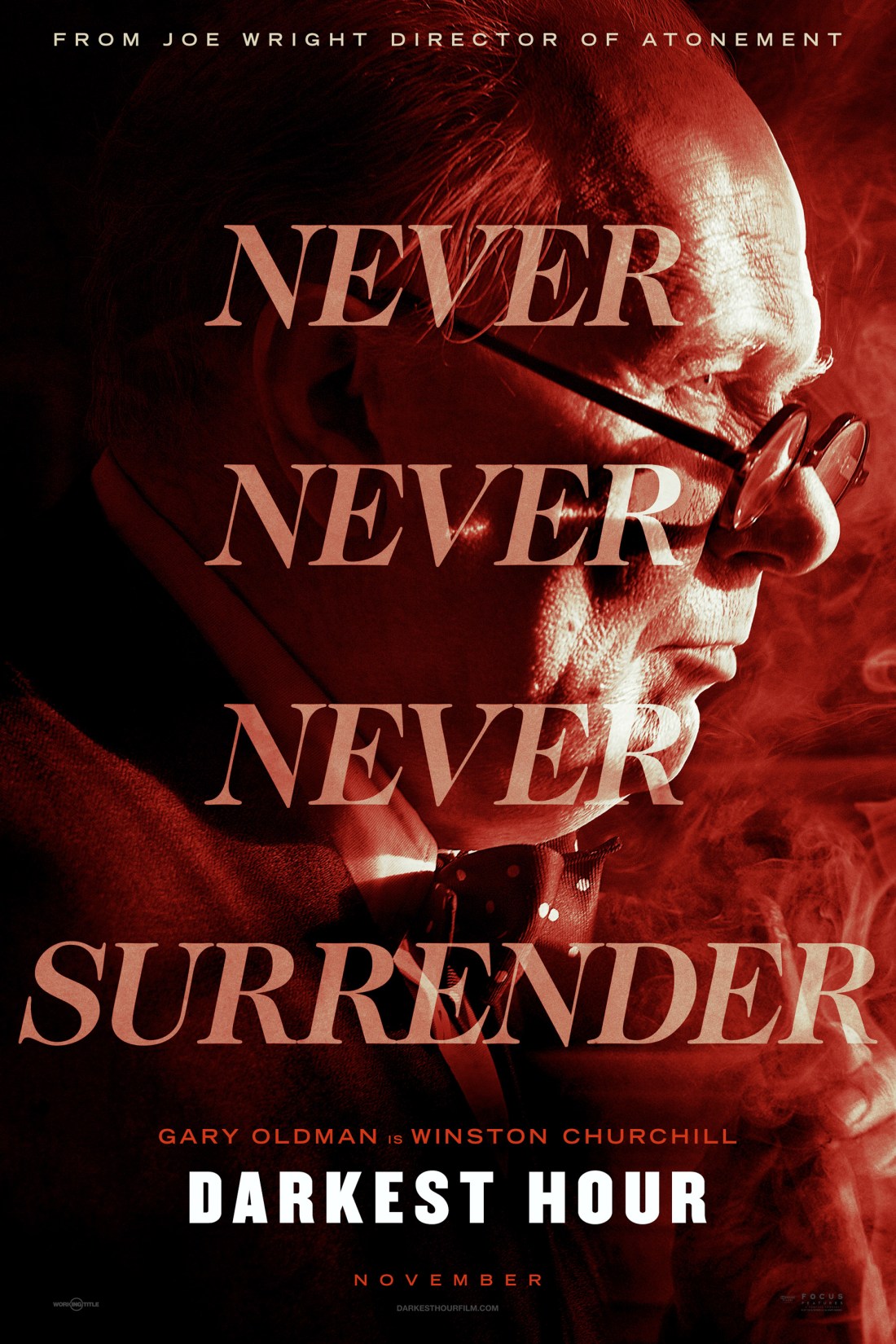
This film chronicles the early period of World War 2, through a time span covering roughly about a month. The period that the movie covers was before the Americans and Russians joined the war effort, a time when the British Empire was at its most vulnerable; and in many ways, this is reflected in the character of Winston Churchill himself. Gary Oldman portrays Churchill, a man synonymous with the British war effort. The director Joe Wright shows us a Churchill who is a far cry from the fearless war-time leader that we have come to know, we see a man who is loathed by his own party and has known many failures. The film acts as both a character study and also a new perspective on the previously trodden WW2 film. There are elements of a cat and mouse struggle throughout the film, with the hierarchy of the Conservative party made up of Lord Halifax, (in an excellent turn by Stephen Dillane), and the previous Prime Minister Neville Chamberlain, (Ronald Pickup) trying to force Churchill to enter into peace talks, when the man himself wants to fight to the bitter end. This film is incredibly accurate in its presentation of figure from the time period, such as Ben Mendelsohn’s King George the 4th, before I went to see this film I had been watching Netflix’s the crown which featured both King Geroge the 4th and Winston Churchill, and I had loved the job Jared Harris had done playing the late king but Ben Mendelsohn’s performance here made me completely forget about Harris’s iteration.  The film despite it’s PG age rating doesn’t stray away from the horrors of war with a Calais scene showing the sacrifice made and provoking an emotional response from anyone who sees it. It is in creating that emotional significants and capturing ideals and patriotism, that make this film as great as it is. Whether it is through Lilly James’s Elizabeth Layton, who experinces the horrors of war and carries on, or whether it is shown through the British public who have a bitter resolve to never surrender to Hitler no matter what. This film  has an air of hopelessness with the British position often looking bleak and that brings with it many sad moments, but it is with that the film also brings with it a sense of optimism, a sense that through the bad we can endure and come out stronger. Also Joe Wright dedicates quite a bit of screen time to exploring Churchill relationship with his wife Clementine, (played here by Kristin Scott Thomas), is shown to be the rock that held Churchill together when he most needed it, this emotional softer element of the film helps to keep it varied, and develops the characters in quite a satisfying way.  Overall this film is a well paced, well acted, well directed film and it deserves all the awards recognition it’s getting. This film inspired a strong sense of patriotism in me, what more can I say; except this film would make an excellent double feature with last years Dunkrik.

5/5

Reviewed by Luke