Interview With Shaun Rose: The Star/ Co-Writer And Director Of Making And Unmaking

Written by Luke Barnes

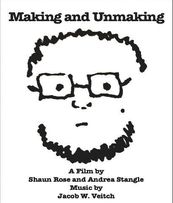
Hey Everyone! I recently had the chance to have a chat with Shaun Rose, the writer/actor/director behind Making And Unmaking a very personal documentary film that chronicles Rose’s experiences within the film industry around the film of him making Upstate Story. We discuss the creative process, whether the toll of Hollywood is worth it, and mental health. I hope you enjoy.  

Q: If you were to sum up Making and Unmaking in a word what would it be?


A Therapeutic. Another word would be extensive or exhausting.

Q: What was your message with this film? To inform? To share?


A: Initially it was just me trying to get so many feelings out in the midst of production of ‘Upstate Story’ as they both overlapped. I was in a deep crisis period. I will say that many who have watched the film consider it educational in regard to the creative process. Not just the no budget tier of filmmaking. 

Q: What was the inspiration or catalyst for you making this film?


A: Just wanting to heal or get better. My mental and physical health were in pretty rough states due to so much I was going through. I wanted the film to act as a sort of journal or diary where I could vent. 

Q: Would you describe the struggle you and other filmmakers go through to get films made as worth it?


A: Most of the time. There are horror stories out there. Mainly in Hollywood where filmmakers have expressed regret over certain projects. For myself, I have no regrets at all. It might be hard and at times frustratingly difficult, but the finished product has always been worth the hardship. 

Q: What advice would you give to young filmmakers working in the industry right now?


A: Keep writing and filming. There are a plethora of affordable cam options out there for you. Even modern cell-phones are being used frequently. Go for whatever you want to do. 

Q How did you find the production of Making and Unmaking different from that of your other projects?


A: I’ve only experimented with the documentary form in college so that was a departure from the norm. Many years in between. I also just started using DSLR’s too for the documentary so that was a learning curve. I was late to that party.

Q: Did you find the format of Making and Unmaking, freeing or constrictive?


A: Very freeing, but at times overwhelming. As a documentary, I feel the possibilities are endless or more flexible. Just stick to the truth no matter what. It’s the editing that becomes hard. Trying to keep the story moving along all the while keeping a smooth edit going is where it gets tricky. We only had 1 cam to use during the interview sections, so we had to film each interview 2 times at different angles. From there, try to splice it together. Trying to place the music by Jake was also tricky. Considering it’s a documentary, it was especially tricky. I just took his tracks and placed them in a way to compliment as opposed to overwhelm. I hope I did him justice.

Q: If you won an award who would you thank?


A: My children. Adrianna and Keenan. My co-creators on the film. My Father, Andrea, Jake and Charles. My family, critics who gave my work a chance. A bunch of my friends who have been very close to me in my darkest times. People to confide in during both personal and creative rants. And those that have passed who made a strong impact on me as a person. Gracelynn, Sue and Darlene. 

Q: What are your closing thoughts on the film industry in general?


A: I’m concerned about where it seems that comedy is headed. For centuries, comedy has largely consisted of others laughing at the misfortune of others. It’s always been offensive to some degree or other. There are so many different realms of comedy as well and nowadays, I fear that we’re heading into territory that minimizes what we can laugh at. Perhaps I should say censorship in general. 

Q: If you could go back in time to when you were young and just starting out in the film industry, would you tell yourself to go for it, or to rethink?


A: Go for it. It’s difficult, but getting your works out there, seen and appreciated, makes all the struggle worth it. 

You can check out Making and Unmaking right now on Youtube, and as always you can find a review of the film on my site!

Interview With Hunter Farris: Writer, Director, Producer and Actor For Cursed Camera

Written by Luke

Hey Everyone! I recently had the chance to sit down and chat to Hunter Farris about his new horror shot Cursed Camera, which is a delightful play on the found footage demonic possession genre, with the camera itself being possessed by a demon and killing anyone who goes off screen. We chat about, curses, found footage horror and Martin Scorsese’s quotes on cinema. I hope you enjoy.

Q: If you had to sum your film up in one word what would it be?

A: Experimental.

 Q: Who is your filmmaking inspiration?

 A: Todd Strauss-Schulson. I love how he used movies about movies to explore deep, universal themes.

Q: Do you have any funny on set stories?

A: I forgot to write the last scene until almost the last day of shooting. It wasn’t even in the outline; it was just an afterthought. But because of that, our cinematographer/editor was unable to plan the shot properly. So he solved the problem by taking a single screenshot and focusing on that with everything in voice-over.

Q: If you could travel back in time to when you were first starting in filmmaking out what would you say to your younger self?

 A: First starting out in filmmaking. Slash your budget down to nothing. Then work with what you get. First starting out on this video? Everything will work out just fine. There were a few issues with production that caused me a lot of stress in the moment (like recasting someone on the day of filming), but none of them ultimately affected the finished product.

Q: What would you do if you were caught on the cursed camera?

A: Oh gosh… The whole point of a horror movie is that you can’t win. I mean, sure, I could try to outsmart it by following the rules and staying onscreen… until the rules change, and the camera starts randomly turning off and on. So I guess the best thing to do is turn the camera toward the wall and report the camera to the rental house so they can take care of it.

Q: What was your catalyst for making this film?

A: Honestly? I just wanted to make something that could go to a festival, without spending a dime on production. A found footage movie seemed like the most narratively interesting excuse for no budget and killing off characters was an easy way to make sure people only had to show up for a few hours of filming. So when I asked how they could die without spending money on makeup, effect, props, or costumes, I remembered Martin Scorsese’s quote (“cinema is the art of what’s in the frame and what’s not in the frame”) and decided to play around with the relationship between the character and the camera.

Q: Are there any particular films you are homaging, referencing, or spoofing with curse camera?

A: I’m gonna be honest, I haven’t watched a single found footage movie or possession movie yet, and pre-production went so fast that I didn’t have time to research. So I didn’t want to comment on any movies I hadn’t seen, so I was more commenting on the very idea of a camera. Not many movies make the camera diegetic, and I wanted to make the camera as diegetic as possible to play around with the idea of the interaction between character and camera.

Q: What is your favourite possession film?

A: I wish I could give you a good answer, but I don’t think I’ve seen any possession movies yet. I look forward to watching a lot of possession movies.

Q: How would you describe the state of modern horror?

A: It seems to me that modern horror is splitting into 2 camps: One wants to use horror as a vehicle to explore a theme, and the other wants to use horror as a vehicle to have fun with fear. And I think those are equally valid camps.

Q: If you ever won an Oscar or other award who would you thank in your acceptance speech?

A: I’m always deeply grateful to *every* member of the cast and crew. If I can, I always like to express gratitude to each one by name. And I’d definitely be thanking the people who financially support me while I’m chasing my dreams of filmmaking.

If you want to check out Cursed Camera you can find it on Youtube, and as always there is a review of the short up on my site now!

Interview With Ethan Cvitanic: Writer/ Director/ Producer Of Hit Record

Written by Luke Barnes

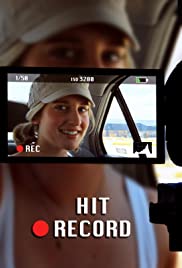
Hey Everyone! Recently I had the chance to chat with Ethan Cvitanic about his mockumentary film Hit Record, which follows a young women attempting to become the next huge, global pop star and in order to make that happen she agrees to be the subject of a documentary. In the interview we talk about the current ideas surrounding what makes a mockumentary, celebrity culture, and the price of fame. Enjoy!

Q: If you had to sum the film up in one word what would it be?

A: Delusion.


Q: What was the message you were trying to get across in the film? And why was it important to you?

A: Art is less about the outcome and more about the process. It’s difficult, it’s scary, but always fulfilling, so don’t be scared, just go for it! For a long time I wasn’t sure if I was qualified to become a screenwriter or make a movie, and then I just went for it and it was one of the best experiences of my life and I want others to go for it too.

Q: Who is your filmmaking inspiration?

A: I have so many, but I think Curtis Hanson is a big one. He’s done films in every genre and I really admire that adventurousness. LA Confidential is one of my favorite movies.


Q: If you could go back to the start of your filmmaking career and give your younger self some advice what would it be?

A: Be sure to storyboard before you start shooting (just to save time), but more importantly, don’t forget you’re making the movie for yourself. If it makes you laugh, cry, etc that’s the best you can do.


Q: Do you have any funny production stories?

A: There were a few close encounters with the cops, mainly when we were filming on top of a moving car, but we’re all actors so we could talk our way out of it 🙂


Q: How do you view the mockumentary genre?

A: Mockumentaries are best when they are pretty realistic. I don’t think many are anymore, but Blair Witch, Waiting For Guffman and a few others really nail that fine line. I hope they make a comeback because it’s my favorite genre.

Q: What comment does your film make on celebrity culture and do you view it favourably or negatively?

A: I think of celebrities as people who are more known for their personality than their art, and, instead of fighting it, just keep using that perception to make money. We can’t all be Adele or Meryl Streep so it exists for a reason, but I wish we could focus more on the music or the film that they’re in.


Q: What is the price of fame? and do you want to be famous yourself?

A: Fame means having less privacy and I love my privacy, so the obvious answer is no. But if I do become famous it would probably be really fun for about a week.

Q: What inspired you to make this film, what was your catalyst?

A: Shug and I both love mockumentaries and grew up in Oklahoma, so we wanted to make something that included our favorite places and people (most of the cast are our family). The catalyst for going for it was me finally raising $6K and having 6 weeks free over the summer, so I figured that’s not too much to lose in the grand scheme of life.


Q: If you were to win an award for this film who would you thank in your acceptance speech?

A: My three best friends – Shug, Alex and Michael.

You can watch Hit Record now, on Amazon Prime in the US and other online store fronts in you are elsewhere. As always my review is now on site now, so check that out too!