Interview With Jamie Insalaco: Writer/ Director For Will Reading

Written by Luke Barnes

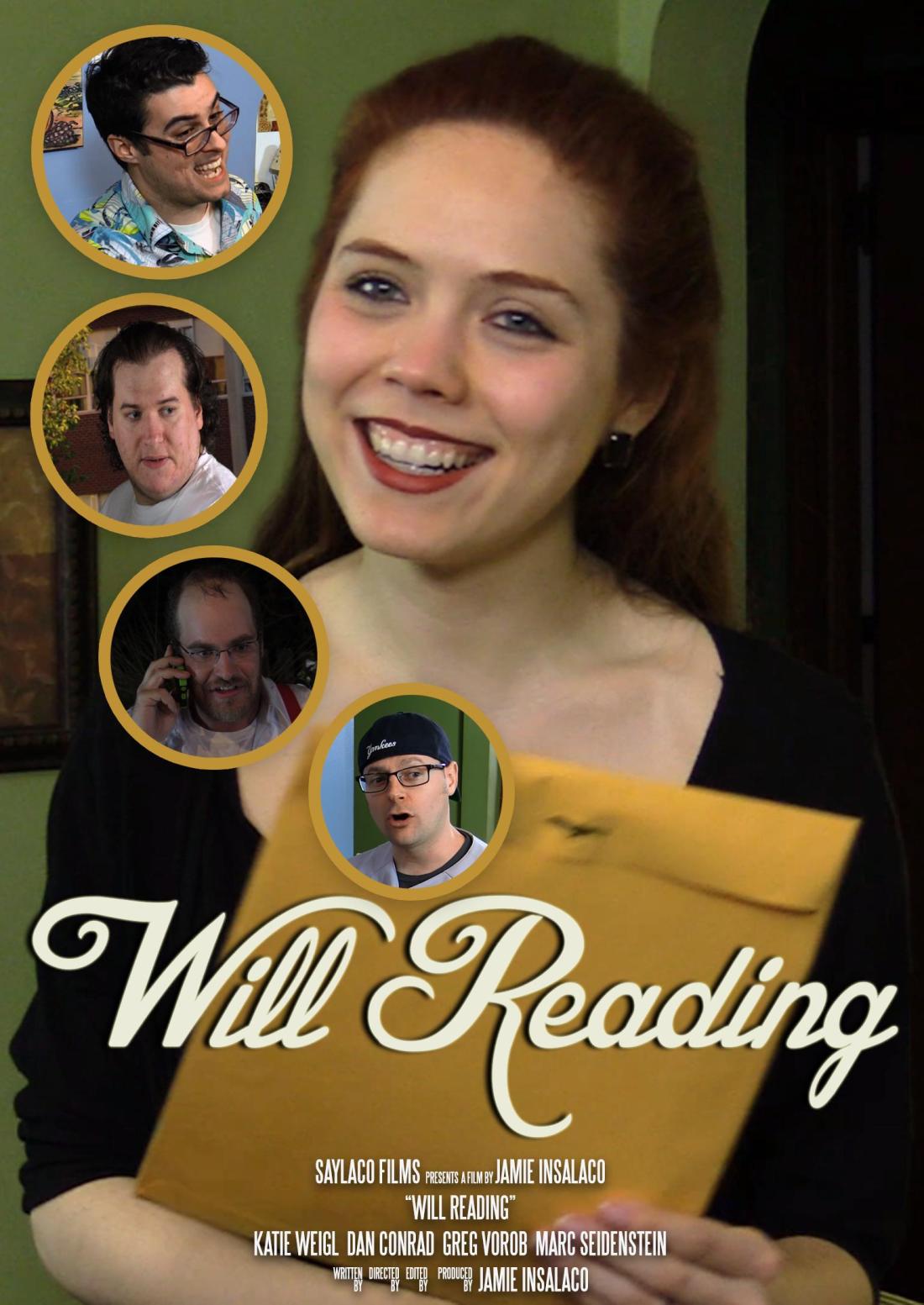
Hey Everyone! I recently had the chance to interview Jamie Insalaco about his film Will Reading. The plot of the film revolves around a group of friends who meet up to help their friends widow find some money their friend has hidden from the IRS. Within the interview we talk, about the meaning of friendship, do it yourself filmmaking and the Coen Brother classic No Country For Old Men

Q: How would you describe this film in a word?

JI: Everything!

Q: Who is your filmmaking inspiration?                                                            

JL: So many! The song drops in where old The Simpsons episodes would drop a musical number (“Marge vs the Monorail”), and the referential comedy of that writers room is certainly an inspiration. I appreciate Kevin Smith’s indie can-do “Why not?” spirit – and YouTubers showing how much they could do with so little really got me going. Will Reading is full of homages to other movies.

Q: What was your catalyst for making this film?        

JI: I knew I wanted to make a movie and I also knew I’d have to do it myself – so the situation dictated which story treatment I would develop into a script and that eventually became Will Reading.  The runner up was just too ambitious: it revolved around a wedding.  Too many locations, too many costumes, too many extras… but it was kinda similar in the respect that it would have a long dinner scene and a fight as the climax.  I don’t think I’d ever make a movie like this again in terms of no crew, extreme limitations on the script and so forth.

 Q: What was the message behind this film?                                        

JL: I think the viewer can take a few different ideas from the movie… and I guess I prefer to let them pick! One message that comes from the character journeys is “Know thyself.”  At least for Steve and Tom. For Dave and Wendy, it’s more of a “Give Trust a Chance” situation.  The movie takes place after the Great Recession economic downturn, so that certainly influences the messaging and colors a lot of what’s going on, how people are reacting to their situations and what the movie is saying about life at this time in the twenty first century in this little pocket of the United States

Q: Friendship is a key theme of the narrative in Will Reading, how would you say your film tackles this theme, what are its intentions?

JL: Relationships are always tricky.  As opposed to family, when it comes to relationships we choose – romantic or platonic – maybe we expect or at least want them to work perfectly.  And when they don’t, we end up with these “I thought I knew you” ideas floating around in our heads. What does it say about me that I chose this? Particularly here in Will Reading, Steve wants his relationship to go back to the way it was with Wendy when they were teenagers.  That’s a big ask. Wendy needs to get back to a place where she can trust Dave – the nature of these relationships have to change so they can move forward – that’s the thing we’re really trying to show here.

Q: What would you do if you found a large amount of lost or hidden money?

JL: I’d probably leave it where I found it!  I’ve seen NO COUNTRY FOR OLD MEN too many times. The line, “At what point would you quit bothering to look for your 2 million dollars” is burned into my brain! A large amount of money will always be missed, there are ALWAYS consequences to any action – the bigger the action, the bigger the consequence.  My answer is NO COUNTRY!  Everybody go watch NO COUNTRY.  Leave the money where you found it!

Q: Sequels or future filmmaking plans?

 JL: A sequel is highly unlikely but not completely off the table.  It’d be more of a spinoff rather than a Will Reading 2: On the Move direct sequel.  I have a short in the works and as far as features go, a horror movie and a “one last job” movie – one of which will probably be my next indie feature, unless something drastically changes!

Q: If you could go back in time to when you were first starting out as a filmmaker what advice would you give yourself?  

JL: Be bolder. Drink more coffee and keep going.  There were shots I wanted in Will Reading but they were too technically difficult to pull off by myself. Now, I have the experience and understanding to execute them – think it through. “There’s probably a way to cheat that in post if I plan it out right on set.”

Q: Any funny on set stories?

JL: Sometimes we’d get giggling and couldn’t stop.  I would hand out bottles of water as a mini break, to try and alter the mood. From then on, if anything went wrong, the cast would suggest I hand out water – like, if the battery on the camera died: “Water will fix this.”  Someone couldn’t get through a long bit of dialogue, “Have some water.”

Q: If you won an award for this film who would you thank in your acceptance speech?

JL: Of course the cast, who really brought Will Reading to life, and then a long speech about my wife and my mom, who were constantly behind me even though they are not particularly interested in filmmaking – they were just there for me.

If you would like to watch Will Reading you can find it on Amazon Prime right now, with a wider release planned for the near future and as always I have a review of the film up on my site right now!

If you enjoyed this interview, then please head over to my Patreon to support me, I offer personalized shoutouts and the ability for you to tell me what to review next. Check it out!
https://www.patreon.com/AnotherMillennialReviewer

Interview With Phil Stubbs: Writer/ Director Of Last Chancers

Written by Luke Barnes

I recently had the chance to interview Phil Stubbs writer and director of Last Chancers, a film about two friends who run afoul of a local gangster and must find a way out of their situation. We chat about

Q: How would you describe the film, in a word?

PS: Friendship

Q: Who is your filmmaking inspiration?

PS: Peter Jackson

 Q: What was your catalyst for making this film?

PS: I just had to try making a feature film, despite having no experience.

Q: Any funny on-set stories?

PS: An unpleasant cafe owner was having an argument with Brian Croucher then recognised him from EastEnders.

Q: Gloucestershire plays a large role in the film, why was this setting so important to you and the film?

PS: I’ve always lived in Gloucestershire and always thought it would look good on film and be a different setting for this kind of story

 Q: What is your favourite British crime film, other than your own?

PS: The Long Good Friday

Q: How would you describe your experiences making this film?

PS: Very stressful. Learning how to get the work done while battling many onset problems

Q: How did you manage the comedy to crime ratio, and how important was the buddy dynamic between Flynn and Aiden?

PS: Keeping the tone consistent was important so I was very careful when writing the script. The friendship between Flynn and Aiden anchors the whole story so had to be believable and compelling for audiences to enjoy the film.

 Q: If you could go back in time to when you were first starting out as a filmmaker what advice would you give yourself?

PS: Don’t get so stressed, take more time to get the shots how you want them.

 Q:  If you won an award for this film who would you thank?

 The amazing cast, the crew, the editor Lucy, and my girlfriend Ali for putting up with me pursuing the crazy idea of being a filmmaker.

If you enjoyed this interview you can find Last Chancers on Amazon and as always I have an review of the film on site now.

If you enjoyed this review, then please head to my Patreon to support me, I offer personalized shoutouts, the ability for you to tell me what to review next, and a film based Q and A. Check it out!

https://www.patreon.com/creator-home

Interview With Tom Heard: Actor/ Filmmaker Getting It

Written by Luke Barnes

I recently had the chance to talk to actor/ filmmaker Tom Heard about his romantic film Getting It, which follows a selfish man as he opens himself up and finds love. We talk about, representation, love and Call Me By Your Name.  

Q: How would you describe the film in a word?

TH: Hope. (That people can change).

Q:  Who are your filmmaking inspirations?

TH: Well, Mike Nichols has always been my hero. And now Luca Guadagnino (Call Me By Your Name) is right up there.

 Q: What was your catalyst for making this film

TH: I wanted to make a love story about two gay men where being gay isn’t the story. Just two

people who fall in love who happen to be gay.

Q: Any funny on set stories?

TH: The campfire scene was shot on pastureland owned by a friend of mine where it had just poured rain and we had to dodge puddles and cow patties all night long!

Q: How would you describe the process of trying to get an LGBTQ+ romance film made?

TH:  I met no resistance at all. Only support. Everyone thought it was a great idea and loved the story!

Q: How do you feel about the current state of the romance genre?

TH: Well, because of films such as the aforementioned, “Call Me By Your Name,” as well as others like, “God’s Own Country,” I think we’re in a great place at present!

 Q: Would you say Hollywood is more progressive now than it has been in the past few years?

TH: I think Hollywood has jumped light years recently and has really embraced alternative storytelling.

Q: What was the message of your film? What did you want to say?

TH: That the most selfish thing anyone can do for themselves…is to be unselfish. In other words, the more you give of yourself, the more you will receive in return.

Q: If you were to go back in time to when you were a younger filmmaker first starting out what advice would you give yourself?

TH: The same thing I’d say to anyone. Believe in yourself. What have you got to lose?

Q: If you film ever won any awards who would you thank in your acceptance speech?

TH: My best friend, Michael. His constant encouragement gave me the confidence to embark on this journey.

Q: Future filmmaking plans?

TH:  I am currently writing, “Comeback” about two actors who give each other’s careers and lives new life!

If you enjoyed Getting It you can find it on all good streaming platforms and on DVD, and as always you can head over to my site to find my review of the film.

If you enjoyed this interview, then please head to my Patreon to support me, I offer personalized shoutouts and the ability for you to tell me what to review next. Check it out!
https://www.patreon.com/creator-home

Interview With Darcy Weir: Head Writer/ Director For Crop Circle Realities

Written by Luke Barnes

I recently had the chance to chat to Darcy Weir about their documentary film Crop Circle Realities, the film serves to investigate the phenomena of crop circles and tries to suggest possible origin theories for them. We discuss other worldly visitors, UFO’s and of course the actual origins of crop circles, I hope you enjoy!

Q: What word would you use to describe Crop Circle Realities?

DW: Informative


Q: Who is your filmmaking inspiration?

DW: James Fox

Q:  What was the catalyst for you making this film?

DW: I found this story sitting in some hay in England…Jaime Maussan and I had done a couple documentaries together

and I saw how for years since the early 90’s he had been flying over to England to observe first-hand the crop circles as they appeared.

I wanted to find out more about his experience and what he had learned. This led me to meeting Gary King, who was the first person to

lead Jaime Maussan around a crop circle. It was all laid out for me from there.


Q:  Did you run into any stumbling blocks while making this film?

DW: Yes, I was looking for the original video of the Oliver Castle UFO laying a crop circle formation and through Tercer Milenio a Mexican News agency, I was able to obtain it finally.


Q: Do you have any fun on-set stories?

DW: Jaime Maussan fell off his seat at one time because he was startled by a call that he received on his cell phone mid interview. We had to cut that take for sure.


Q: What was your message with this film what were you trying to convey? 

DW: Not all crop circles are manmade, and the ones from an off world source have important messages for mankind. “Much pain, but there’s still time”.


Q: If you could go back in time to when you were first starting out as a filmmaker what advice would
you give yourself?

DW: Don’t be afraid to take chances, connect with as many like-minded people as possible and don’t waste your time on the other ones.


Q: What is the reality of crop circles?

DW: They have been showing up en-masse in the Wiltshire area of England for centuries now. There is a continuity in the messaging there and they will keep coming every year.


Q: If you won an award for the film who would you thank?

DW: My Wife, for supporting me and tagging along on these interview adventures.


Q:  Would you consider doing a follow up Documentary in the future?


DW: Yes, there is still a lot to talk about in terms of important crop circle messages that have shown up.

If you would like to check out Crop Circle Realities then you can find it on various streaming marketplaces, and as always check out my review of it which can be found on my blog right now!

If you enjoyed this review, then please head to my Patreon to support me, I offer personalized shoutouts and the ability for you to tell me what to review next. Check it out!
https://www.patreon.com/AnotherMillennialReviewer

Interview With Terence Elliott: Writer/ Director Of Devil In The Woods

Written by Luke Barnes

Hey Everyone!  I recent had a chat with writer/director Terence Elliott about his new horror feature Devil In The Woods, which follows a group of film studies students out in the woods who soon run into something supernatural, in our conversation we talk about, the creepiness of the woods, Ti west, and a shared remembering of our days as film studies students.   

Q: How would you describe the film in a word?

TE: That’s a tough one, I guess I’d say tragic. Yeah, tragic. I think that really covers some events that predate the story, along with the path that follows.

Q: Who is your filmmaking inspiration?

TE:  Ok this is a 2 fold answer. My first inspiration has to be John Carpenter. I remember as a child seeing Halloween for the very first time on BBC 2. Mark Kemode presented an intro to the film and I was aw struck. Carpenter has such a unique classic look to his films, and he is the master of creating suspense and dread. I’d have to also say Peter Goddard. I met Peter working in retail many years ago, and he asked me to help fill a small role in his debut feature film ‘Season of the Witch’. It was so inspiring to see someone just getting out there and making a film, something I’d wanted to do but didn’t think a real possibility. From there I’ve been fortunate to work with and learn a lot on subsequent films.

Q: Do you have any funny on set stories?

TE: Yes! On the final large shoot, which had been plagued with Delays due to recent lockdowns and Covid restrictions, we were finally able to get going. Nicholas Carter, who plays Officer West, had stepped up to help out with gore fx at the last minute, but first he’d overslept when I’d gone to pick him up, then he got an Uber from 30 miles away, got dropped off but took the wrong turning and was lost in the woods! He found us eventually.

 Q: How important is natural horror to you in the film?

TE:  Whilst I love all sorts of horror, even cross genres with things like sci fi, I think there’s something instinctively scary when that horror could be close to home, based in reality. Saying that, a big influence on the script for the Harvest of the Dead films was H.P. Lovecraft, and that’s some of the most out there stuff!

Q: Did you focus on atmospheric horror over jump scares? And if so how did you strike the balance between the two?

TE: Atmospheric horror for sure. I find jump scares more often than not just a bit on the nose. Yes, I tend to jump at them myself 9 times out of 10, but when writing I focus more of creating that sense of unnerving, I find that far more interesting

 Q: What was your catalyst for making this film?

TE: So I’d co-written and played the killer in Peter Goddard’s Harvest of the Dead and had a greater involvement in the script on its sequel, along with helping more and getting more involved, so really I felt that I needed to challenge myself with writing a feature script myself and trying my hand at directing.

 Q: For me this film brought back a lot of memories of shooting short films in the woods, was that the idea to capture a sense of nostalgia within film students?

TE: Yes it was a trip down nostalgia avenue for me as my first media assignment was a short horror filmed in the local woods over a decade before. With zero budget filmmaking you have to be practical with what you can shoot and where, it just so happened that I’d wanted to create this film project within a film and went to my roots with the location.

Q: Sequel ideas or future projects?

TE: I’d deliberately left the ending lingering on a particular item as all the answers for the surviving characters could be found on that (being vague to avoid spoilers!) but I don’t know if I’ll ever be returning to those characters and that world. I like the ambiguity of it and there’s a direct starting point to pick things up from but right now I have no plans for a sequel.

Q:  How would you describe the current state of horror?

TE: There’s a lot of interesting projects going on currently. Ari Aster is a big inspiration with his features Hereditary and Midsommar so I’m looking forward to what he makes next. Also I’d heard Ti West is returning to horror which is very exciting. Peter Goddard and I have just finished a script for our next collaboration which we’re both very excited to get started filming. I think horror is in a good place, you just have to keep your ear to the ground and know what to look out for, as there’s some real gems recently.

 Q:  If you won an award or Oscar for this film who would you thank?

TE: I’d obviously thank the cast and crew, without their tireless effort none of this would be possible. Again, Peter Goddard for helping me really from day one, whether loaning me equipment, offering editing advice or filming a lot of the action scenes, I’m indebted to him. Also my mum. Me and my sister, Cari Payne who operated the boom and played Judy Lench, lost our mum about a month after production started. It was a really tough time but also brought us closer together so if this won an Oscar, it’s for you Mum!

If you would like to watch Devil In The Woods you can find it on DVD or on BD-R via Vipco and as always you can find my review of the film on site now.

Interview With Jimmy Kustes: Writer and Actor Body Swap

Written by Luke Barnes

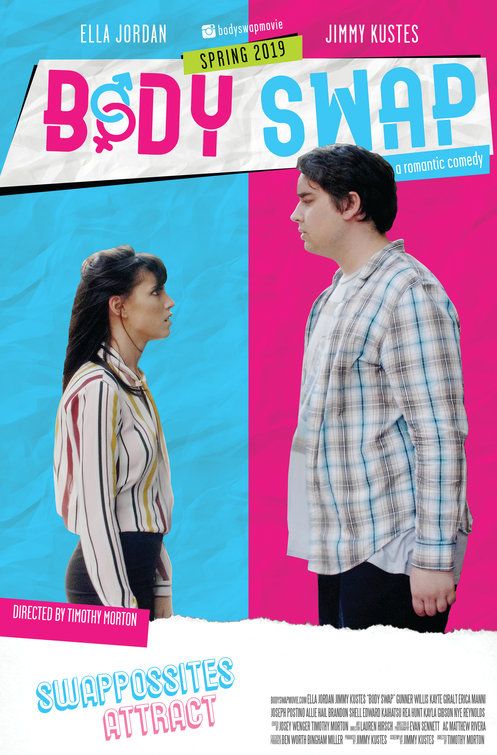
Hey Everyone! I recently had the chance to chat to Jimmy Kustes the writer actor star of Body Swap, a film about two very different people who swap bodies and have to experience things from the other’s point of view. We talked about the art of writing good dialogue, fixing up houses and Napoleon Dynamite  

Q: If you were to describe body swap in a word what would it be?

JK:Independent.

Q: Who is your filmmaking inspiration?

JK: My two biggest are John Hughes and Billy Wilder. But I like the Andersons, PT Anderson and Wes Anderson. With a limited budget the one thing you need to focus on is the dialogue. I envy filmmakers that can make a film with just visuals. Ghost Story has very little talking but I’m not sure if I have that skill. 

Q: What was your catalyst for making this film?

JK: I had the script lying around and had already done a small movie with the director Tim Morton called New Cops. My parents and brothers have been fixing up houses since I was a kid so making something that gets everyone involved and proud of their work that you can give to someone else is a great feeling. Unlike houses, making money off films is something not many people have figured out. There’s a reason New Kids on the Block and Vanilla Ice have HGTV shows. 

Q: What is your favourite Body Swap film, other than this one of course?

JK: 17 Again is good. It has a 90s style trailer even though it came out in 2009. We actually released 1990s, 1980s, and 1970s style trailers for Body Swap in addition to the modern one. It just so happened that Wandavision was released with a similar concept where each episode was based off of a different era. 

Q:  How important was the balance between romance and comedy here, and how did you manage it?

JK: Well it’s not a sappy romance but you can’t free base comedy, it gets exhausting. Step Brothers and Napoleon Dynamite might be the only movies to pull that off. You have to dilute it with a genre like Ghostbusters or Black Dynamite does. The go-to genre to mix it with is romance. And I’m a big fan of how Billy Wilder does that so hopefully we pulled off something close.

Q: Why did you choose to structure the film as a body swap?

JK: There aren’t that many entries in the genre even though there were three in 2020 with Body Swap, Possessor, and Freaky. I thought the romantic comedy where the slob meets the career woman had been done quite a bit so maybe adding two worn genres would be original if they body swap as well. Just so happen, Freaky made a horror movie where the final girl and killer swap bodies so we have a bit of a twin movies situation. I’m not complaining because it’s free advertising.

Q: Do you have any funny on set stories?

JK: The scenes in the cafe were fun to shoot because we had a lot of extras and they bring their own dynamic and make it fun.

Q: Sequel ideas?

JK: One of the characters is watching a Christmas movie on TV in Body Swap so maybe a sequel where the Christmas movie is the whole thing, and they watch pieces of Body Swap 2 from the other side. 

Q: What is your personal favourite moment from the film?

JK:  I enjoy the ending; it ties the whole movie together. It took awhile to find a satisfying ending.

Q: If you won an award for this film who would you thank in your acceptance speech.

JK: That actually did happen! It won best feature awards at Louisville International Festival of Film and Peachtree International Film Festival. One is headed by an Academy member Conrad Bachmann and one is Academy Award-qualifying so that’s basically like winning an Oscar. Isn’t it? I like to thank Tim the director, my friends Worth, Brent, Sean, Laura, and Tracy who worked on it. Matt, Evan, Allie, and Ella and the rest of the cast and crew. I mean our lead actress filmed and cut together a “behind the scenes” video so everyone pitched in more than they had to, to get it done.  

If you want to check out Body Swap it is on Amazon,  the Google Play Store and Youtube, and as always I have a review of it up on the site now!

Interview With Michael Caradonna (Producer) And Geoff Ryan (Writer/ Director): Blood From Stone

Written by Luke Barnes

Hey Everyone! I recently had the chance to chat to Michael Caradonna (the producer) and Geoff Ryan (the writer/director) about their neo-noir, western, vampire flick Blood From Stone. We talk about

Q: How would you sum up Blood From Stone in a word?

MC:  Honest. I have been a fan of the Vampire genre for as long as I’ve been a fan of film. Blood From Stone shows the realistic problems today’s vampires would deal with should they really exist.

GR: Unique. I wanted to make something different from anything else out there – for better or for worse – and judging from both critic and audience reviews it seems like we succeeded. 

Q: Who is your filmmaking inspiration?

MC – I enjoy films of all genres which has opened the door to appreciating the likes of Soderbergh, Kubrick, Scorsese, Lucas and Spielberg, but looking at a whole catalogue, I’d have to say Quentin Tarantino. From writing True Romance to his latest Once Upon a Time in Hollywood, he inspires me as a Producer.

GR – So many to choose from! With this one I’d have to say the most overt influence would be Tarantino. From the genre-blending to the character banter punctuated by extreme violence, to the non-traditional story structure… it’s got a lot of his early works influencing it.

Other big influences would be Peter Greenaway, Paul Verhoeven, Robert Altman, The Coen Bros, and on and on…

Q: Other than your film, what is your favourite vampire film?

MC – Many films come to mind, but I would say Kathryn Bigelow’s Near Dark. There was always something gritty and honest with that film and one of the first films I thought of when I read Blood From Stone.

GR – Let the Right One In. I love that it’s a great movie that perfectly balances being a beautiful character story and a haunting vampire tale.

Q: How did you gauge the emotional tone of this film, between having the character seem sympathetic whilst also being a blood thirty monster? 

MC – I defer this question to my writer/director Geoff Ryan.

GR – As anyone who has been in a toxic relationship knows, the emotions can go from deep love to vicious hate in a matter of seconds. Or, at the big picture level, how a society with so many enlightened and progressive advancements is still capable of primal brutality, selfishness, and tribalism. To me, vampire lore was a perfect way to explore these ideas: It was a way to explore the way our own worst impulses, no matter how much we try to deny them to ourselves or bury them in the past, still make up so much of who we truly are. None of the characters want to be monsters and go to great lengths to convince themselves they are good people (and in many ways they are), but their actions matter. I wanted to really show how actions have consequences no matter our good intentions.  It is something all of us do. I personally might not be a vampire or a killer, but I am a citizen of a nation that wages wars, I buy products from exploitive companies, I eat once living animals, I’m sometimes a crappy friend, and so on. These are things I don’t want to define me but to those who are impacted by these actions it is who I am. And, so, in the story it’s about the search for balance and how we live with the monster inside of us. 

Q: Do you have any funny on-set stories?

MC – Oh my, where do I start?  The crew that worked together on this film was full of its own great characters. From the encounters with the Las Vegas Police Department when I get pulled over while getting the crew food at 3am and they discovered “blood” all over the back seat, to casino security, with hand on gun, following up on a video feed showing dead bodies being dragged down a hall where there were supposed to be no people. We had such a great time on set. While getting every shot that Geoff required, there were infinite moments of fun, laughter and comradery.

GR – So many funny stories! This was really a once-in-a-lifetime type of film for me because the team that came together to work on this was a phenomenal group of fun people. Add to that the ridiculousness of what we were filming, and it made for some funny moments. Like when casino security had to do a safety check because they saw us dragging dead bodies through the hallways or having to explain to a policeman who pulled us over why there were blood stains all over our car (my car’s backseat is still a blood stained mess). On the Blu-Ray there’s a bloopers segment that captures some of the fun but nowhere near the almost constant state of joking, hijinks, and lunacy we went through. 

Q: How would you describe the current state of the Vampire horror sub-genre?

MC – Just as in the myths and legends, vampires will never die. While I am biased, I think that Blood From Stone is up there with many other great vampire films throughout filmmaking history. There are many bad vampire films that are good and many good ones that do not get the attention they should. Every once in a while there is a film that truly stands out like The Hunger, The Lost Boys and even What We Do In the Shadows. These films draw us in and, as fans, we suck it all up. The current state of the Vampire films is alive and well.

GR – Just like all movie genres, there’s a ton of mediocre-to-bad with some exceptionally unique and amazing work shining through. Plus, there’s some really exciting new Dracula/Nosferatu films in the pipeline that I’m eagerly anticipating. Much like vampires themselves, the genre won’t ever die, and great artists will continue making great vampire films while some will suck the corpse dry for whatever cash-grab potential it has. 

Q: Was there a message you were trying to communicate with the film? And if so what was it?

MC – I defer this question to my writer/director Geoff Ryan.

GR – I kind of touched on it in the early question about tone but the primary theme I wanted to explore was about our interconnectedness. It’s why the two main characters only share two scenes together: I wanted to tell a story of how their lives are connected even when their actions aren’t directly to each other. And, I intentionally told the story in a way that offers a lot of ideas in a way that will allow the audience to create their own opinions on it. It’s been fascinating to hear from audiences about how they see the characters and the story. Some see it as a tragedy, some as a love story, some as a dark comedy. Some people think Jure is a monster and others think Darya is the real monster. 

But the most important line of the film to me is when Viktoria tells Jure, “There are no endings, only cycles. It’s your choice: Creation or destruction, vengeance or forgiveness.” This to me is the message of the film. We all have those choices in our lives. Are we creators or destroyers? Do we seek forgiveness for our own sins, or do we seek vengeance for wrongs against us? The choices we each make will shape the future for humanity. Do we circle back to another dark ages or do we progress forward into a brighter future? 

Q: How important were western and neo-noir elements to you as you were filming? 

MC – I defer this question to my writer/director Geoff Ryan.

GR – To me they were very important! For Jure, the movie is a western. For Darya, it’s a noir. Even the score represents this with Jure’s music being composed of guitar, banjo, and lap steel to evoke that country/western vibe. And Darya’s music is reminiscent of Bladerunner with pulsing Moog and sparkling synth Arpeggios. He’s rooted in the old world and she aspires for the future. 

Westerns especially are iconic American stories. The lone hero is a trope that has its virtues but also has been used to justify some of the worst elements of our society from our wars (“You’re either with us or against us”) to our gun culture (“Only way to stop a bad guy with a gun is a good guy with a gun”). Jure sees himself as this lone hero. At the beginning, he’s riding into town to save the girl, and at the end: He’s riding off into the sunset (or sunrise). He sees himself as the good guy, even a god amongst men, but modern society has forced him into the shadows. He resents this new era where he can no longer act with impunity. It was often joked that Jure should wear a hat that says, “Make Vampires Great Again”. 

Similarly in noir it was often a “damsel in distress” that turned to the guy to save her, but she was usually hiding a dark secret. And Darya at first is portrayed to be that “damsel in distress” but over the course of the film she evolves into a force of nature. She is from an old world and holds an old idea of who she should be. She hides her true self just wanting “to be normal”.  But over the course of the story there are glimmers of light showing her breaking through that and discovering her power to shape her own destiny. 

Q: Sequel ideas and future plans?

MC – I defer this question to my writer/director Geoff Ryan.

GR – I would love to! It kind of sets itself up for one and I have notes for where the story will go. Much like this one had a yin & yang between Jure and Darya, the sequel would have that between past and present. It would juxtapose life for the vampire women of the story after Jure (spoiler!) and life for him before modern society – and how those timelines impact each other. Sort of like a hybrid of Unforgiven and Thelma & Louise told through Aronofsky’s The Fountain! But, unless Blood From Stone develops a much bigger fan base than it currently has, the prospects for a sequel are unlikely. 

Q: If Blood From Stone ever won an Oscar or other award who would you thank in your acceptance speech?

MC – First and foremost, Geoff Ryan for trusting me to produce this project for him followed by the rest of the amazing Blood From Stone family. Geoff Black, Nika, Adeshola, Sarah, Alethea, Carl, Steven and, of course, our solid cast, including our stars, Vanya and Gabriella. Thanks to all of you!

GR – My BFS Family: Our small and wonderful team who put so much of their trust, time and talent into helping make my crazy fever dream a reality on a budget that did not merit the scale of what we made. Linda & Michael of Indie Rights who believed in this film back when it was just a concept in my brain. The people of Las Vegas who opened their doors and contributed so much to this movie. And, my cat Pafoofa who passed before the film came out, but her voice is immortalized in the music score. 

If you would like to check out Blood From Stone you can find it on all good digital media marketplaces, Vudu, Amazon and of course you can buy the Blu-ray and DVD director’s cut as well. As always I have a review up of the film on my site now, so check that out as well!

Interview with Mike Morelli: Writer/ Director of Sh*t Head

Written by Luke Barnes

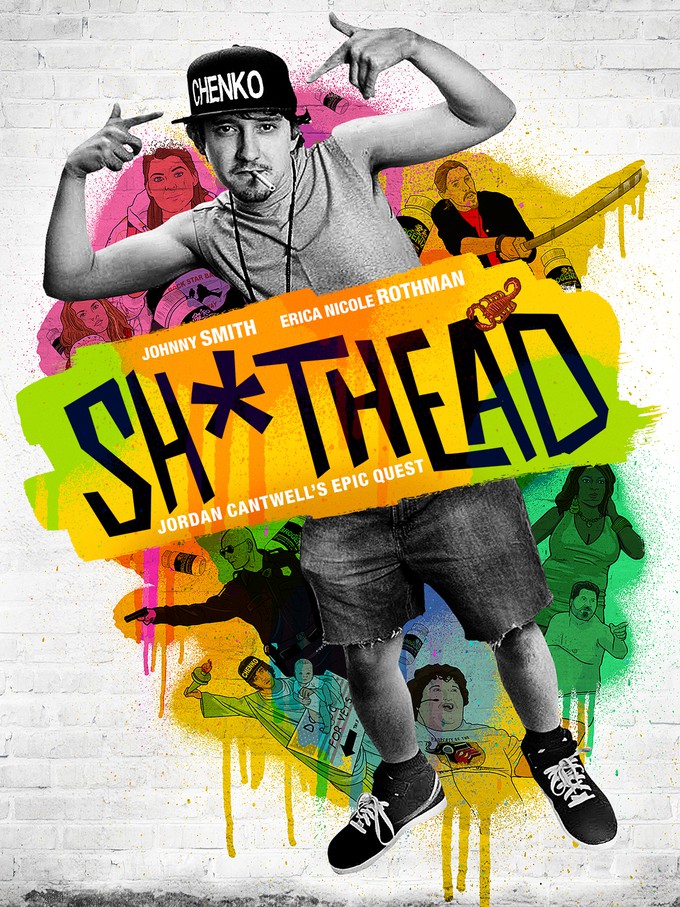
Hey Everyone! I recently had the chance to interview Mike Morelli, about this award winning feature film Sh*thead, which is about a man selling his friends baby, so that he can afford to go and see his favourite musical artist. We talk about, wild quests, dancing, and the death of cinema- I hope you enjoy.

Q: If you were to sum the film up in one word what would it be?

A: Stoned.

Q: Do you have any funny production stories?

A: We rented a drone for the concert scene but there was some mix up with the rental house, it came in after we were supposed to shoot with it, so they just let me have it for a full week. We ended up improvising and playing around with that thing literally non-stop the whole week, just trying to get whatever wide-shots I could with it. I had Jordan’s costume and from far enough away, if I put it on you really couldn’t tell as easily Jordan suddenly got like 6 inches taller. I did a ton of those shots, and most of the actors weren’t available on short notice so a lot of times I’d program a route for the drone, run into place and try and get the shot all by myself. It always felt like some bizarre silent film routine. 

At the end of the week, I had literally done as many shots as I could possibly think of they were coming out so good, I had one night left with the drone, I was just like, alright, you know what if we get really far away and it’s kind of dark, maybe I could pull off doubling as Janeé too? I had Erica’s costume and a wig, so, yeah I put it on, stuffed some balloons in my chest and set out at 4AM to try and sneak some night shots where no one could see me. 

I did like four or five shots, and it really wasn’t working no matter how far away you got you just could tell – that’s no lady. There was no way anyone was gonna’ buy that was Janeé. Ever. 

To do the shot, I’d have to program the drone, run into place and then I’d have 30 seconds before it starts. And I remember, I’m right in the middle of doing one of my last takes and this van full of young, construction guys probably going off to a super early morning job pulls down the road before I had time to hide. And they just stop. And stare at me. And they see this crazy man, dressed as a lady with balloons in his chest, flying a drone. At 4AM. Filming himself. 

They didn’t laugh, they simply stared at me for like a full minute trying to piece together what the hell their eyes were seeing. The looks on their faces, thinking about now I’m dead. 

None of the shots made it into the film. 

Q: What inspired you to make this film, what was your drive, your catalyst?

A: I made a short called “SHITHEAD” that this is loosely based off. I sold weed when I was younger, and I was always fascinated by the delicate juggling act that went into balancing out a serious illegal drug habit. Drugs aren’t free and by the very nature of the activity, they need to be replaced fairly often. So, it becomes this game of constantly trying to make money, find drugs, take the drugs, run out of drugs, repeat. 

Now take that dynamic and tell it like a raunchy, Preston Sturges screwball comedy. That was the idea, at least. 

Q: Does your film have a message and if so what is it?

A: Don’t sell your baby. Use Birth Control. Liberate Taiwan. 

Q: Who is your filmmaking influence?

A: My older brother, John. Authors like Charles Willeford and James Ellroy loom large in the stories I like to tell. There are so many filmmakers from around the world I could name drop to make me sound smart, but I’ll stick with that. 

Q: How would you describe the film’s sense of humour?

A: Juggalo Crack. I guess that’s really what Chenko is, anyway. 

 Q: Have you ever been on any wild quests of your own?

A: Making this movie. Without a doubt the most epic quest that I have ever been on. And I’m still talking about it, right now…

 Q: If you had the sum the production up in a word what would it be?

A: Vietnam. 

 Q: If you could travel back in time to when you were a young filmmaker just starting out what advice would you give yourself?

A: Learn to dance. I’d tell myself that, hey, by the time you’re able to release your first feature film cinema as you know it, conceptually, will be dead. Monopolistic corporations will destroy a lot of the things you hold so dear, and people’s attention spans are going to dwindle to below a minute. Maybe less.. So learn to dance and Tik Tok. It’s your best shot. 

 Q: If you ever win an award who will you thank in your acceptance speech?

A: I probably wouldn’t attend any awards ceremony. I actually just won something and am trying to get someone to attend virtually in my place. Nobody knows what I look like, it would make me laugh so hard if they cut to a speech by me and it’s like a 90-year-old man from Wisconsin or something. 

We did win some awards for Sh*thead, I never attended any of those ceremonies to thank anyone. 

That’s not because I’m not grateful, far from it. Making an Independent Film is tough, and you need a lot of passionate, motivated people for it to work. And we had a lot of talented souls come together to make Sh*thead. I really am deeply thankful for so many people. Of course, I gotta’ thank Johnny Smith who is a genuinely great person and good friend of mine. Johnny lit up our film, everyone on set loved being around him so much. And people don’t realize, Johnny had severe back issues from a car accident, he was in a lot of pain during the shoots. And Tom Valentino and Erica Everett, I gotta’ thank them so much, they stuck with the film, and me, to see this through. I’m grateful to everyone that helped make Sh*thead happen, thank you all. 

You can watch Sh*thead on Amazon Prime, Google Play and Vimeo and as always my review of the film is up on site right now!

Interview with Alexander Jeremy The Writer/Director Of F r e d And Milk Run

Written by Luke Barnes

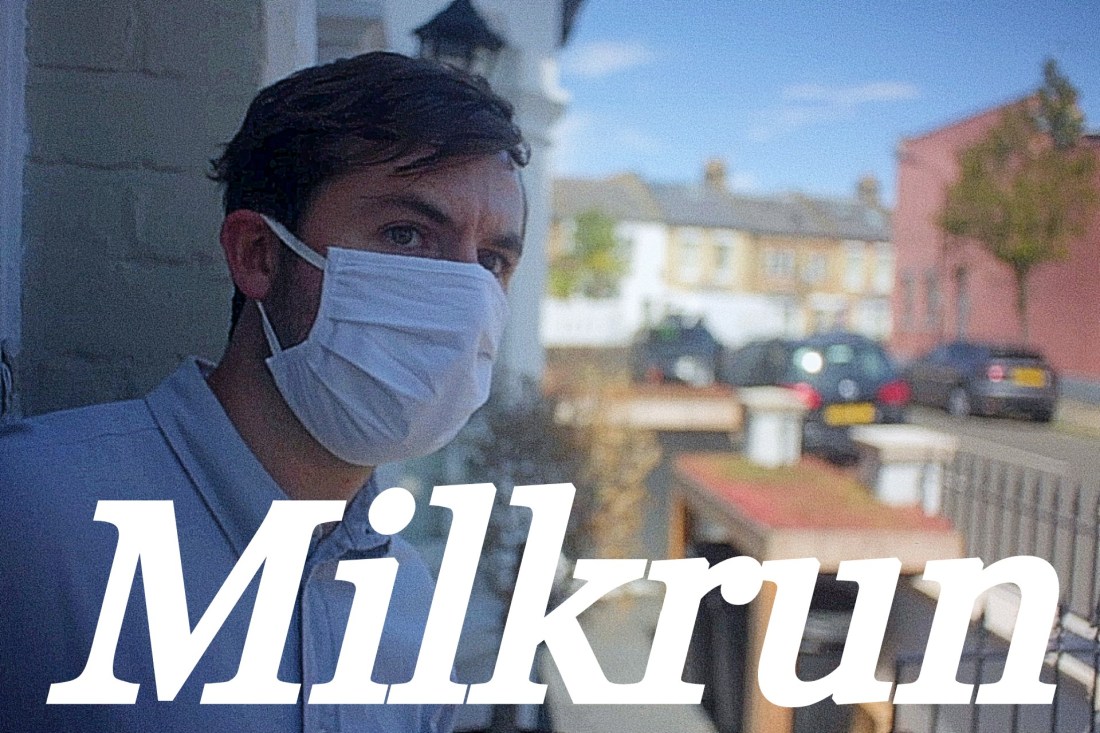
Hey Everyone! I recent had the chance to sit down and chat to Alexander Jeremy, the writer director behind f r e d and the lockdown thriller Milk Run.  We talk about filming during lockdown, dancing through grief and the films of Russian cinematic giant Andrei Tarkovsky. I hope you enjoy!

Q: Who is your filmmaking inspiration?

A: I think it’s quite a lot of things actually. Film wise, from super strange niche stuff, like Tarkovsky/Bresson or something like that; things that kind of push the boundaries. Then on the flip side, pretty straight down the line films like Star Trek, The Last Samurai and the Avengers movies! I also get a lot of inspiration from music and the whole music world. I love weird electronic music and rap.

Q: Do you have any funny on set stories?

A: Not particularly hilarious but just one of those unexpected moments whilst filming; in f r e d, there’s a bit where Fred dances through a restaurant. We just shot that with no prep and no warning to the restaurant (naughty) – but at the end, a random guy started dancing with him. I love things like that.

Q: How would you describe the production of either F r e d or Milkrun?

A: F r e d was my first serious “piece”. Everyone was going out on a limb and we had no idea what it was going to turn out like, it felt a lot like a train in motion and we just kept up a long with it. Milkrun was strange, because I shot everything by myself on the cheapest of gear I could afford. So it was incredibly rough and “lofi” as I call it, it was not at all like a proper set – but I quite like that, makes it feel more like a bunch of kids with cameras. I think we should value short films made with nothing that are rough around the edges, as opposed to super high-budget, professional ones, clean ones – I always find them less interesting, (less risk?).

Q: How would you describe your experience with Lockdown filmmaking? 

4. It’s been an incredible time for me as a filmmaker, you’d think it’d be the opposite. If you’re willing to accept that shooting in Lockdown with nothing is probably not going to get you into Cannes or Sundance, and you can focus more on the love of it, practice, play etc – then in that sense, it’s been lovely. The super affordable gear and equipment these days are making filmmaking so accessible, it’s awesome. I want a Black Magic Pocket 6k Pro very badly!!

Q: How key was tapping into the fear and paranoia of the British lockdown for Milk Run? How close to life was your spoof?

A:  I love the old silent films, so I wanted to do something like that – also because it meant I wouldn’t need sound which cuts costs massively and makes everything much easier to shoot. In terms of the paranoia, and especially at that time (during the end of the second lockdown), you’re constantly in waves between paranoia and “fuck it”. I myself have probably swayed too far in each direction at one point, so I guess I wanted it to be a reminder not too swing too far in any direction.

Q: If you could go back in time to when you were a filmmaker first starting out what would you say to yourself?

A: Make more, keep going, be patient…and what I try to tell myself now is to focus on the fun, the joy, the creating, making good work – and try to forget about everything else. I think focusing on your “career” might make your work mediocre. 

Q: With F_r_e_d what was vital to you when trying to convey the grief on screen?

A: Just the silence, I think. How someone is there, with you, every day and then isn’t. Also, that with grief you cry one minute, dance the next, cry, then laugh, then numb, then cry – all over the place.

Q: Dance is obviously a central part of the narrative in f r e d, why is that and how did the idea come about?

A: F r e d ended up a very ambiguous piece, people read lots of different things into it – so I don’t really want to say too much. However, I’ll say the dance came from the fact that it’s so opposite to grief, and I thought it would suit Fred’s character – you can’t place him, he feels more like a force, a spirit, then a living person. 

Q: Sequel ideas or potential new endeavours?

A: No sequels in the works! Just more projects. I have another film coming out very soon, called Crowning, written by Hannah May Jessop. That film I think continues to explore stylistically some things I was tapping into with f r e d; a kind of stylistic awkwardness, anti-cinematic – to make you feel slightly unnerved – it’s not following the cinematic rules that we take comfort in, so you don’t know what it will do. Then, combining that with the silent era call-backs of Milkrun. Let’s see what happens with it! Please follow @crowningfilm !!

Q: If you ever win an Oscar or other award who would you thank in your acceptance speech?

A:  My Mum and Dad, my late friend Josh, and Keith Johnstone. (And agent + wife I imagine!)

You can check out F r e d and Milk Run, on Youtube, Vimeo and other streaming services now and of course you can check out reviews of both on my site now!

Interview With McCain Lindquist Director Of The Tell Tale Heart

Written by Luke Barnes

Hey Everyone! I recently had the chance to sit down and chat with The Tell Tale Heart director McClain Lindquist, and we chatted all things horror- Poe, Hitchcock and of course the horror films of the 1970s and the 1980s. Be sure to check out my review before reading this, for further context- it is on the site now. I hope you enjoy!

Q: How important were practical effects to you with the Tell Tale Heart?

A: Practical effects were critical to our film. Using tangible special effect makeup was a decision we made right from the beginning. Our love of 1980s horror/Sci-Fi would be the impetus for this nostalgic approach. Respect for the modern masters would be the driving force in their inclusion. The late 70s and early 80s were the high-water mark of practical special effects and influenced us immensely. We harkened to the heady days of amazing films like American Werewolf, The Fly, Alien, The Thing, Howling, Evil Dead 2, and The Blob to achieve a realistic yet surreal tone. Chris Hanson tasked with the special effects department is a wizard and we were blessed to have his expertise and creativity involved from the earliest stages of preproduction.

Q: What is your favourite horror film and who are you influences?

A: I have such a long list! It’s so hard to narrow down to one film. But here are a few… The Exorcist, The Shining, The Omen, Rosemary’s Baby, Psycho, Deep Red, The Beyond, Shock, Hellraiser, Texas Chainsaw, Halloween, Train to Busan, Night of the Living Dead, Jaws, REC, Descent, Funny Games, Carnival of Souls, The Skin I Live In, Cape Fear, Devils Backbone, Jacobs Ladder, Poltergeist, Babadook, The Ring, Let The Right One In, Carrie, Suspiria, The Others, 28 Days, Dead Alive, but if you had to pin me down and say one movie it’s… Evil Dead 2!

 Q: Sequel ideas?

A: I have already parlayed or rewritten the (sequel) full length version into two distinct screenplays. I have no interest in doing a follow up film for The Tell Tale Heart. So I pilfered my own ideas and applied unused aspects from my original script to the new stories. Both of the scripts are also based on Edgar Allan Poe short stories. The Cask of Amontillado and The Black Cat. This trilogy of short films (including Tell Tale) would work splendidly within a movie anthology of Poe shorts. My full-length film fit perfectly amongst those two intense stories. So I just transplanted settings and characters to fit the narrative. It worked surprisingly well and came together very quickly and easily.

 Q: How did you get into filmmaking?

A: I was tasked to write, direct and produce the music videos for my band Bass Mint Pros. We shot our first music video in beautiful Death Valley National Park. I took to the entire process of filmmaking very quickly and shortly thereafter I was shooting local commercials, musical/political spoofs and then web based serials. Being a cinephile and film buff, making a movie was the next logical progression.

 Q: What are your thoughts on modern horror?

A: I have a deep love for the genre of horror. My favorite horror movies are the Universal Monster classics. As time passes sadly even the amazing genre films I grew up on are now considered outdated and vintage. Like all art forms it must change and grow, or it becomes stagnant and then dies. In my opinion modern horror is incredible. It’s the next logical step. I find this new wave of heady horror hounds to be most invigorating. It’s really refreshing to see the next batch of filmmakers having a sense of cinema and apply elements of art house to their films. Watching new perspectives has been eye opening. I want to see films from all cultures that represent a new and yet unseen viewpoint. I am also pleased with the style and bold experimentation in their vibrant films. I love the depth and emotional power of these trailblazers. Elevating the art form could never be (and should never be) seen as a negative element when it comes to the evolution of scary films around the world.

 Q:  Which do you value more when making a horror film, scares or atmosphere?

A: Atmosphere without a doubt! Ninety percent of horror is generated through atmospheric dread. The vast majority of atmosphere in cinema is created by gaffe or lighting. Pace, setting and tone are all vital to instil a spooky ambiance as well. As strange as it seems being “scared” is not critical. Everyone has different responses to fright. However I personally love jump scares and want the audience of my films to most definitely feel fear and become afraid. Fear is such a fascinating response to me. Fight or flight can be achieved without cheap scares if you carefully take the time to build up to the intense moments. Let the audience create the ambiance within themselves. It’s a litmus test of sorts. Don’t undercut the imagination and creativity of the viewer. They might just surprise you!

 Q: Do you have any fun production stories?

A: Too many to count! Fun is the perfect word to encapsulate our production. If you aren’t having fun why even create art? We have three rules to our film productions. 1. BE SAFE! (No one should EVER get hurt making a movie) 2. Work hard! (Duh!) and 3. Have FUN! It’s hard to think of any element that wasn’t incredibly fun while making this movie. It was very upbeat and jovial on set. Lots of light-hearted inside jokes abound. I was usually the butt of everybody’s joke and was pranked endlessly each and every day on set. I got them all back, however. When we watched the trailer at the wrap party I purposely had the file slow down and go into buffering mode. It was hilarious to watch them all squirm. Revenge is dish best served… COLD!

Q: If you were to describe the production in one word what would it be?

A: Definitive

Q: If you could meet and chat to any living or dead filmmaker who would it be?

A: Living – Martin Scorsese / Deceased – Alfred Hitchcock.

Q: If you won an Oscar who would you thank?

A: I would have the shortest speech in the history of the Oscars and beat Joe Pesci by one word. I would simply say… “Thanks!” However… I dedicated this film to my two beautiful daughters. I love them more than words could ever express, and they would be first and foremost on my mind.

Q: How important was Edgar Allan Poe’s influence over the film as a whole?

A: Edgar Allan Poe’s immense influence permeated throughout the entire process of the making of this film. From my brother nailing his voice in the dialogue to Janelle Corey’s costume design which we used Poe as the model. All the way down to Nikki BreedLove’s hair style which was styled in the vein of Edgar. Hell even Lyndi Bone’s set design was also inspired by the venerable Mr Poe. We wanted to respect him and his vast influence completely in our short film. This is his story. We are just tourists merely visiting his macabre world. I hope he would approve and appreciate our deference to his lasting legacy.

If you are interested, you can check out The Tell Tale Heart on the festival circuit right now! Or own in on VHS tape by ordering it from Telltalemovie.com